3GPP vs O-RAN Standards: Complementary or Competing?
JUL 7, 2025 |
To fully delve into the relationship between 3GPP and O-RAN standards, it is essential to first understand what each set of standards entails. The 3rd Generation Partnership Project (3GPP) is a collaboration between groups of telecommunications standards associations that is responsible for establishing protocols for mobile telecommunications. 3GPP has been the backbone for several cellular standards, including GSM, UMTS, LTE, and the newer 5G networks. The goal of 3GPP is mainly to ensure global interoperability and functionality of mobile networks by providing a unified platform for standardization.
On the other hand, the O-RAN (Open Radio Access Network) Alliance seeks to revolutionize the RAN (Radio Access Network) industry by promoting openness and intelligence. O-RAN aims to break the traditional vendor lock-in by enabling more flexibility in network operations and encouraging the use of open interfaces and standards. This approach allows for a more diverse ecosystem where multiple vendors can coexist, fostering innovation and competition.
The Complementary Nature of 3GPP and O-RAN
While on the surface, 3GPP and O-RAN might appear to be competing entities due to their different approaches and objectives, they are indeed complementary. 3GPP provides a crucial baseline of standards that ensure the fundamental operations, security, and interoperability of mobile networks worldwide. These standards are indispensable for the global harmonization of telecommunications and have been instrumental in the rollout of 5G networks.
O-RAN, meanwhile, builds upon the foundation laid by 3GPP. It acts as an enhancer, introducing an additional layer of flexibility and openness to the standardized framework. By advocating for open interfaces and a multi-vendor environment, O-RAN enables network operators to tailor their networks more specifically to their needs, potentially reducing costs and improving service innovation.
Interplay Between Standardization and Innovation
The interplay between 3GPP and O-RAN is a fascinating example of how standardization and innovation can coexist and even support one another. 3GPP’s rigorous and well-established standards pave the way for uniformity and reliability, which are crucial for the vast scale of metropolitan and global networks. This standardization is critical not only for network operators but also for consumers who rely on seamless connectivity.
O-RAN, however, introduces a level of dynamism and adaptability by opening up the market to smaller, innovative companies that can contribute to the RAN ecosystem. This can lead to more rapid technological advancements and a diversified supply chain, which can drive down costs and increase the resilience of networks against vendor-specific vulnerabilities.
Challenges and Opportunities
Despite their complementary nature, integrating 3GPP and O-RAN standards is not without challenges. One significant challenge is ensuring compatibility between traditional, proprietary network components and the more modular, open solutions proposed by O-RAN. Network operators must negotiate these technical complexities to leverage the benefits of both standards.
Furthermore, there is a governance aspect to consider, as the inclusion of a broader range of vendors necessitates robust coordination and management to maintain network integrity and security. This is where regulatory bodies and industry partnerships play a crucial role in facilitating cooperation and ensuring that competitive dynamics do not compromise network quality.
However, the opportunities afforded by blending 3GPP and O-RAN are substantial. Network operators can achieve greater agility in deploying and managing their network infrastructure, potentially leading to enhanced service offerings and improved customer satisfaction. Additionally, by fostering a competitive landscape, these standards can spur innovation and drive the evolution of telecommunications technology.
Conclusion
In conclusion, 3GPP and O-RAN are not necessarily competing standards but are instead complementary components of a modern telecommunications ecosystem. While 3GPP provides the essential framework for global interconnectivity and reliability, O-RAN introduces a new paradigm of openness and innovation. Together, they offer a promising pathway for the future of mobile networks, balancing the need for standardization with the benefits of a dynamic and diverse technological landscape. The onus is now on network operators, regulators, and industry stakeholders to navigate this evolving landscape to harness the full potential of these standards, ultimately leading to a more connected and innovative world.
Empower Your Wireless Innovation with Patsnap Eureka
From 5G NR slicing to AI-driven RRM, today’s wireless communication networks are defined by unprecedented complexity and innovation velocity. Whether you’re optimizing handover reliability in ultra-dense networks, exploring mmWave propagation challenges, or analyzing patents for O-RAN interfaces, speed and precision in your R&D and IP workflows are more critical than ever.
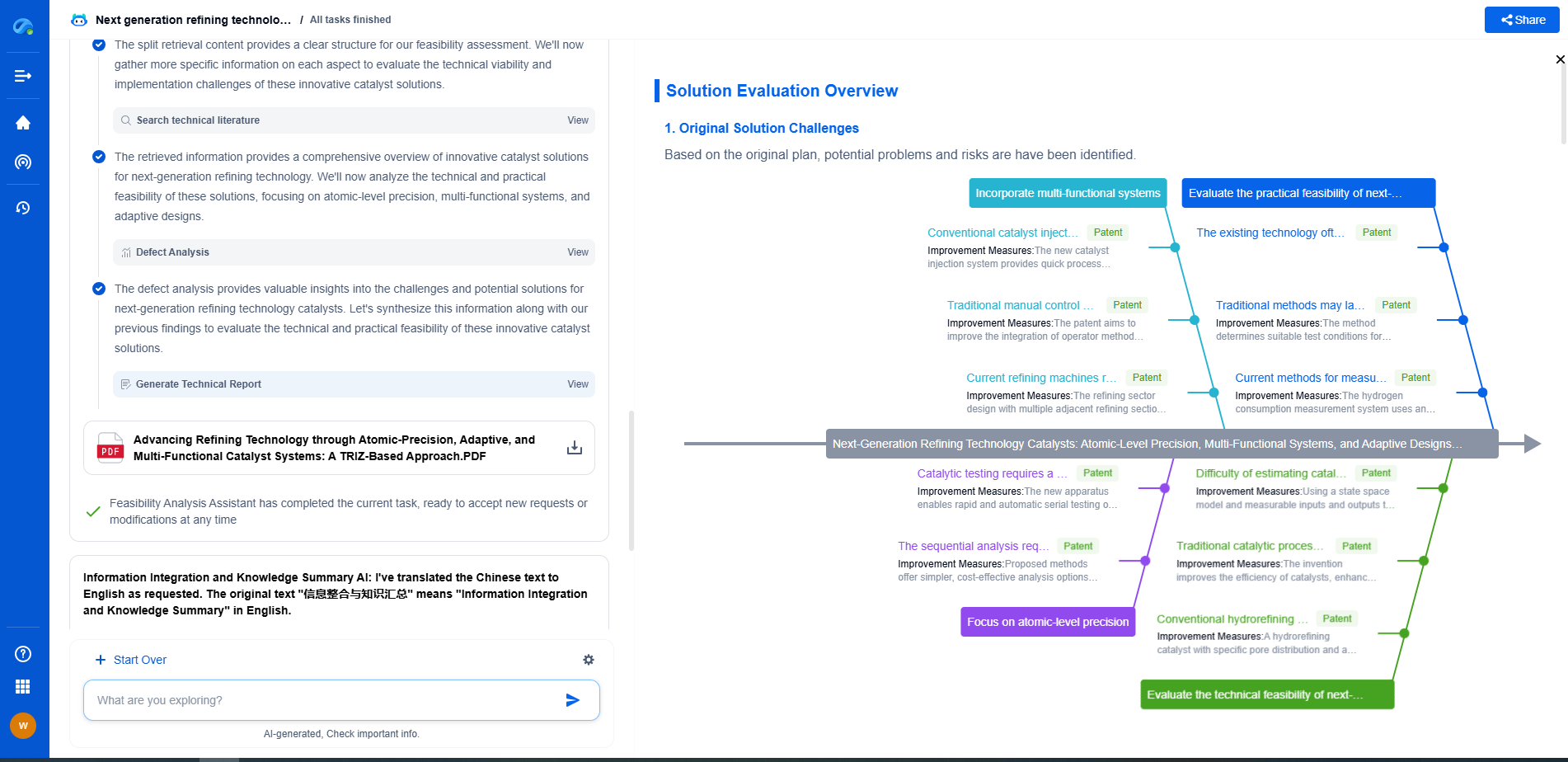
Patsnap Eureka, our intelligent AI assistant built for R&D professionals in high-tech sectors, empowers you with real-time expert-level analysis, technology roadmap exploration, and strategic mapping of core patents—all within a seamless, user-friendly interface.
Whether you work in network architecture, protocol design, antenna systems, or spectrum engineering, Patsnap Eureka brings you the intelligence to make faster decisions, uncover novel ideas, and protect what’s next.
🚀 Try Patsnap Eureka today and see how it accelerates wireless communication R&D—one intelligent insight at a time.