Authentication for Non-Terrestrial Networks (Satellite Access)
JUL 7, 2025 |
As the world becomes increasingly interconnected, the demand for reliable and fast internet access extends beyond terrestrial boundaries. Non-terrestrial networks (NTNs), particularly those involving satellites, have emerged as a crucial component in providing connectivity to remote areas, enhancing global communication infrastructure, and supporting a myriad of applications from navigation to disaster management. One of the critical challenges in these networks is ensuring secure and efficient authentication processes. This blog delves into the complexities of authentication in satellite access, exploring current methods, challenges, and future directions.
Understanding Non-Terrestrial Networks
Non-terrestrial networks are a diverse ecosystem of communications systems that extend beyond the traditional ground-based infrastructure. Satellite networks, as a significant part of NTNs, offer global coverage capabilities that are unmatched by conventional networks. These networks are categorized into different orbits, including Low Earth Orbit (LEO), Medium Earth Orbit (MEO), and Geostationary Orbit (GEO), each with unique characteristics that influence authentication strategies.
The Importance of Authentication in NTNs
Authentication is the backbone of secure communication, ensuring that only authorized users and devices can access network resources. In satellite networks, the vast distances and unique propagation characteristics pose additional challenges to implementing robust authentication protocols. Ensuring data integrity, confidentiality, and availability is paramount, especially in scenarios involving sensitive information or critical infrastructure.
Challenges in Satellite Network Authentication
1. Latency and Propagation Delays: Satellite communication inherently involves significant latency due to the vast distances between satellites and ground stations. This latency can complicate traditional authentication processes, which often rely on rapid exchanges of information.
2. Dynamic Topologies: Unlike fixed terrestrial networks, satellite networks are characterized by constantly changing topologies as satellites move in their orbits. This dynamic nature requires authentication protocols to be highly adaptable and resilient.
3. Limited Bandwidth: Satellites often operate within limited bandwidth constraints. This requires authentication methods that are not only secure but also efficient in terms of data usage to avoid overburdening the network.
Current Authentication Methods in NTNs
1. Symmetric Key Cryptography: This method involves the use of a shared secret key between communicating parties. While it offers fast authentication processes, key management and distribution can be challenging in a widespread satellite network.
2. Public Key Infrastructure (PKI): PKI provides a more scalable solution by employing asymmetric key pairs for authentication. Despite its advantages, PKI can introduce additional latency, which may not be ideal for all satellite applications.
3. Token-Based Authentication: Tokens can be used to authenticate users and devices by providing proof of identity without the need for continuous communication. This method can be beneficial in reducing the load on satellite links.
Future Directions and Innovations
1. Quantum Key Distribution (QKD): As NTNs evolve, quantum key distribution holds promise for providing unparalleled security. QKD uses principles of quantum mechanics to generate secure keys, potentially transforming satellite network authentication.
2. Blockchain Technology: Integrating blockchain technology into satellite networks can enhance authentication by providing a decentralized and tamper-proof method for verifying identities and transactions.
3. AI-Driven Authentication: Artificial intelligence can be leveraged to develop adaptive authentication protocols that respond to changing network conditions and anticipate potential security threats.
Conclusion
Authentication in non-terrestrial networks, particularly satellite access, is a field of growing importance as our reliance on global communication networks intensifies. Overcoming the unique challenges posed by these networks requires innovative approaches that balance security, efficiency, and adaptability. By exploring and implementing advanced authentication methods, we can ensure that satellite networks remain a secure and integral part of our connected world.
Empower Your Wireless Innovation with Patsnap Eureka
From 5G NR slicing to AI-driven RRM, today’s wireless communication networks are defined by unprecedented complexity and innovation velocity. Whether you’re optimizing handover reliability in ultra-dense networks, exploring mmWave propagation challenges, or analyzing patents for O-RAN interfaces, speed and precision in your R&D and IP workflows are more critical than ever.
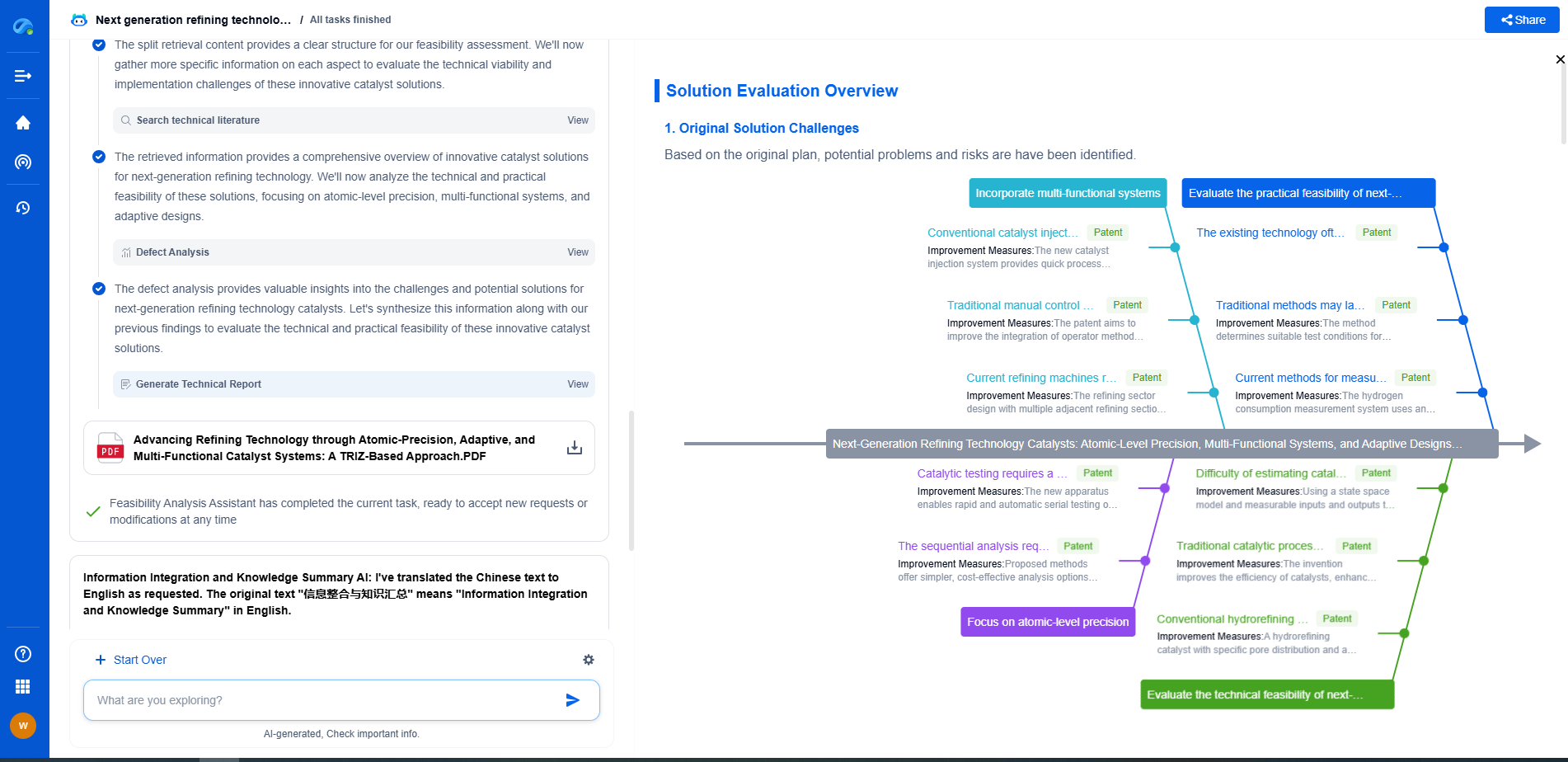
Patsnap Eureka, our intelligent AI assistant built for R&D professionals in high-tech sectors, empowers you with real-time expert-level analysis, technology roadmap exploration, and strategic mapping of core patents—all within a seamless, user-friendly interface.
Whether you work in network architecture, protocol design, antenna systems, or spectrum engineering, Patsnap Eureka brings you the intelligence to make faster decisions, uncover novel ideas, and protect what’s next.
🚀 Try Patsnap Eureka today and see how it accelerates wireless communication R&D—one intelligent insight at a time.