Common Pitfalls in 5G Network Simulation
JUL 7, 2025 |
As the global rollout of 5G technology gathers pace, the demand for accurate and efficient network simulation tools has never been more critical. These simulations are essential for understanding the complexities and potential of 5G networks before deployment. However, the intricacies involved in simulating these advanced networks can often lead to common pitfalls. In this article, we explore these pitfalls and offer insights into how they can be avoided to ensure more reliable and effective simulation outcomes.
Underestimating Computational Challenges
One of the most significant challenges in 5G network simulation is the sheer computational power required. 5G networks are vastly more complex than their predecessors due to their higher frequencies, increased bandwidth, and the need for massive MIMO (Multiple-Input, Multiple-Output) configurations. This complexity means simulations demand substantial computational resources. A common pitfall is underestimating these requirements, which can lead to incomplete simulations or erroneous results. It is crucial to assess and allocate appropriate computational resources before embarking on a 5G simulation project.
Neglecting Real-World Variables
Real-world variables such as environmental factors, user behavior, and physical obstructions significantly impact 5G performance. A common oversight in network simulation is failing to adequately model these variables. For example, urban environments with dense buildings can disrupt signal propagation, while user mobility can affect connection stability. Ignoring these factors can result in simulations that do not accurately reflect real-world conditions, leading to over-optimistic performance predictions. To mitigate this, simulations should incorporate detailed models that account for these variables, ensuring a more realistic and reliable evaluation of 5G network performance.
Over-Simplifying Network Models
While simplifying network models can make simulations more manageable, over-simplification is a common pitfall that can compromise accuracy. Simplifications might include reducing the number of network nodes or omitting certain signal interactions. These can lead to misleading results that do not adequately capture the complexities of 5G networks. To avoid this, it’s important to strike a balance between simplification for manageability and complexity for accuracy. Advanced modeling techniques and tools can help simulate realistic scenarios without excessive simplification.
Inadequate Testing of Edge Cases
5G networks introduce new scenarios and edge cases that were not present in previous generations, such as ultra-reliable low-latency communication (URLLC) and massive IoT connectivity. A common mistake is failing to test these edge cases adequately. This can lead to unanticipated issues during actual deployment, where these scenarios play a critical role. Comprehensive testing should include a wide range of scenarios to ensure robust network performance across all potential use cases.
Ignoring Interference and Spectrum Management
Interference and spectrum management are significant concerns in 5G networks due to the increased use of higher frequency bands and shared spectrum. A common pitfall in simulation is overlooking the impact of interference from other devices and networks, which can severely degrade network performance. Effective spectrum management strategies should be incorporated into simulations to predict and mitigate interference issues.
Conclusion
Navigating the complexities of 5G network simulation requires careful planning and attention to detail. By acknowledging and addressing common pitfalls such as computational challenges, real-world variable modeling, network model simplification, edge case testing, and interference management, it is possible to conduct more accurate and reliable simulations. These efforts will ultimately contribute to the successful deployment of 5G networks, ensuring they meet the high expectations set for this groundbreaking technology.
Empower Your Wireless Innovation with Patsnap Eureka
From 5G NR slicing to AI-driven RRM, today’s wireless communication networks are defined by unprecedented complexity and innovation velocity. Whether you’re optimizing handover reliability in ultra-dense networks, exploring mmWave propagation challenges, or analyzing patents for O-RAN interfaces, speed and precision in your R&D and IP workflows are more critical than ever.
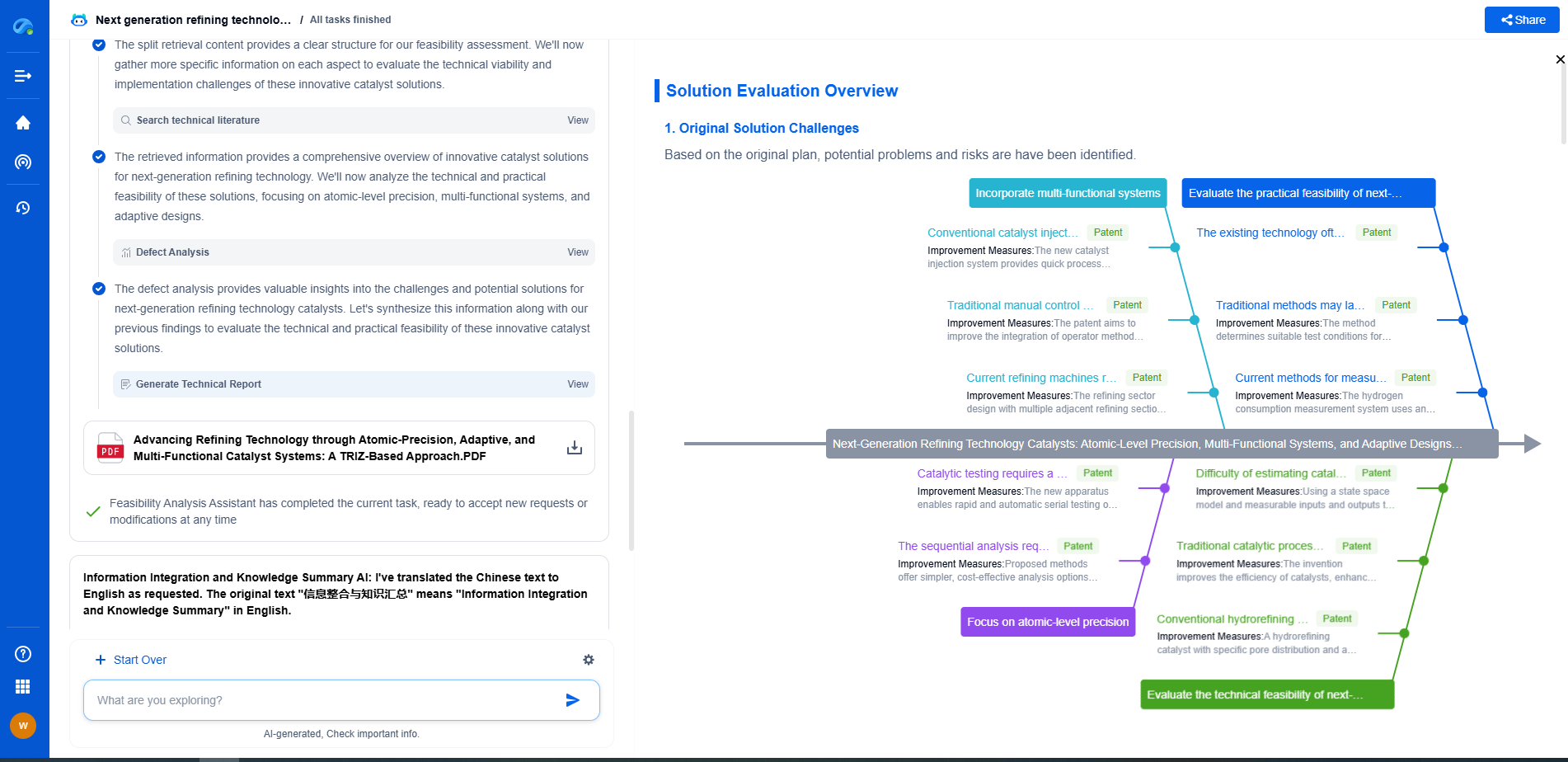
Patsnap Eureka, our intelligent AI assistant built for R&D professionals in high-tech sectors, empowers you with real-time expert-level analysis, technology roadmap exploration, and strategic mapping of core patents—all within a seamless, user-friendly interface.
Whether you work in network architecture, protocol design, antenna systems, or spectrum engineering, Patsnap Eureka brings you the intelligence to make faster decisions, uncover novel ideas, and protect what’s next.
🚀 Try Patsnap Eureka today and see how it accelerates wireless communication R&D—one intelligent insight at a time.