FCC vs hydrocracking: Which is more efficient?
JUN 19, 2025 |
Before delving into the comparison of efficiency between Fluid Catalytic Cracking (FCC) and hydrocracking, it's essential to understand what each process entails. Both FCC and hydrocracking are vital components of the petroleum refining industry, aimed at breaking down large hydrocarbon molecules into smaller, more valuable ones such as gasoline, diesel, and kerosene.
***What is Fluid Catalytic Cracking (FCC)?***
Fluid Catalytic Cracking is a chemical process used in the refining of petroleum. In FCC, heavy oil fractions are converted into lighter, more valuable products using a catalyst. This process takes place in a reactor where the catalyst, typically in a powdered form, aids in breaking the long-chain hydrocarbons into shorter chains. FCC is particularly renowned for its efficiency in producing gasoline and olefins, making it a cornerstone in refineries around the world.
***Understanding Hydrocracking***
Hydrocracking is another essential refining process, primarily focusing on utilizing hydrogen to crack heavy oil molecules into lighter ones. Unlike FCC, hydrocracking operates under high temperature and pressure, with the presence of hydrogen and a catalyst. This method is particularly valuable in producing diesel and jet fuel. The hydrogen component in hydrocracking helps in saturating the cracked products, enhancing the quality and stability of the resulting fuels.
***Efficiency Comparison***
When evaluating the efficiency of FCC versus hydrocracking, several factors need to be considered, including product yield, energy consumption, and operational flexibility.
***Product Yield***
FCC is highly efficient in producing gasoline and olefins, which are crucial for various chemical industries. Its ability to convert heavy fractions into lighter, high-value products makes it a preferred choice for refineries focusing on gasoline production.
In contrast, hydrocracking is more efficient in producing middle distillates like diesel and jet fuel. The presence of hydrogen in the process allows for greater saturation of the cracked molecules, improving the quality of the end products. Therefore, if the primary goal is to produce high-quality diesel, hydrocracking might exhibit higher efficiency.
***Energy Consumption***
Energy consumption is a critical factor in evaluating refinery processes. FCC is generally less energy-intensive compared to hydrocracking, primarily because it doesn't require the high pressures and hydrogen input necessary for hydrocracking. However, the energy savings in FCC must be balanced against the specific product requirements of the refinery.
Hydrocracking, while more energy-intensive due to its need for high pressure and hydrogen, often results in products with higher conversion rates and better quality. Therefore, despite its energy demands, hydrocracking can be more efficient in scenarios where product quality is a priority.
***Operational Flexibility***
FCC processes are highly flexible and can be adjusted to suit various feedstock types and desired product slates. This flexibility allows refineries to adapt to changing market demands more readily.
Hydrocracking, on the other hand, is less flexible due to its dependency on high-pressure hydrogen input. However, it can process a broader range of feedstock types, including those that FCC cannot handle, making it a crucial process for refineries dealing with diverse crude sources.
***Economic Considerations***
From an economic standpoint, the choice between FCC and hydrocracking often depends on market demands and the price differential between gasoline and diesel. In regions where diesel is in higher demand, investing in hydrocracking might yield better profitability.
***Conclusion***
Both FCC and hydrocracking play indispensable roles in the refining industry, each with its unique advantages and drawbacks. The efficiency of each process is contingent upon the specific goals of a refinery—whether the focus is on producing high volumes of gasoline or high-quality diesel. FCC offers lower energy costs and greater flexibility, whereas hydrocracking provides superior product quality in middle distillates. Ultimately, the decision between the two processes should align with the strategic objectives and economic realities of the refinery in question.
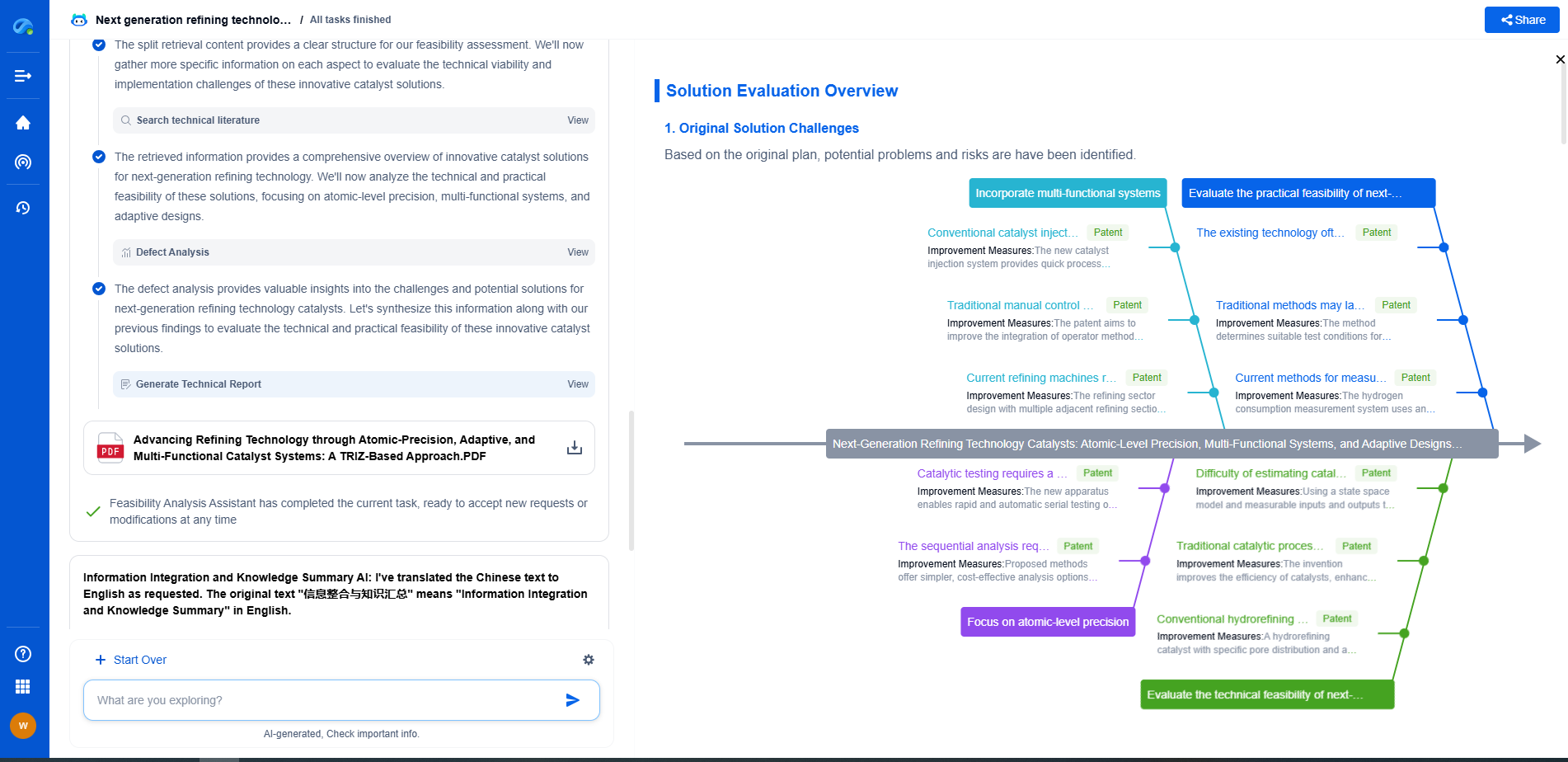
Discover Patsnap Eureka: AI Agents Built for Scientific Innovation
Whether you're designing the next generation of refining technologies or analyzing catalysts and process flows, keeping up with rapidly evolving research and IP data in petroleum processing is no easy task.
Patsnap Eureka, our intelligent AI assistant built for R&D professionals in high-tech sectors, empowers you with real-time expert-level analysis, technology roadmap exploration, and strategic mapping of core patents—all within a seamless, user-friendly interface.
Ready to accelerate your innovation process and make smarter, faster decisions? Discover Patsnap Eureka today and unlock the full power of confident, AI-driven innovation.