How a Refinery Boosted Diesel Yield with Advanced Hydrocracking
JUN 19, 2025 |
Hydrocracking is a crucial process in petroleum refining, where heavier fractions of crude oil are transformed into lighter, more valuable products. This conversion is achieved through the application of hydrogen in the presence of a catalyst at high temperatures and pressures. For refineries aiming to maximize diesel production, hydrocracking becomes an essential tool in enhancing yield and quality. Recently, a refinery adopted advanced hydrocracking techniques, leading to significant improvements in diesel yield. This blog explores how this was achieved and the benefits it brought along.
Understanding the Basics of Hydrocracking
Hydrocracking is predominantly used to break down large, complex hydrocarbons into smaller, more useful molecules. The process involves two main steps: cracking and hydrogenation. Cracking breaks the large molecules, while hydrogenation saturates them with hydrogen, preventing the formation of unwanted by-products. This dual action not only increases the yield of lighter fractions such as diesel but also enhances their stability and quality.
Challenges in Traditional Hydrocracking
Traditional hydrocracking processes often face several challenges, such as incomplete conversion of feedstock and undesirable production of lighter gases instead of diesel. The catalysts used can also degrade over time, reducing efficiency and increasing operational costs. Moreover, the need to balance temperature, pressure, and hydrogen availability adds complexity to the process, making it crucial for refineries to innovate continuously.
Implementing Advanced Hydrocracking Technologies
The refinery in focus sought to overcome these challenges by implementing advanced hydrocracking technologies. This included the introduction of next-generation catalysts that offer improved stability and activity, leading to better conversion rates. These catalysts are designed to withstand higher temperatures and pressures, optimizing the hydrogenation process and minimizing the formation of lighter gases.
Additionally, the refinery incorporated process optimization software, which enabled real-time monitoring and control of the hydrocracking parameters. This software provided vital data analytics that helped in fine-tuning the operational conditions, ensuring that maximum diesel yields were consistently achieved.
Benefits of Enhanced Diesel Yield
By boosting diesel yield through advanced hydrocracking, the refinery experienced several benefits. Firstly, the increased production of diesel met rising market demands more effectively, ensuring profitability and competitive advantage. The refined diesel also boasted improved quality, with higher cetane numbers and lower sulfur content, aligning with stringent environmental regulations and consumer preferences.
Furthermore, the operational efficiency realized through the use of advanced catalysts and process optimization significantly lowered production costs. This cost-effectiveness is vital in maintaining economic viability, especially in fluctuating market conditions.
Environmental and Economic Impact
The adoption of advanced hydrocracking not only improved diesel yield but also contributed positively to environmental sustainability. By producing cleaner diesel with reduced emissions, the refinery took a step forward in minimizing its ecological footprint. This shift towards environmentally friendly production practices resonates well with global efforts to reduce pollution and move towards sustainable energy solutions.
Economically, the enhanced yield translates into increased revenue, allowing the refinery to invest further in technological innovations and expansions. The ability to produce more diesel at lower costs also enhances the refinery's competitiveness in the global market.
Conclusion
The exploration of advanced hydrocracking techniques by the refinery exemplifies how innovation in refining processes can lead to substantial improvements in product yield and quality. By addressing traditional hydrocracking challenges through the use of next-generation catalysts and optimization technologies, refineries can achieve higher diesel yields, meet market demands, and maintain sustainable practices. As the industry continues to evolve, such advancements will be key to future success, ensuring that refineries can operate efficiently while contributing positively to societal and environmental goals.
Discover Patsnap Eureka: AI Agents Built for Scientific Innovation
Whether you're designing the next generation of refining technologies or analyzing catalysts and process flows, keeping up with rapidly evolving research and IP data in petroleum processing is no easy task.
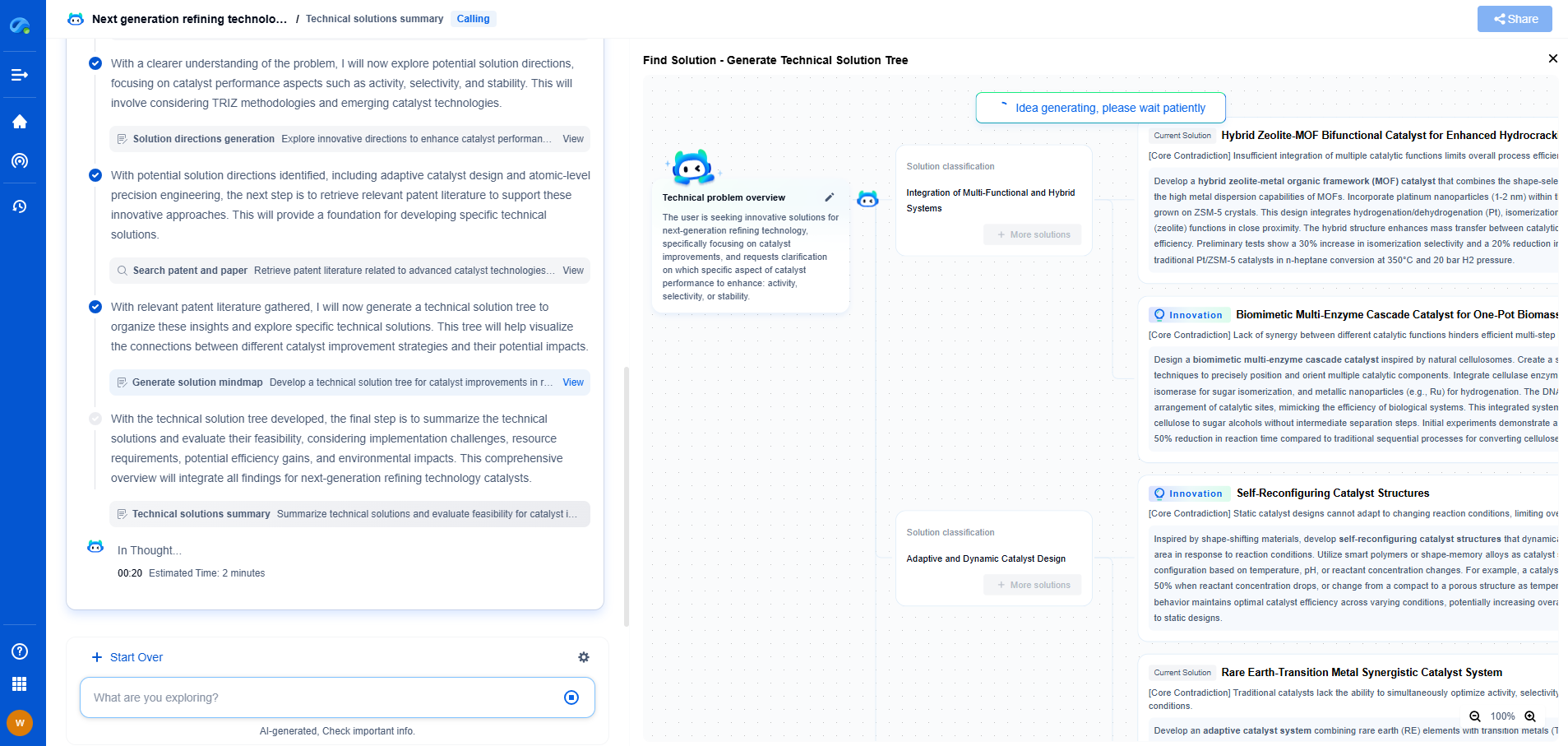
Patsnap Eureka, our intelligent AI assistant built for R&D professionals in high-tech sectors, empowers you with real-time expert-level analysis, technology roadmap exploration, and strategic mapping of core patents—all within a seamless, user-friendly interface.
Ready to accelerate your innovation process and make smarter, faster decisions? Discover Patsnap Eureka today and unlock the full power of confident, AI-driven innovation.