How Are New Wireless Communication Standards Developed?
JUN 27, 2025 |
The Evolution of Wireless Communication
Wireless communication has witnessed remarkable advancements over the decades, evolving from rudimentary analog systems to sophisticated digital networks. This evolution is largely propelled by the development of new wireless communication standards, which are crucial for ensuring compatibility, interoperability, and high performance across various devices and applications. But how exactly are these standards developed?
Key Organizations in Standard Development
Various organizations play pivotal roles in the creation of wireless communication standards. The International Telecommunication Union (ITU) is a prominent global body that coordinates the international allocation of radio spectrum and satellite orbits. On a more specific level, standards development organizations (SDOs) like the Institute of Electrical and Electronics Engineers (IEEE), the European Telecommunications Standards Institute (ETSI), and the 3rd Generation Partnership Project (3GPP) are directly involved in developing standards for different wireless technologies.
The Role of Stakeholders
The development of wireless communication standards is a collaborative effort that involves multiple stakeholders, including industry players, academic institutions, and regulatory bodies. Manufacturers of telecommunications equipment, network operators, and research institutions contribute their expertise and insights to shape the standards. This collaborative approach ensures that the standards cater to the diverse needs of different sectors and regions.
Research and Innovation: The Foundation of New Standards
The journey towards a new wireless communication standard begins with extensive research and innovation. Researchers and engineers work tirelessly to identify technological gaps and explore new ways to enhance wireless communication. This phase may involve developing new modulation techniques, exploring higher frequency bands, or improving energy efficiency. The research findings are crucial in setting the groundwork for the subsequent stages of standard development.
Defining Technical Specifications
Once the foundational research has been conducted, technical specifications are outlined. This involves defining the technical parameters, such as frequency bands, data rates, and transmission methods. These specifications serve as a blueprint that guides the development and implementation of the new standard. The process requires careful consideration to ensure that the standard is robust, scalable, and capable of supporting emerging technologies and applications.
Consensus Building and Approval Process
Arriving at a consensus is a critical step in developing wireless communication standards. This involves rigorous discussions, negotiations, and sometimes compromises among the involved stakeholders. The goal is to ensure that the standard meets the technical requirements while being commercially viable. Once a consensus is reached, the proposed standard undergoes a formal approval process, which may include multiple rounds of voting and revisions.
Testing and Validation
Before a new standard is officially released, it undergoes extensive testing and validation. This phase is crucial to ensure that the standard performs as expected under various conditions and is interoperable with existing technologies. Testing may involve simulations, laboratory experiments, and field trials. The feedback obtained during this phase is used to make necessary adjustments and refinements to the standard.
Adoption and Implementation
After successful testing and validation, the new standard is ready for adoption and implementation. Regulatory bodies may need to allocate frequency bands specifically for the new standard. Network operators and equipment manufacturers then begin to design and deploy systems that conform to the new standard. It often takes several years for a new standard to achieve widespread adoption, as it requires significant investment in infrastructure and technology upgrades.
The Impact of New Standards on the Industry and Society
The introduction of new wireless communication standards has far-reaching impacts on both the industry and society. For the telecommunications industry, new standards drive innovation, creating opportunities for new products and services. For consumers, these standards translate into faster, more reliable, and more efficient communication services, enabling applications that were previously impractical or impossible.
Conclusion
The development of new wireless communication standards is a complex, collaborative process involving multiple stakeholders and rigorous research. It ensures that wireless communication continues to evolve, meeting the growing demands for connectivity in our increasingly digital world. As technology continues to advance, we can expect to see even more innovative standards that push the boundaries of what wireless communication can achieve.
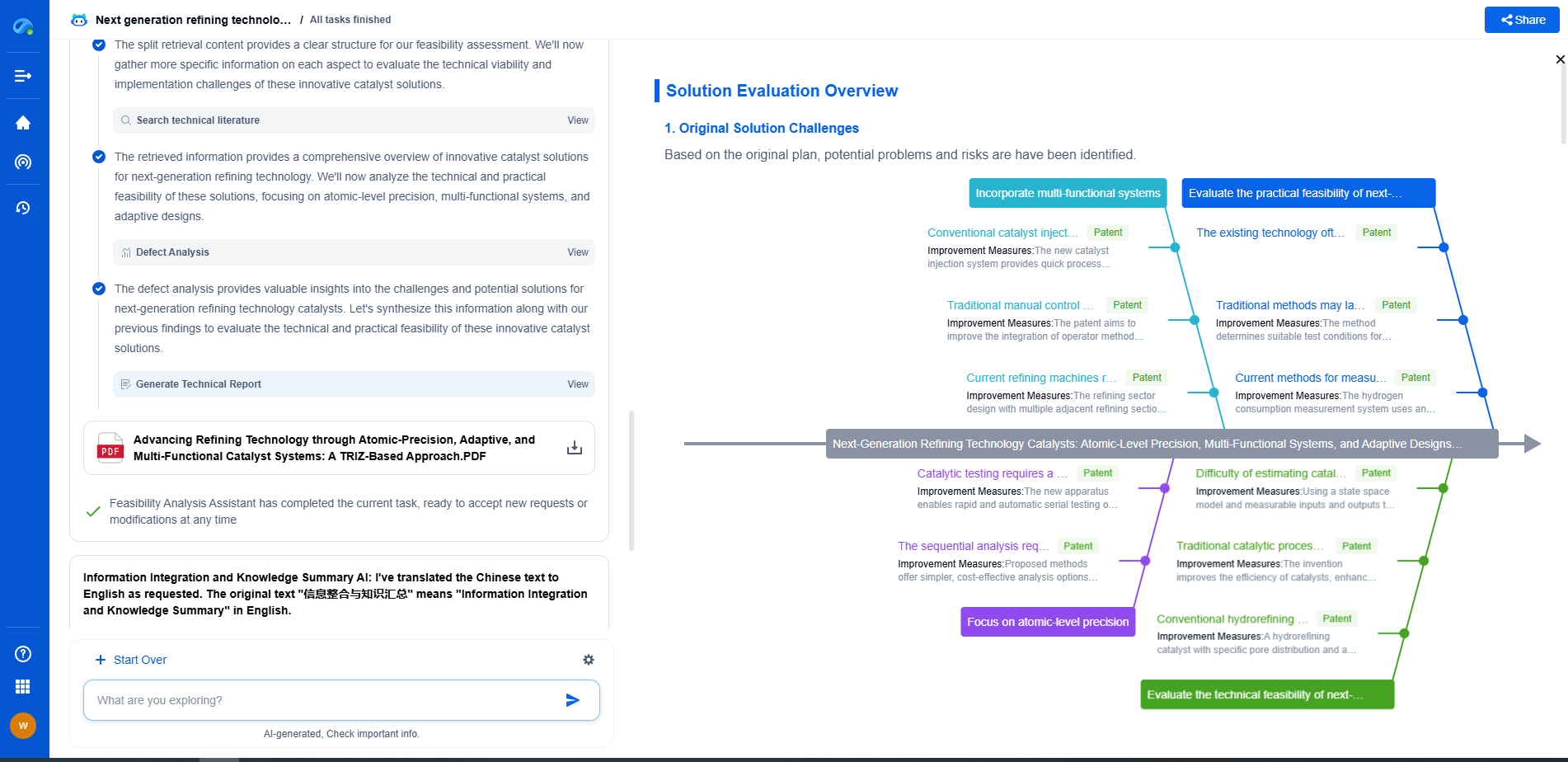
Unlock Next-Gen Innovation in Communication Technology with Patsnap Eureka
The field of communication technology is evolving at breakneck speed—from 5G and satellite systems to next-gen wireless protocols and quantum communications. Staying ahead demands more than just information—it requires strategic insights, real-time patent intelligence, and a deep understanding of technological trajectories.
Patsnap Eureka, our intelligent AI assistant built for R&D professionals in high-tech sectors, empowers you with real-time expert-level analysis, technology roadmap exploration, and strategic mapping of core patents—all within a seamless, user-friendly interface. Whether you're optimizing signal processing designs, navigating 3GPP standards, or exploring IP strategies for IoT and 6G networks, Eureka helps you move faster, think deeper, and innovate smarter.
Try Patsnap Eureka today—and see how it can transform the way you work across the entire communication technology innovation lifecycle.