How Do Neural Networks Run on Mobile Devices?
JUN 26, 2025 |
As the demand for smart and intuitive applications grows, the integration of neural networks into mobile devices has become increasingly commonplace. These sophisticated models enable mobile devices to perform tasks like image recognition, natural language processing, and even real-time translation with remarkable accuracy. But how exactly do these complex systems operate on such compact hardware? Let's explore the mechanisms that allow neural networks to run smoothly on mobile devices.
Optimizing Neural Networks for Mobile
One of the primary challenges in deploying neural networks on mobile devices is the limited computational power and battery life compared to traditional computing environments. To address this, developers employ several optimization techniques:
1. **Model Compression**: Techniques such as pruning and quantization help reduce the size of neural networks without significantly affecting their performance. Pruning involves removing less important neurons or connections, while quantization reduces the precision of the numbers used in the network, both leading to smaller, faster models.
2. **Efficient Architectures**: Researchers design lightweight neural network architectures specifically for mobile environments. Examples include MobileNet and SqueezeNet, which are tailored to perform efficiently with fewer resources, making them ideal for mobile applications.
3. **Edge Computing**: By processing data closer to the source, such as directly on the device, edge computing reduces latency and the need for constant cloud connectivity. This is crucial for applications that require real-time processing, like augmented reality and facial recognition.
Leveraging Hardware Acceleration
To further enhance the performance of neural networks on mobile devices, developers utilize hardware acceleration:
1. **Graphics Processing Units (GPUs)**: Many modern smartphones are equipped with powerful GPUs that can parallelize computations, making them well-suited for the matrix operations inherent in neural networks.
2. **Neural Processing Units (NPUs)**: Some devices feature NPUs, which are specifically designed to accelerate neural network tasks. These specialized chips can execute complex algorithms more efficiently than general-purpose processors.
3. **Digital Signal Processors (DSPs)**: DSPs are often used for processing sensor data and can also be employed to speed up certain neural network operations, contributing to energy-efficient performance.
Balancing Power and Performance
Running neural networks on mobile devices involves a delicate balance between power consumption and computational performance. Strategies like adaptive computation, where the network adjusts its computational load based on the task complexity, help manage this balance. For instance, more complex tasks may trigger the use of additional resources, while simpler tasks conserve power by using fewer.
Incorporating Machine Learning Frameworks
Several frameworks have been developed to facilitate the deployment of neural networks on mobile platforms:
1. **TensorFlow Lite**: A lightweight version of TensorFlow designed for mobile and embedded devices, offering model conversion and optimization tools to make neural networks mobile-friendly.
2. **Core ML**: Apple's machine learning framework, which allows developers to integrate models into iOS applications efficiently, providing seamless performance on Apple devices.
3. **PyTorch Mobile**: Enables the execution of PyTorch models on mobile devices, offering tools for optimizing models to run efficiently on both Android and iOS.
Future Directions
The future of neural networks on mobile devices looks promising, with ongoing advancements in both software and hardware. Innovations such as federated learning, which allows models to be trained across decentralized devices while preserving privacy, and the continuous improvement of hardware components, will further enhance the capabilities of mobile neural networks.
In conclusion, the successful operation of neural networks on mobile devices hinges on a combination of model optimization, hardware utilization, and efficient software frameworks. As technology progresses, we can expect even more sophisticated applications powered by these intelligent models, making mobile devices smarter and more responsive than ever before.
Unleash the Full Potential of AI Innovation with Patsnap Eureka
The frontier of machine learning evolves faster than ever—from foundation models and neuromorphic computing to edge AI and self-supervised learning. Whether you're exploring novel architectures, optimizing inference at scale, or tracking patent landscapes in generative AI, staying ahead demands more than human bandwidth.
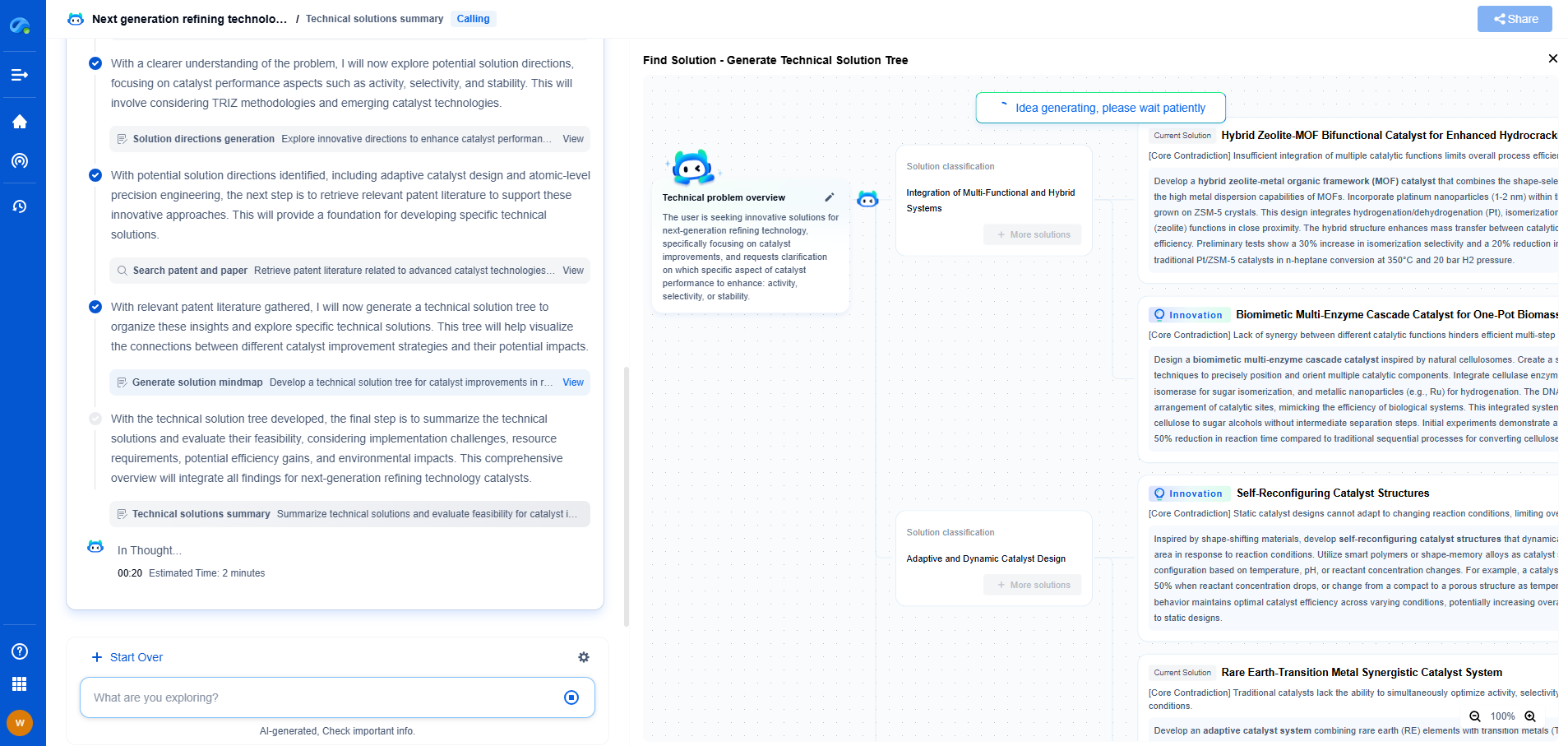
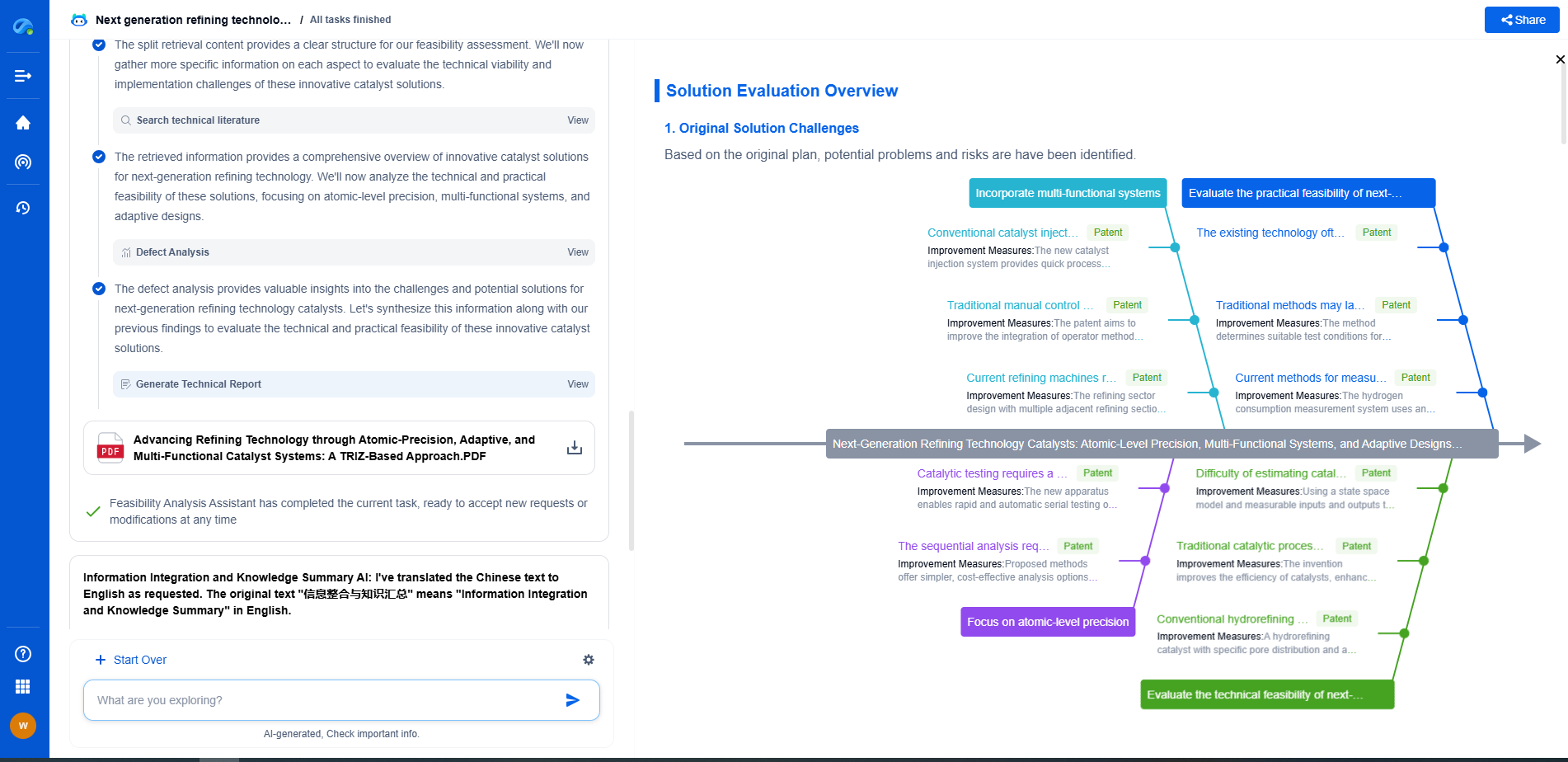
Patsnap Eureka, our intelligent AI assistant built for R&D professionals in high-tech sectors, empowers you with real-time expert-level analysis, technology roadmap exploration, and strategic mapping of core patents—all within a seamless, user-friendly interface.
👉 Try Patsnap Eureka today to accelerate your journey from ML ideas to IP assets—request a personalized demo or activate your trial now.