How does crude blending affect refinery efficiency?
JUN 19, 2025 |
Crude blending is a critical process in the petroleum refining industry, where different types of crude oil are mixed to produce a feedstock with desired properties for refining. This process can significantly influence the efficiency of a refinery, impacting everything from operational costs to product quality. Understanding how crude blending affects refinery efficiency is essential for optimizing operations and maximizing profitability.
Benefits of Crude Blending
One of the primary benefits of crude blending is cost optimization. Refineries often have access to a variety of crude oil types, each with different prices and qualities. By blending these crudes, refineries can create a feedstock that meets specific quality requirements at a lower cost than using a single crude. This strategic blending allows for more flexibility in crude purchasing and can lead to significant cost savings.
Crude blending also enhances operational flexibility. Refineries are designed to process certain types of crude, but market conditions can change, making it necessary to adapt quickly. Blending enables refineries to adjust their feedstock mix in response to fluctuations in crude availability and pricing, thereby maintaining optimal operation levels.
Impact on Refinery Processes
The impact of crude blending on refinery efficiency is most apparent in the distillation process. Blending influences the boiling range of the crude, which in turn affects the efficiency of separation in the distillation column. A well-designed blend can improve the yield of desirable products such as gasoline, diesel, and jet fuel, while also reducing the production of less valuable by-products.
Moreover, blending affects downstream processes such as hydrotreating and catalytic cracking. A balanced blend can minimize the presence of contaminants like sulfur and nitrogen, reducing the load on these processes and improving their efficiency. In contrast, a poorly designed blend can increase operational challenges, leading to higher energy consumption and reduced throughput.
Challenges and Considerations
While crude blending offers numerous advantages, it also presents challenges. One significant challenge is the variability in crude oil characteristics. Crudes vary widely in terms of density, sulfur content, acidity, and other properties. Creating a consistent blend that meets all operational requirements can be complex and requires sophisticated analytical tools and expertise.
Another consideration is the potential for incompatibility issues. Some crude oils, when mixed, can lead to the formation of asphaltenes or other precipitates, which can foul equipment and disrupt processes. To mitigate these risks, refineries need to conduct thorough compatibility testing and have robust monitoring systems in place.
Environmental and Economic Implications
Crude blending can also have environmental and economic implications. On the environmental side, optimizing blends can help reduce emissions by lowering the sulfur content in fuel products. Economically, effective blending can improve a refinery's competitiveness by enabling it to adapt to market changes, thus enhancing profitability.
Conclusion
In conclusion, crude blending is a vital tool for enhancing refinery efficiency. By optimizing feedstock composition, refineries can reduce costs, improve product yields, and maintain operational flexibility. However, successful crude blending requires careful planning, advanced analytical techniques, and a deep understanding of crude characteristics. By addressing these challenges, refineries can leverage crude blending to achieve better efficiency and remain competitive in a dynamic market.
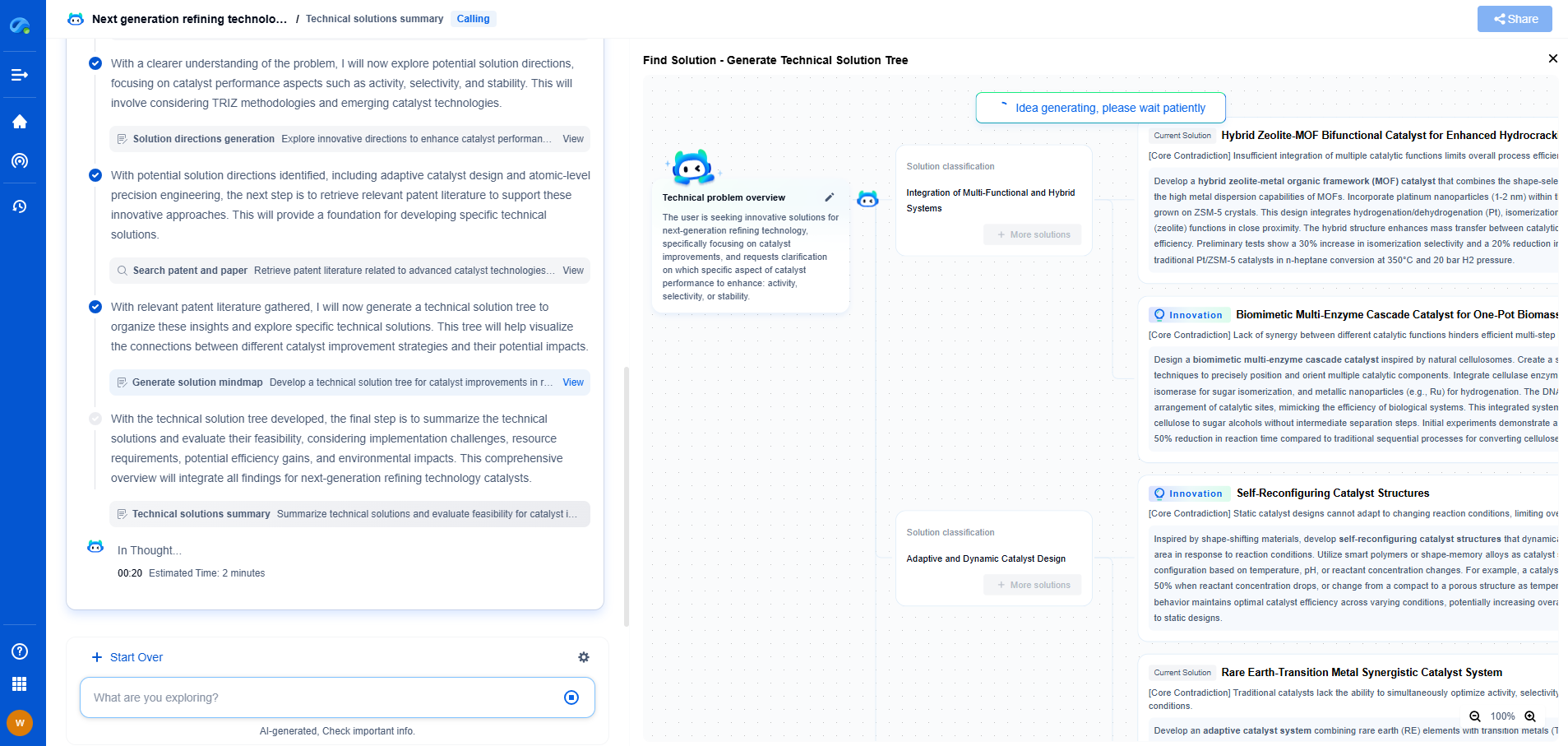
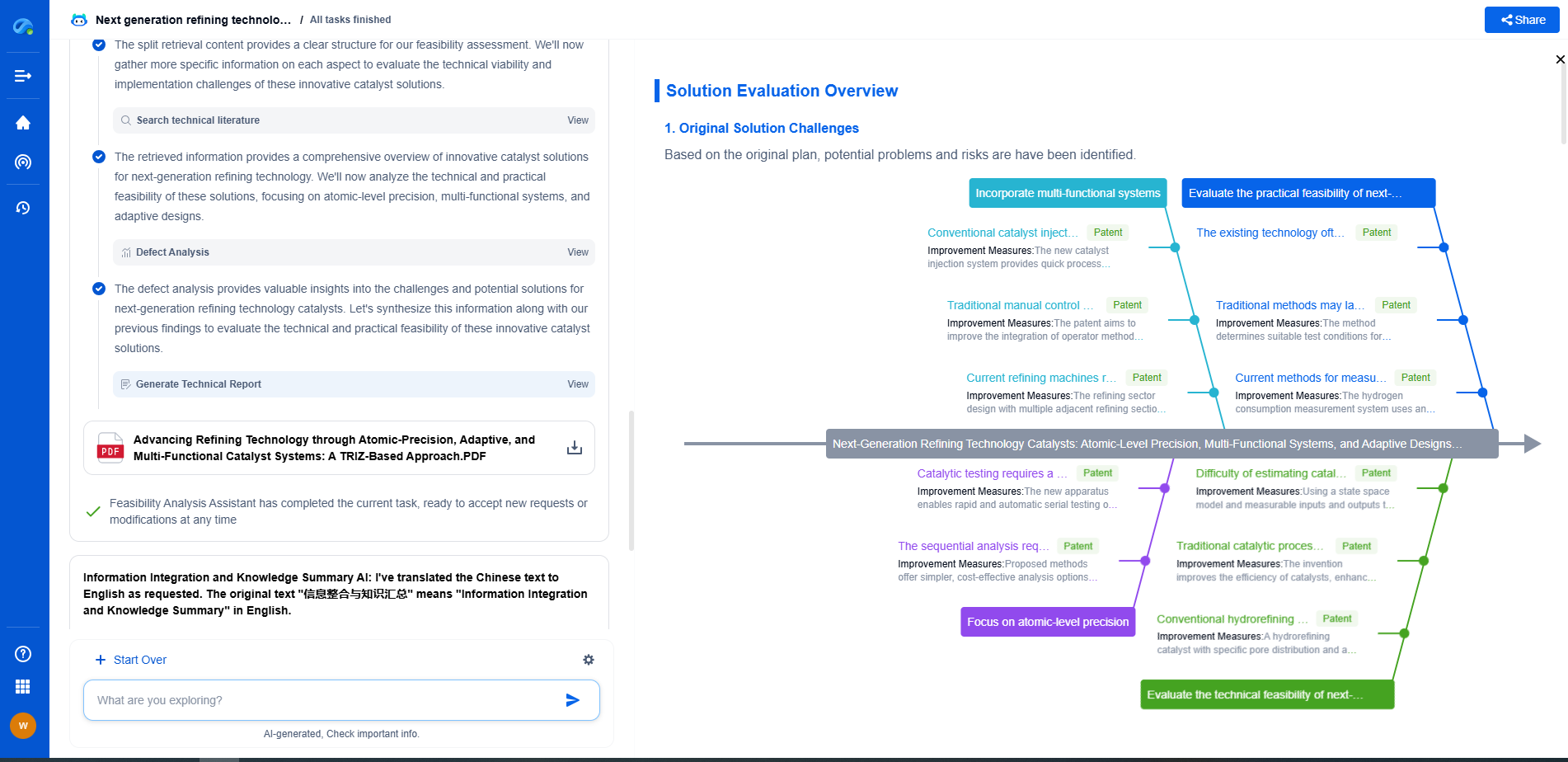
Discover Patsnap Eureka: AI Agents Built for Scientific Innovation
Whether you're designing the next generation of refining technologies or analyzing catalysts and process flows, keeping up with rapidly evolving research and IP data in petroleum processing is no easy task.
Patsnap Eureka, our intelligent AI assistant built for R&D professionals in high-tech sectors, empowers you with real-time expert-level analysis, technology roadmap exploration, and strategic mapping of core patents—all within a seamless, user-friendly interface.
Ready to accelerate your innovation process and make smarter, faster decisions? Discover Patsnap Eureka today and unlock the full power of confident, AI-driven innovation.