How Few-Shot Learning Enables AI in Low-Data Environments
JUN 26, 2025 |
Few-shot learning is an innovative approach in the development of artificial intelligence that addresses one of the most pressing challenges in machine learning: the need for large amounts of data. Traditionally, training AI models requires extensive datasets to achieve accuracy and robustness. However, in many real-world applications, such data is either scarce or expensive to obtain. Few-shot learning offers a solution by enabling AI systems to learn new tasks from just a handful of examples, mimicking the human ability to learn quickly and efficiently.
**Understanding Few-Shot Learning**
Few-shot learning operates on the premise that with a clever design of algorithms and architectures, machines can generalize from a limited number of examples. This is made possible through techniques such as meta-learning, transfer learning, and the use of sophisticated neural network architectures like siamese networks and prototypical networks. In essence, few-shot learning equips models with the ability to leverage prior knowledge from previously encountered tasks to understand and perform new tasks with minimal data.
**Meta-Learning: Learning to Learn**
Meta-learning, often referred to as "learning to learn," is a cornerstone of few-shot learning. It involves training models not just on a specific dataset but on a diverse range of tasks so they can adapt quickly to new tasks. This is achieved by optimizing the model’s ability to learn, rather than just optimizing for performance on a single task. Meta-learning algorithms aim to find a good initialization of model parameters that can be fine-tuned with only a few examples from a new task, thereby reducing the data dependency.
**Transfer Learning: Leveraging Pre-Trained Models**
Another powerful tool in the realm of few-shot learning is transfer learning. This approach involves pre-training a model on a large dataset and then fine-tuning it on a smaller, task-specific dataset. Transfer learning has already proven highly effective in fields like natural language processing and computer vision, where models like BERT and ResNet demonstrate significant improvements in performance with limited task-specific data. By building on pre-existing knowledge, these models achieve high accuracy even with few-shot scenarios.
**Applications of Few-Shot Learning**
The implications of few-shot learning are vast, with potential applications across various industries. In healthcare, for instance, few-shot learning can be used to develop diagnostic tools that require fewer samples to identify rare diseases. This could revolutionize areas like radiology and pathology where data collection is challenging and time-consuming. Similarly, in the field of robotics, few-shot learning can enable robots to learn new tasks in dynamic environments without extensive retraining.
**Challenges and Future Directions**
Despite its promise, few-shot learning is not without challenges. Ensuring the reliability and accuracy of models trained on limited data remains a significant hurdle. Furthermore, the computational resources required for meta-learning and transfer learning can be substantial, necessitating advancements in hardware and optimization techniques. Researchers are also exploring ways to improve the interpretability of few-shot models, ensuring that their decision-making processes are transparent and understandable.
**Conclusion**
Few-shot learning represents a significant step forward in the quest to make AI more adaptable and accessible. By reducing the dependency on large datasets, it opens the door to deploying AI in a wide range of low-data environments, making AI solutions viable in previously inaccessible domains. As research in this field progresses, we can expect few-shot learning to play a crucial role in the future of artificial intelligence, driving innovation and enabling smarter, more efficient AI systems.
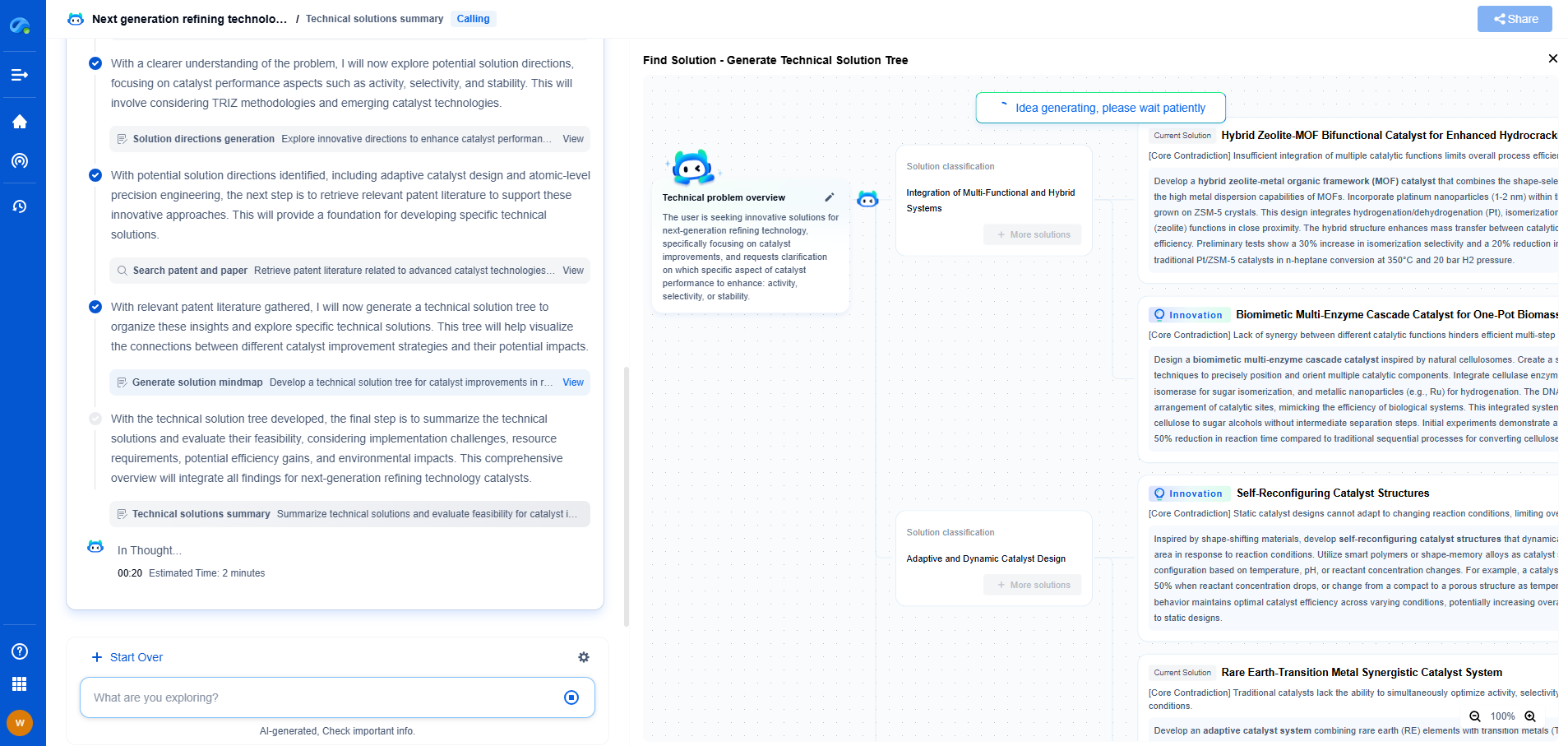
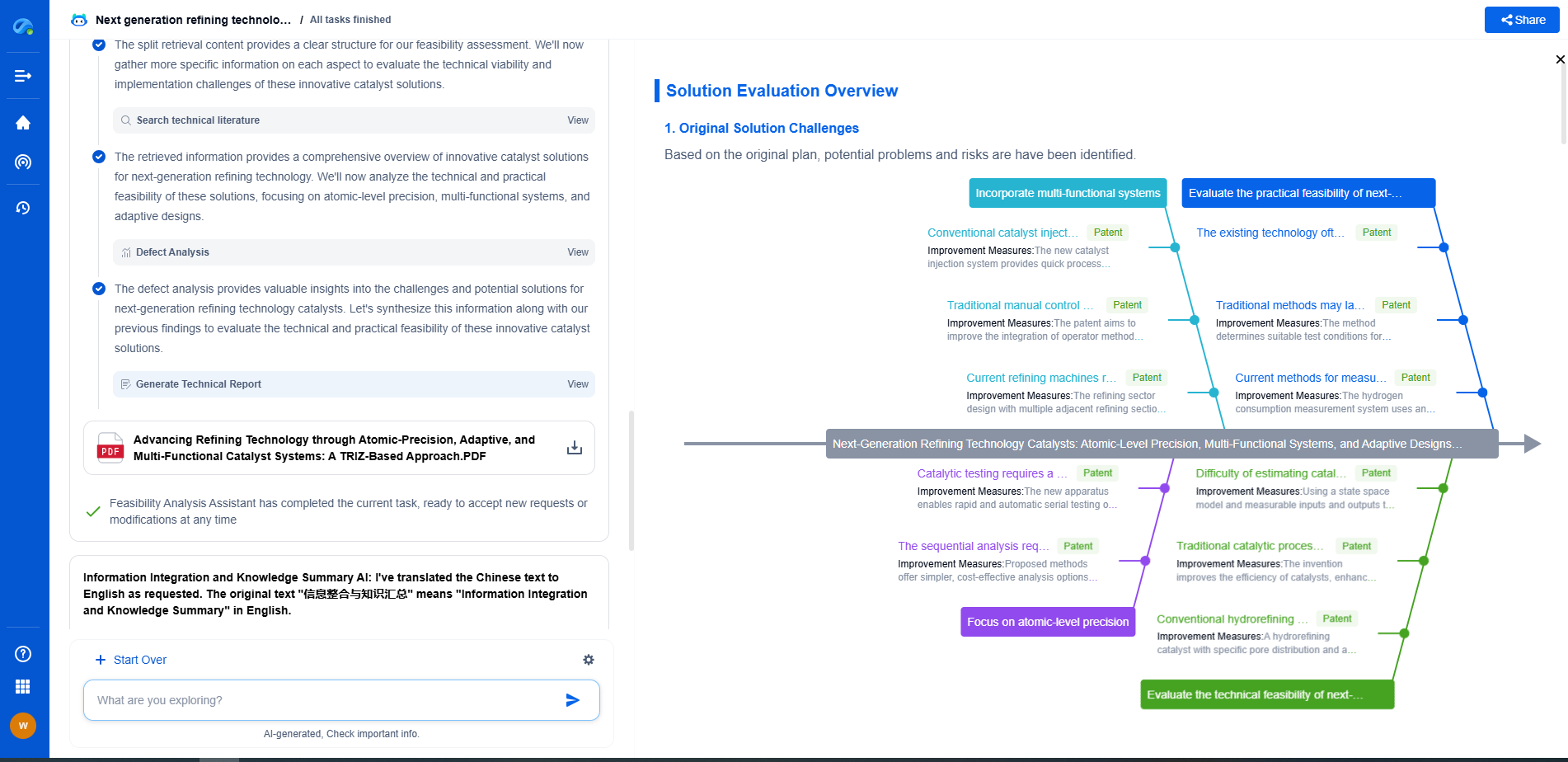
Unleash the Full Potential of AI Innovation with Patsnap Eureka
The frontier of machine learning evolves faster than ever—from foundation models and neuromorphic computing to edge AI and self-supervised learning. Whether you're exploring novel architectures, optimizing inference at scale, or tracking patent landscapes in generative AI, staying ahead demands more than human bandwidth.
Patsnap Eureka, our intelligent AI assistant built for R&D professionals in high-tech sectors, empowers you with real-time expert-level analysis, technology roadmap exploration, and strategic mapping of core patents—all within a seamless, user-friendly interface.
👉 Try Patsnap Eureka today to accelerate your journey from ML ideas to IP assets—request a personalized demo or activate your trial now.