How to Interpret Traffic Prediction Errors in Load Balancing Models
JUL 7, 2025 |
When dealing with load balancing models, interpreting traffic prediction errors is crucial for optimizing the performance and reliability of network systems. Traffic prediction models aim to forecast network loads, ensuring that resources are allocated efficiently to maintain service quality. However, these predictions are not always accurate, and understanding the nature and causes of errors can help in refining models and improving system performance.
Types of Prediction Errors
Prediction errors in load balancing models can generally be categorized into two types: systematic errors and random errors. Systematic errors are consistent biases in predictions that arise due to model assumptions or flaws in the data. For instance, if a model assumes a linear relationship in traffic patterns when the actual relationship is non-linear, this can lead to systematic errors. Random errors, on the other hand, are unpredictable and arise from noise and variability in the data. These errors are often unavoidable but can be minimized with sophisticated modeling techniques.
Analyzing Error Magnitudes
Once errors are identified, their magnitudes must be analyzed to understand their impact on load balancing decisions. High error magnitudes can lead to over-provisioning or under-provisioning of resources, affecting the network's efficiency and service quality. Techniques such as root mean square error (RMSE) or mean absolute error (MAE) are commonly used to assess error magnitudes. These metrics help quantify deviations between predicted and actual values, enabling network administrators to gauge the reliability of their prediction models.
Evaluating Model Assumptions
To effectively interpret prediction errors, it's essential to evaluate the underlying assumptions of the load balancing model. Different models make various assumptions about traffic patterns, user behavior, and network conditions. Reviewing these assumptions can reveal potential sources of systematic errors. For example, a model assuming stable traffic patterns might fail during peak hours when traffic is highly volatile. Regularly revisiting and updating model assumptions can reduce errors and improve prediction accuracy.
Improving Prediction Models
Interpreting traffic prediction errors is not just about identifying and categorizing them, but also about improving models to minimize such errors. One approach is to incorporate adaptive algorithms that can adjust to changing patterns and conditions in real-time. Machine learning techniques, such as neural networks and ensemble methods, have shown promise in enhancing prediction accuracy by learning from historical data and identifying complex traffic patterns.
Another strategy is to leverage hybrid models that combine different forecasting methods to balance their strengths and weaknesses. By doing so, errors from one method can be compensated by another, leading to more robust predictions. Additionally, integrating external data sources, such as weather information and social events, can provide context that might impact network traffic, allowing for more nuanced predictions.
Implications of Prediction Errors
Understanding and interpreting prediction errors is vital for network management and optimization. Errors can have significant implications, including increased latency, reduced throughput, and compromised service quality. By accurately interpreting these errors, network administrators can make informed decisions to address bottlenecks, allocate resources more effectively, and ultimately enhance user satisfaction.
Moreover, the insights gained from analyzing prediction errors can inform future model development, leading to more resilient and adaptive load balancing solutions. As networks grow increasingly complex, the ability to interpret and act on prediction errors will be essential for maintaining optimal performance and reliability.
Conclusion
Traffic prediction errors are an inherent part of load balancing models, yet they provide valuable insights into model performance and areas for improvement. By understanding the types, magnitudes, and causes of these errors, network administrators can refine their prediction models, adapt to dynamic conditions, and ensure efficient resource allocation. As technology advances, embracing sophisticated modeling techniques and adaptive strategies will be key to minimizing prediction errors and optimizing network systems.
Empower Your Wireless Innovation with Patsnap Eureka
From 5G NR slicing to AI-driven RRM, today’s wireless communication networks are defined by unprecedented complexity and innovation velocity. Whether you’re optimizing handover reliability in ultra-dense networks, exploring mmWave propagation challenges, or analyzing patents for O-RAN interfaces, speed and precision in your R&D and IP workflows are more critical than ever.
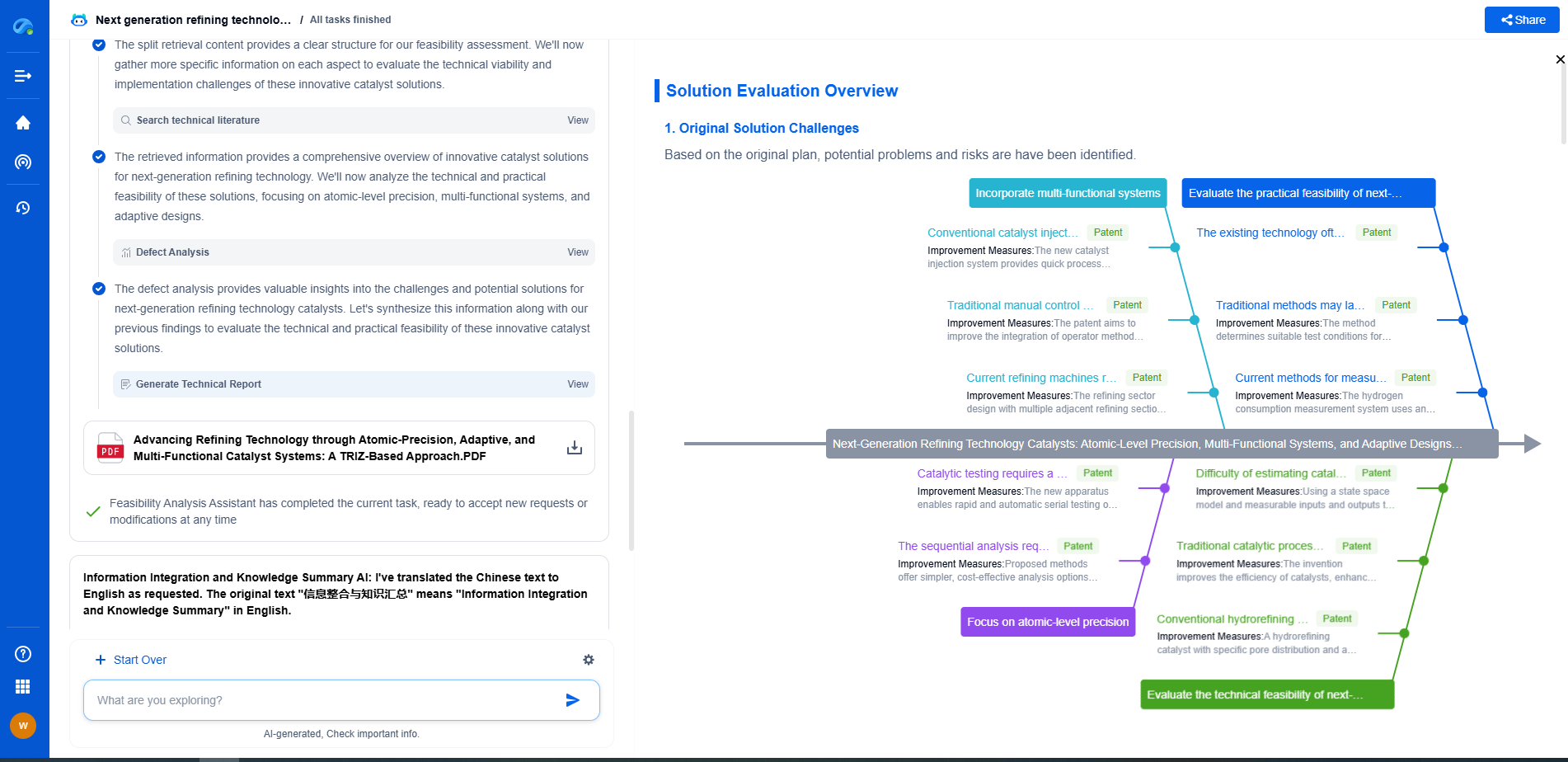
Patsnap Eureka, our intelligent AI assistant built for R&D professionals in high-tech sectors, empowers you with real-time expert-level analysis, technology roadmap exploration, and strategic mapping of core patents—all within a seamless, user-friendly interface.
Whether you work in network architecture, protocol design, antenna systems, or spectrum engineering, Patsnap Eureka brings you the intelligence to make faster decisions, uncover novel ideas, and protect what’s next.
🚀 Try Patsnap Eureka today and see how it accelerates wireless communication R&D—one intelligent insight at a time.