LPG Sweetening: Amine Treating vs. Caustic Wash
JUN 19, 2025 |
LPG sweetening is a crucial process in the petroleum industry, aimed at removing undesirable and harmful sulfur compounds present in liquefied petroleum gas (LPG). These sulfur compounds, such as hydrogen sulfide and mercaptans, can lead to corrosion, emit unpleasant odors, and are harmful to both human health and the environment. Two common methods used for LPG sweetening are amine treating and caustic washing. Each method has its own advantages and limitations, and selecting the appropriate process depends on several factors including the specific requirements of the LPG being treated.
Understanding Amine Treating
Amine treating, also known as gas sweetening or acid gas removal, is a process that uses aqueous solutions of amines to remove hydrogen sulfide (H2S) and carbon dioxide (CO2) from LPG and other hydrocarbon streams. The most commonly used amines include monoethanolamine (MEA), diethanolamine (DEA), and methyldiethanolamine (MDEA).
The amine treating process involves contacting the LPG with an amine solution in an absorber unit. The amines chemically react with the acidic gases, forming soluble salts that remain in the liquid phase. The treated LPG, now free from sulfur compounds, exits the top of the absorber, while the rich amine solution, containing absorbed gases, is sent to a regenerator. In the regenerator, the solution is heated, causing the absorbed gases to be released and the lean amine solution to be restored for reuse.
Advantages of Amine Treating
Amine treating is highly effective in removing high concentrations of hydrogen sulfide and carbon dioxide. It is a widely used and proven technology in the industry, offering flexibility in handling a variety of gas compositions. Additionally, the process is well-suited for continuous operation and can be integrated into existing processing facilities. The ability to regenerate and recycle the amine solution also contributes to the cost-effectiveness of the process.
Limitations of Amine Treating
Despite its effectiveness, amine treating has some limitations. The process requires significant capital investment in equipment and infrastructure. Moreover, the operation involves energy-intensive steps such as the regeneration of the amine solution, which can contribute to higher operational costs. Corrosion issues may also arise due to the presence of acidic gases, necessitating careful material selection and maintenance.
Exploring Caustic Wash
Caustic wash, also known as caustic scrubbing, is another method used for LPG sweetening. This process involves the use of an aqueous solution of caustic soda (sodium hydroxide, NaOH) to remove sulfur compounds, especially mercaptans, from the LPG stream.
In the caustic wash process, the LPG is contacted with the caustic solution in a scrubber. The caustic soda reacts with mercaptans to form water-soluble sodium mercaptides, which are then separated from the LPG. The treated LPG exits the scrubber, while the spent caustic solution is neutralized and disposed of or treated for further use.
Advantages of Caustic Wash
Caustic washing is particularly effective for the removal of mercaptans, which are often challenging to remove using other methods. The process is relatively simple, requiring less complex equipment compared to amine treating. Caustic wash can also be advantageous in situations where only minor sweetening is required or where the LPG stream has low sulfur content.
Limitations of Caustic Wash
The caustic wash process can be less efficient in removing hydrogen sulfide compared to amine treating. Additionally, the handling and disposal of spent caustic solution pose environmental and operational challenges. The process may generate waste streams that require careful management to prevent environmental contamination. Furthermore, contact with caustic soda can lead to corrosion issues if materials are not properly selected.
Choosing Between Amine Treating and Caustic Wash
The decision between amine treating and caustic wash for LPG sweetening depends on various factors including the specific sulfur compounds present, the composition of the LPG stream, economic considerations, and environmental regulations. Amine treating is often preferred for streams with high concentrations of hydrogen sulfide, while caustic wash may be suitable for lower sulfur content or when mercaptans are the primary concern.
In conclusion, both amine treating and caustic wash play important roles in LPG sweetening, ensuring that the final product meets safety, environmental, and quality standards. A thorough understanding of both processes helps industry professionals select the most appropriate sweetening method for their specific needs.
Discover Patsnap Eureka: AI Agents Built for Scientific Innovation
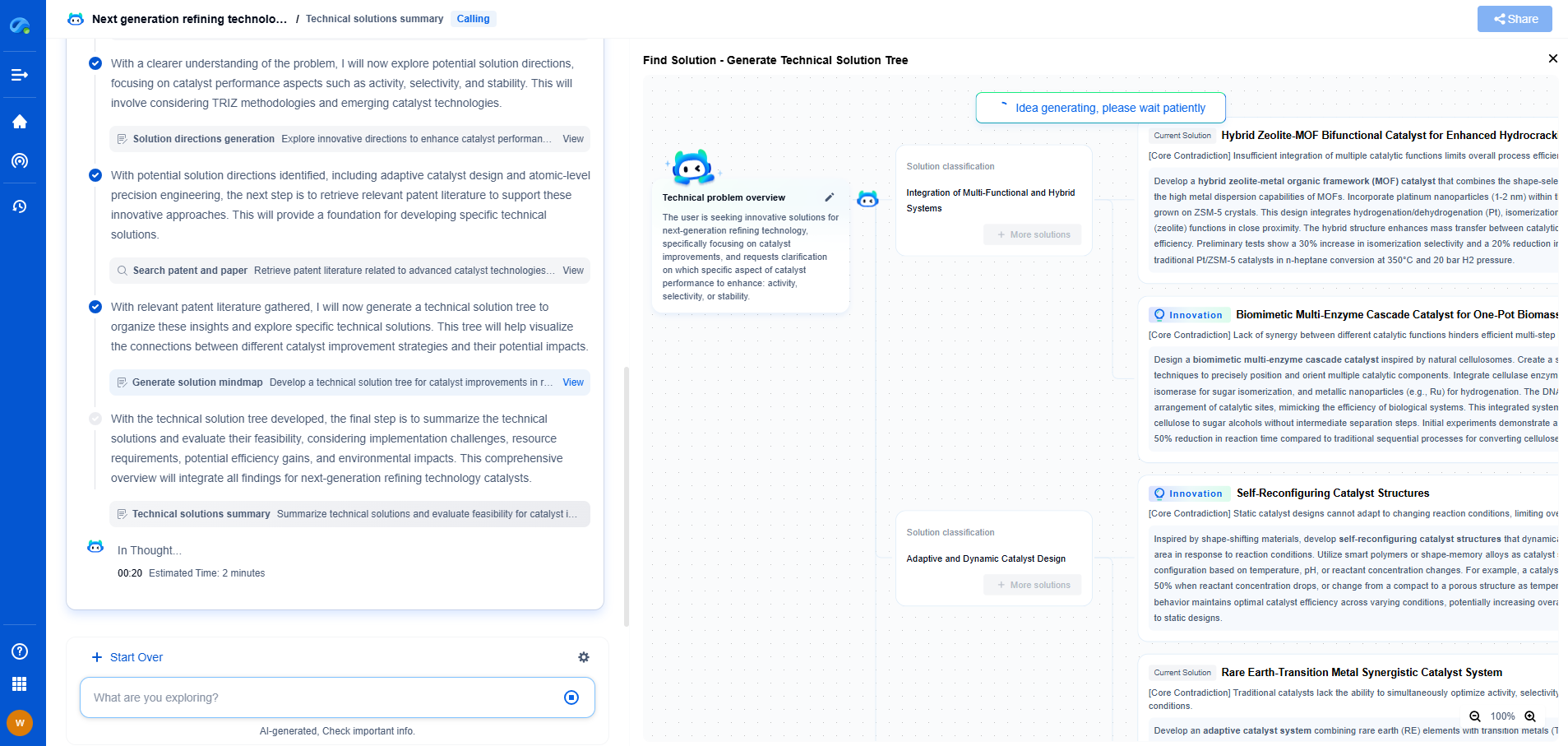
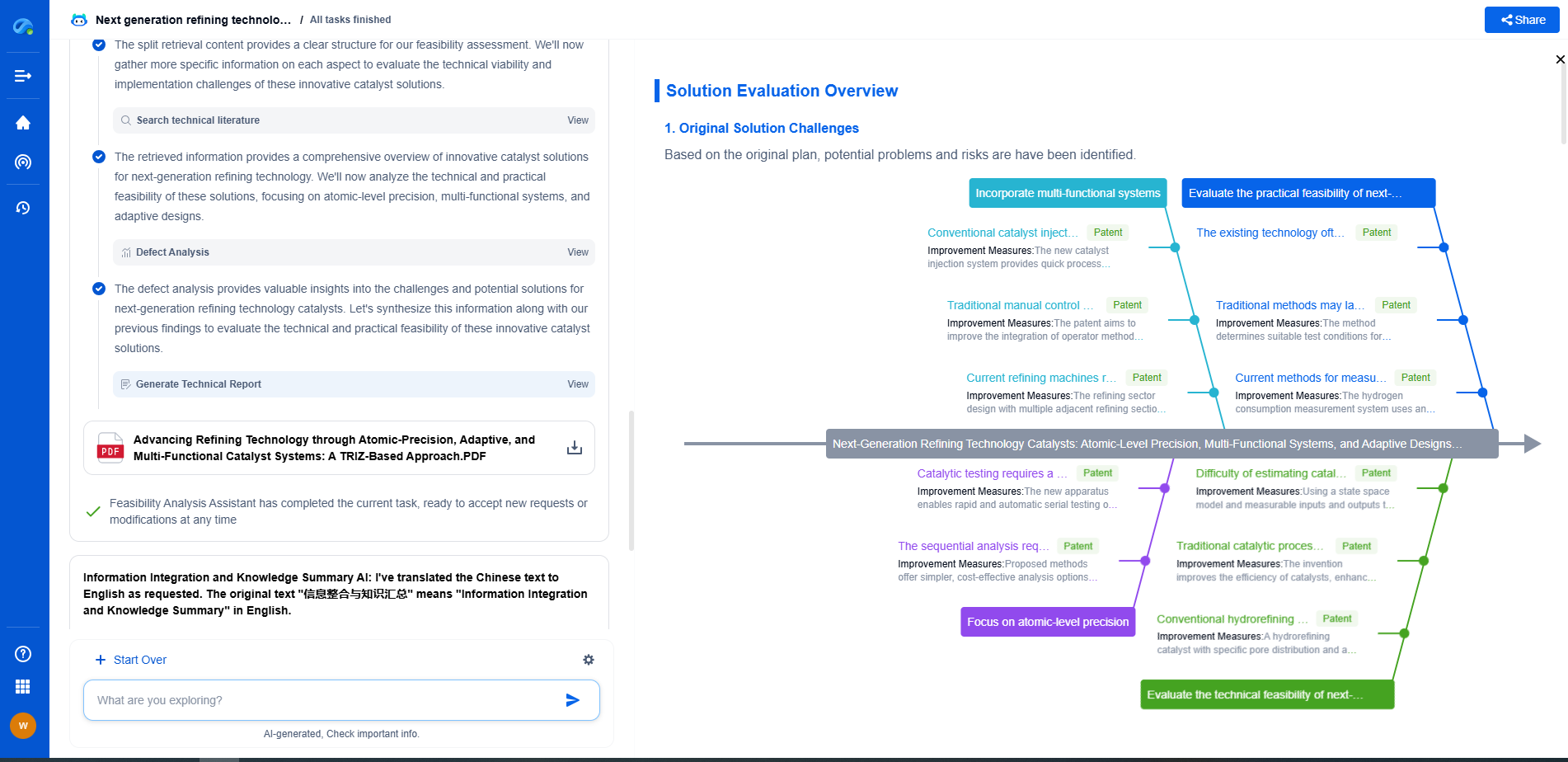
Whether you're designing the next generation of refining technologies or analyzing catalysts and process flows, keeping up with rapidly evolving research and IP data in petroleum processing is no easy task.
Patsnap Eureka, our intelligent AI assistant built for R&D professionals in high-tech sectors, empowers you with real-time expert-level analysis, technology roadmap exploration, and strategic mapping of core patents—all within a seamless, user-friendly interface.
Ready to accelerate your innovation process and make smarter, faster decisions? Discover Patsnap Eureka today and unlock the full power of confident, AI-driven innovation.