O-RAN Deployment Challenges: Real-World Lessons
JUL 7, 2025 |
Open Radio Access Network (O-RAN) technology is gaining traction as a promising alternative to traditional, proprietary RAN solutions. By promoting interoperability and flexibility, O-RAN has the potential to democratize the telecom industry and accelerate innovation. However, as with any groundbreaking technology, deploying O-RAN is not without its challenges. Below, we explore some of the real-world lessons that have emerged from O-RAN deployment endeavors.
Interoperability Issues
One of the primary goals of O-RAN is to enable interoperability between different vendors' equipment. This promise of a multi-vendor ecosystem is enticing, but in practice, achieving true interoperability can be complex. Diverse interfaces and protocols can result in compatibility issues, requiring meticulous integration efforts. Changes or updates from one vendor might cause disruptions across the network, necessitating continuous testing and validation to maintain seamless operation.
Scalability Concerns
Scalability is another significant challenge when deploying O-RAN networks. With the plethora of new devices and the exponential growth of data consumption, networks need to scale efficiently. O-RAN's modular architecture theoretically supports this growth, but the real-world application often reveals bottlenecks. Ensuring that all components can scale harmoniously without compromising performance requires careful planning and robust management solutions.
Security Challenges
Security is paramount in any network deployment, and O-RAN introduces specific concerns due to its open nature. With multiple vendors involved, the attack surface is inherently larger, increasing the risk of vulnerabilities. Ensuring consistent security standards and practices across all components, while also managing access control and data protection, is vital. Operators need to implement a comprehensive security framework to safeguard against potential threats.
Performance Optimization
Performance optimization in O-RAN networks is a delicate balancing act. The flexibility of O-RAN enables operators to tailor networks to specific needs, but it requires precise tuning to ensure optimal performance. Operators must continuously monitor network conditions, adapt configurations, and manage resources efficiently. The dynamic nature of O-RAN can lead to performance fluctuations, necessitating advanced analytics and automation tools to maintain high service quality.
Cost Implications
While O-RAN promises cost savings by leveraging commercial off-the-shelf hardware and fostering competition, initial deployment costs can be significant. The integration of multi-vendor components demands investment in skill development, testing facilities, and support infrastructure. Operators must weigh these upfront costs against potential long-term savings and strategically manage their budgets to achieve a favorable return on investment.
Operational Complexity
The shift to O-RAN involves a steep learning curve for many operators. Traditional network management practices may not be directly applicable, requiring operators to develop new skills and expertise. The complexity of managing a diverse array of components and vendors can strain operational teams. Investing in training and developing a clear operational strategy is essential to effectively transition to and manage O-RAN networks.
Regulatory and Compliance Issues
Navigating regulatory and compliance landscapes is another hurdle in O-RAN deployment. Different countries have varying regulations that can impact how O-RAN is implemented. Ensuring compliance while maintaining the flexibility and innovation that O-RAN allows can be challenging. Operators need to stay informed about regulatory changes and work closely with authorities to align their deployments with local requirements.
Conclusion
O-RAN represents a transformative shift in the telecom industry, offering unprecedented flexibility, innovation, and cost-effectiveness. However, the journey to fully realize its potential is fraught with challenges. By understanding and addressing these real-world deployment issues—ranging from interoperability and security to operational complexity—industry players can navigate the path to successful O-RAN adoption. As the technology matures, continued collaboration and innovation will be key to overcoming these challenges and unlocking the full benefits of O-RAN.
Empower Your Wireless Innovation with Patsnap Eureka
From 5G NR slicing to AI-driven RRM, today’s wireless communication networks are defined by unprecedented complexity and innovation velocity. Whether you’re optimizing handover reliability in ultra-dense networks, exploring mmWave propagation challenges, or analyzing patents for O-RAN interfaces, speed and precision in your R&D and IP workflows are more critical than ever.
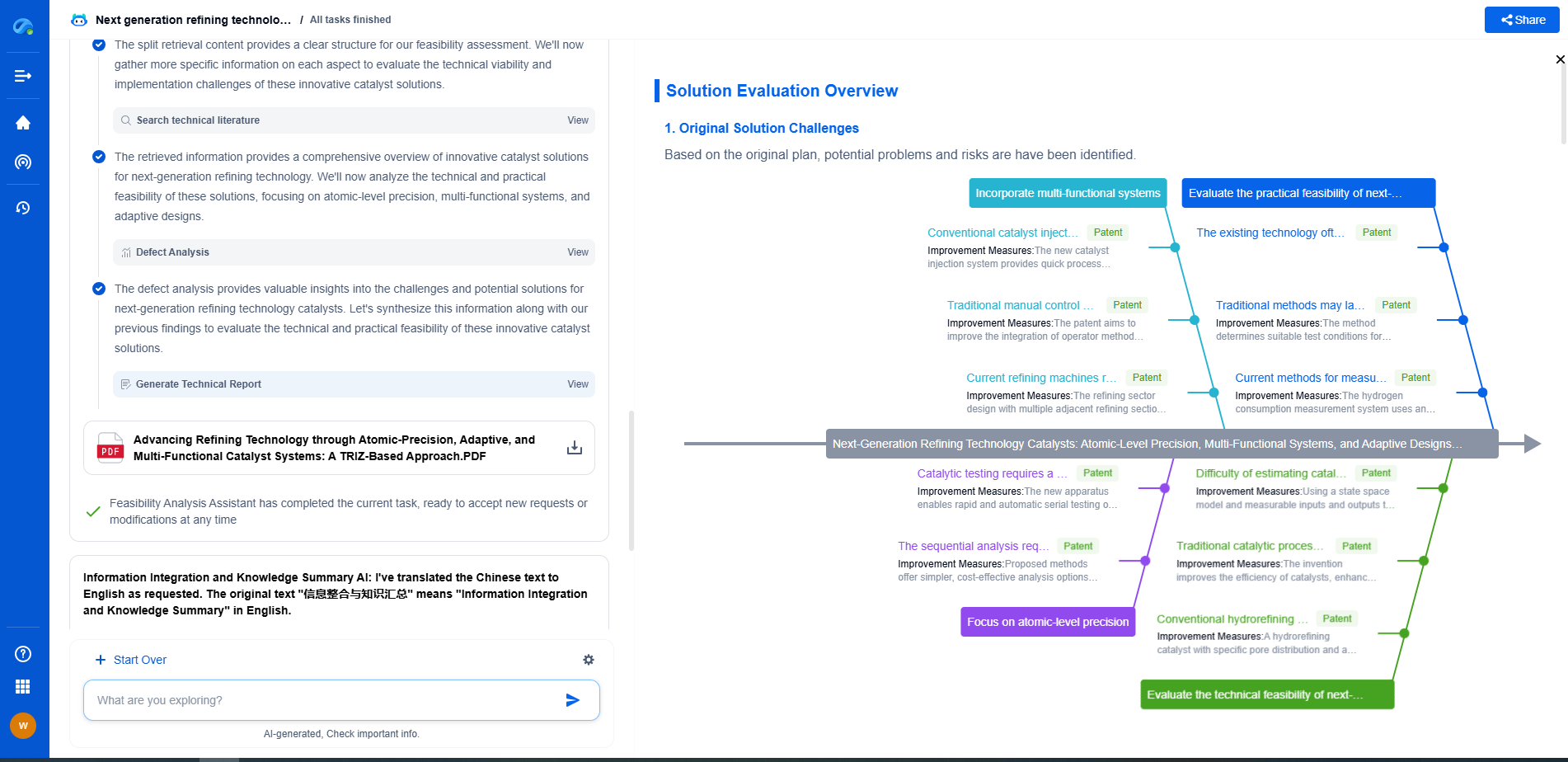
Patsnap Eureka, our intelligent AI assistant built for R&D professionals in high-tech sectors, empowers you with real-time expert-level analysis, technology roadmap exploration, and strategic mapping of core patents—all within a seamless, user-friendly interface.
Whether you work in network architecture, protocol design, antenna systems, or spectrum engineering, Patsnap Eureka brings you the intelligence to make faster decisions, uncover novel ideas, and protect what’s next.
🚀 Try Patsnap Eureka today and see how it accelerates wireless communication R&D—one intelligent insight at a time.