Probing Techniques for High-Frequency Switching Noise
JUN 27, 2025 |
High-frequency switching noise is a common challenge faced in electronic systems, particularly in the realms of power electronics and high-speed digital circuits. This noise can lead to performance degradation, data corruption, and even complete system failure. Understanding the nature of this noise is crucial for effective mitigation. High-frequency switching noise is typically generated by rapid transitions in voltage and current, often found in components such as switch-mode power supplies, inverters, and microcontrollers. It manifests as electromagnetic interference (EMI), affecting both the system in which it originates and nearby systems.
The Importance of Probing Techniques
To effectively tackle high-frequency switching noise, accurate measurement and analysis are essential. Probing techniques play a critical role in identifying the sources and characteristics of noise. These techniques allow engineers to visualize the noise spectrum, assess its impact, and devise appropriate countermeasures. Proper probing not only helps in pinpointing the root cause but also aids in validating the effectiveness of implemented solutions.
Choosing the Right Probes
Selecting the correct probes is a fundamental step in tackling high-frequency switching noise. Passive probes are often used for general purposes, but active probes are preferable for high-frequency applications due to their wider bandwidth and lower loading effect. Differential probes are essential when measuring signals across components where ground reference is not present. Moreover, current probes are used to measure noise in current paths, while network analyzers can provide insights into the impedance characteristics that affect noise propagation.
Techniques for Effective Probing
When probing for high-frequency switching noise, several techniques can enhance accuracy and reliability. Firstly, minimizing loop area is crucial; this involves shortening the leads and keeping the probe tip close to the measurement point to reduce inductive coupling. Additionally, shielding and grounding should be carefully managed to prevent external noise interference. It is also advisable to perform differential measurements to cancel out common-mode noise, thereby isolating the actual differential noise component. Calibrating probes regularly ensures measurement accuracy, while employing appropriate termination techniques can prevent reflections that distort the signal.
Analyzing the Noise Spectrum
Once the noise is measured, analyzing its spectrum is essential to understand its frequency components and amplitude. Spectrum analyzers are commonly used for this purpose, offering a visual representation of noise characteristics. By identifying dominant frequency components, engineers can determine which parts of the system are most susceptible to noise and tailor mitigation strategies accordingly. Techniques such as Fast Fourier Transform (FFT) can convert time-domain signals into frequency-domain representations, providing deeper insights into the noise behavior.
Mitigation Strategies
After thorough analysis, implementing effective mitigation strategies is the next logical step. Filtering is a common method, where low-pass filters can attenuate high-frequency noise. Shielding and grounding techniques can be optimized to reduce EMI. Layout changes, such as increasing the distance between noise-sensitive components and noise sources or rerouting noisy traces, can substantially reduce the impact of high-frequency switching noise. In some cases, adding decoupling capacitors can help stabilize voltage rails and minimize noise.
Conclusion: Continuous Improvement
Probing techniques for high-frequency switching noise are not just about measuring and analyzing; they are about fostering continuous improvement in electronic systems. By understanding the sources and characteristics of noise, engineers can devise innovative solutions that enhance system robustness and reliability. The ongoing evolution of probing technologies promises even greater precision in noise measurement, paving the way for more efficient and reliable electronic systems. Through diligent application and refinement of these techniques, high-frequency switching noise can be effectively managed, ensuring optimal performance in complex electronic environments.
Accelerate Electronic Circuit Innovation with AI-Powered Insights from Patsnap Eureka
The world of electronic circuits is evolving faster than ever—from high-speed analog signal processing to digital modulation systems, PLLs, oscillators, and cutting-edge power management ICs. For R&D engineers, IP professionals, and strategic decision-makers in this space, staying ahead of the curve means navigating a massive and rapidly growing landscape of patents, technical literature, and competitor moves.
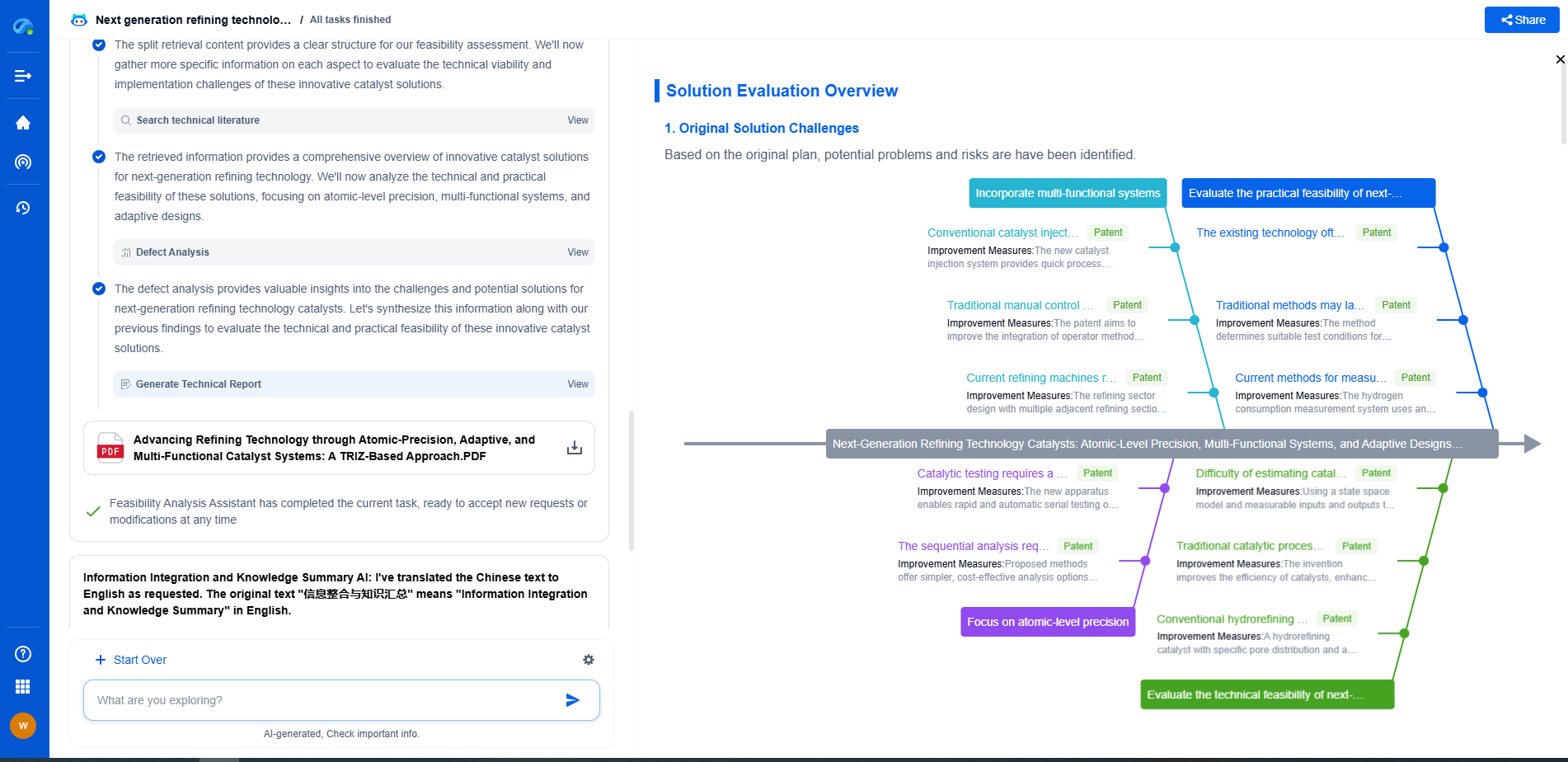
Patsnap Eureka, our intelligent AI assistant built for R&D professionals in high-tech sectors, empowers you with real-time expert-level analysis, technology roadmap exploration, and strategic mapping of core patents—all within a seamless, user-friendly interface.
🚀 Experience the next level of innovation intelligence. Try Patsnap Eureka today and discover how AI can power your breakthroughs in electronic circuit design and strategy. Book a free trial or schedule a personalized demo now.