Solving pump cavitation in refinery circulation loops
JUN 19, 2025 |
Pump cavitation is a common and potentially damaging issue in refinery circulation loops. It occurs when gas bubbles form in the liquid being pumped, then collapse as they move from low-pressure to high-pressure zones within the pump. This can lead to reduced efficiency, noise, vibration, and even physical damage to the pump components. Understanding the root causes and solutions for cavitation is crucial for maintaining smooth operations in refinery systems.
Causes of Cavitation in Refinery Circulation Loops
Several factors contribute to cavitation in refinery circulation loops. One primary cause is inadequate suction head, which results in insufficient pressure at the pump inlet. This can occur due to poor system design, blockages, or improper pump selection. High liquid temperatures can also exacerbate cavitation by lowering the fluid's vapor pressure, making it easier for bubbles to form. Additionally, fluctuating flow conditions and rapid changes in system pressure can lead to transient cavitation events.
Identifying Cavitation Symptoms
Detecting cavitation early is vital to prevent long-term damage to the pump. Some common symptoms include unusual noise resembling gravel or marbles inside the pump, excessive vibration, reduced flow rates, and frequent seal failures. These signs indicate that bubbles are collapsing within the pump, causing mechanical stress and erosion. Regular monitoring and maintenance can help identify these symptoms before they escalate into more severe issues.
Solutions to Prevent Cavitation
Preventing cavitation requires a multifaceted approach that addresses its root causes. Here are some effective strategies:
1. Optimizing System Design: Ensure that the piping layout minimizes sharp bends and restrictions that can lead to pressure drops. Use adequately sized suction lines to maintain sufficient pressure at the pump inlet.
2. Selecting the Right Pump: Choose pumps that are capable of handling the specific fluid properties and operating conditions within the refinery. Consider pumps designed with low NPSH (Net Positive Suction Head) requirements to reduce the risk of cavitation.
3. Controlling Fluid Temperature: Maintain fluid temperatures below critical levels to prevent vapor pressure from rising excessively. Use heat exchangers and other cooling methods to keep the fluid within safe operating limits.
4. Installing Air Release Valves: Place air release valves strategically in the system to expel trapped air and gases, reducing the likelihood of bubble formation.
5. Regular Maintenance and Inspection: Conduct routine checks on pumps and associated equipment to ensure proper operation and detect issues early. Replace worn or damaged components to prevent cavitation-related failures.
Case Study: Successful Cavitation Mitigation
A refinery facing repeated pump failures due to cavitation implemented a comprehensive strategy to address the problem. They redesigned the circulation loop to improve flow patterns and eliminate bottlenecks. By upgrading to pumps with better NPSH characteristics and installing additional cooling systems, they reduced the incidence of cavitation significantly. Regular monitoring and maintenance schedules were also established, leading to increased pump lifespan and improved operational efficiency.
Conclusion
Pump cavitation in refinery circulation loops is a challenge that can be effectively managed through careful design, appropriate equipment selection, and diligent maintenance. By understanding the causes and implementing preventive measures, refinery operators can enhance system reliability, reduce downtime, and extend the life of their equipment. Adopting a proactive approach to cavitation mitigation ensures the continued efficient operation of refinery circulation loops, contributing to overall productivity and safety.
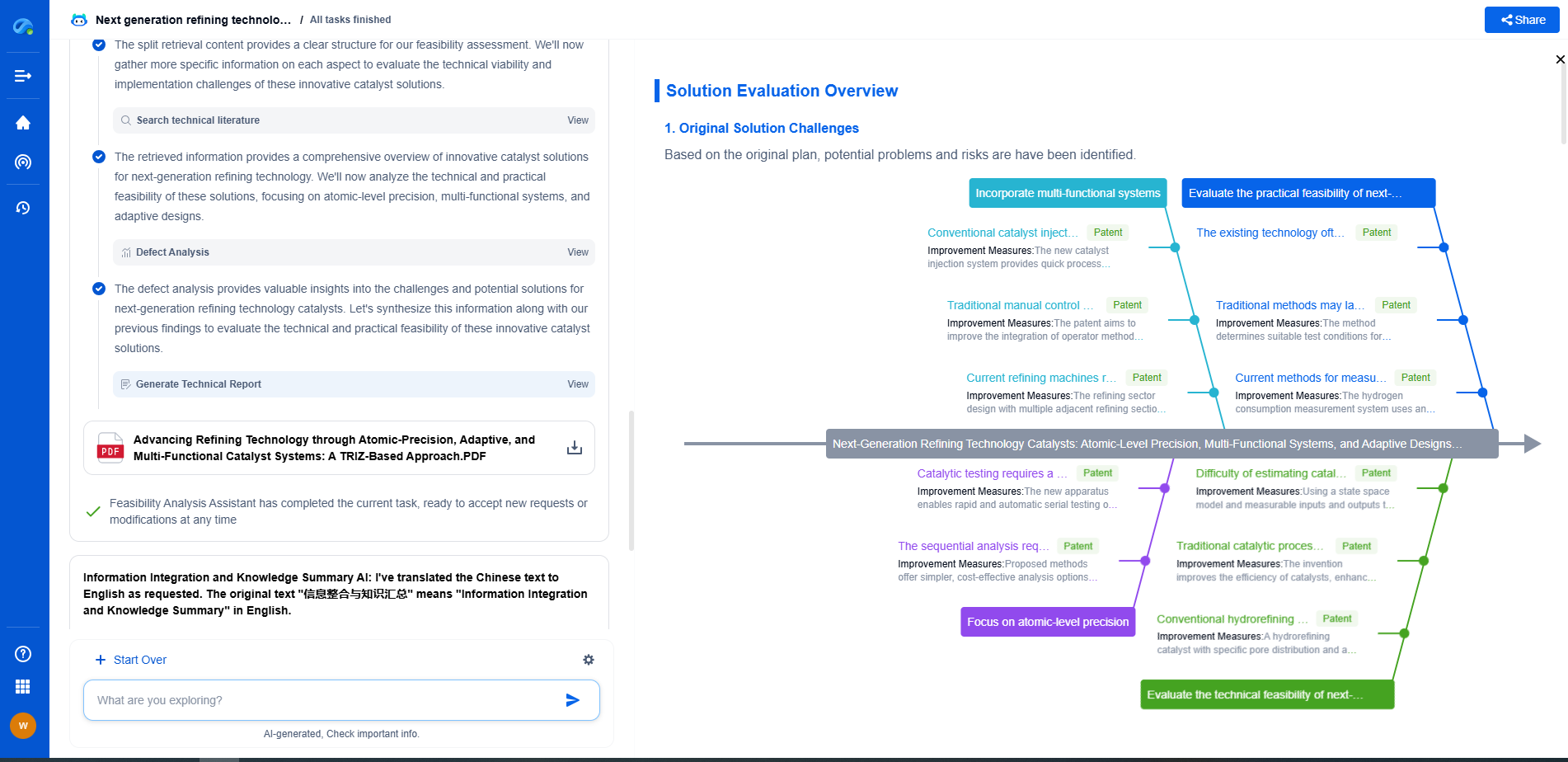
Discover Patsnap Eureka: AI Agents Built for Scientific Innovation
Whether you're designing the next generation of refining technologies or analyzing catalysts and process flows, keeping up with rapidly evolving research and IP data in petroleum processing is no easy task.
Patsnap Eureka, our intelligent AI assistant built for R&D professionals in high-tech sectors, empowers you with real-time expert-level analysis, technology roadmap exploration, and strategic mapping of core patents—all within a seamless, user-friendly interface.
Ready to accelerate your innovation process and make smarter, faster decisions? Discover Patsnap Eureka today and unlock the full power of confident, AI-driven innovation.