Visbreaking: A Simple Yet Effective Residue Upgrading Process
JUN 19, 2025 |
Visbreaking, short for "viscosity breaking," is a thermal cracking process employed in the petroleum industry to reduce the viscosity of heavy residual oils. As refineries aim to optimize the yield of valuable products while minimizing production costs, visbreaking emerges as a simple yet effective solution for upgrading heavy residues into lighter, more marketable products.
The Basic Principle
At its core, visbreaking involves heating heavy oil residues to high temperatures, typically ranging between 450 to 500 degrees Celsius, under moderate pressure. This thermal process causes large hydrocarbon molecules to crack into smaller ones, thereby reducing the viscosity of the residue. Unlike more complex refining processes, visbreaking operates without a catalyst, which simplifies the operation and reduces costs.
Types of Visbreaking
There are two primary types of visbreaking processes: coil visbreaking and soaker visbreaking.
1. Coil Visbreaking: In this process, the heavy oil feed is rapidly heated in a furnace coil. The cracking reaction starts as the feed travels through the coil, and the reaction is quenched quickly after reaching the desired temperature. This method allows for precise control over the reaction time, minimizing the formation of undesirable by-products.
2. Soaker Visbreaking: Here, after initial heating, the feed is held in a soaker drum where the cracking reaction continues. This extended reaction time can lead to a higher conversion rate of heavy molecules into lighter products. However, it may also increase the production of by-products like coke if not properly controlled.
Advantages of Visbreaking
Visbreaking offers several advantages that make it an attractive option for refineries:
1. Cost-Effectiveness: The absence of catalysts and the relatively simple equipment setup make visbreaking a cost-effective alternative for residue upgrading. It requires lower capital and operational expenditures compared to more complex catalytic processes.
2. Flexibility: Visbreaking can be easily integrated into existing refinery configurations. It can process a variety of feedstocks, including those with high sulfur content, making it a versatile option for refineries dealing with diverse crude sources.
3. Improved Product Yield: By converting heavy residues into lighter hydrocarbons, visbreaking increases the yield of valuable products such as naphtha and diesel, thus enhancing the overall profitability of the refinery.
Limitations and Challenges
Despite its advantages, visbreaking does have some limitations. The process typically achieves a moderate level of conversion, which means that a significant portion of the feed remains as heavy residue. This may require further processing through more advanced upgrading technologies to maximize product yield.
Additionally, managing the production of by-products like coke and ensuring consistent product quality can be challenging. Refineries must carefully control operating conditions to optimize the process and minimize the formation of undesirable compounds.
The Future of Visbreaking
As the demand for cleaner fuels and more efficient refining processes grows, visbreaking continues to play a vital role in the evolving landscape of the petroleum industry. Ongoing research and technological advancements aim to enhance the efficiency and environmental performance of this process.
Innovations such as integration with hydrogen addition technologies and the development of advanced process control systems promise to increase the conversion rates and reduce the environmental impact of visbreaking. These advancements will ensure that visbreaking remains a relevant and valuable tool for refineries worldwide.
Conclusion
Visbreaking stands out as a fundamental residue upgrading process that balances simplicity with effectiveness. By transforming heavy residues into lighter, more valuable products, it contributes significantly to the operational efficiency and profitability of refineries. While it has its limitations, ongoing advancements and innovations continue to enhance its capabilities, ensuring its place in the future of petroleum refining.
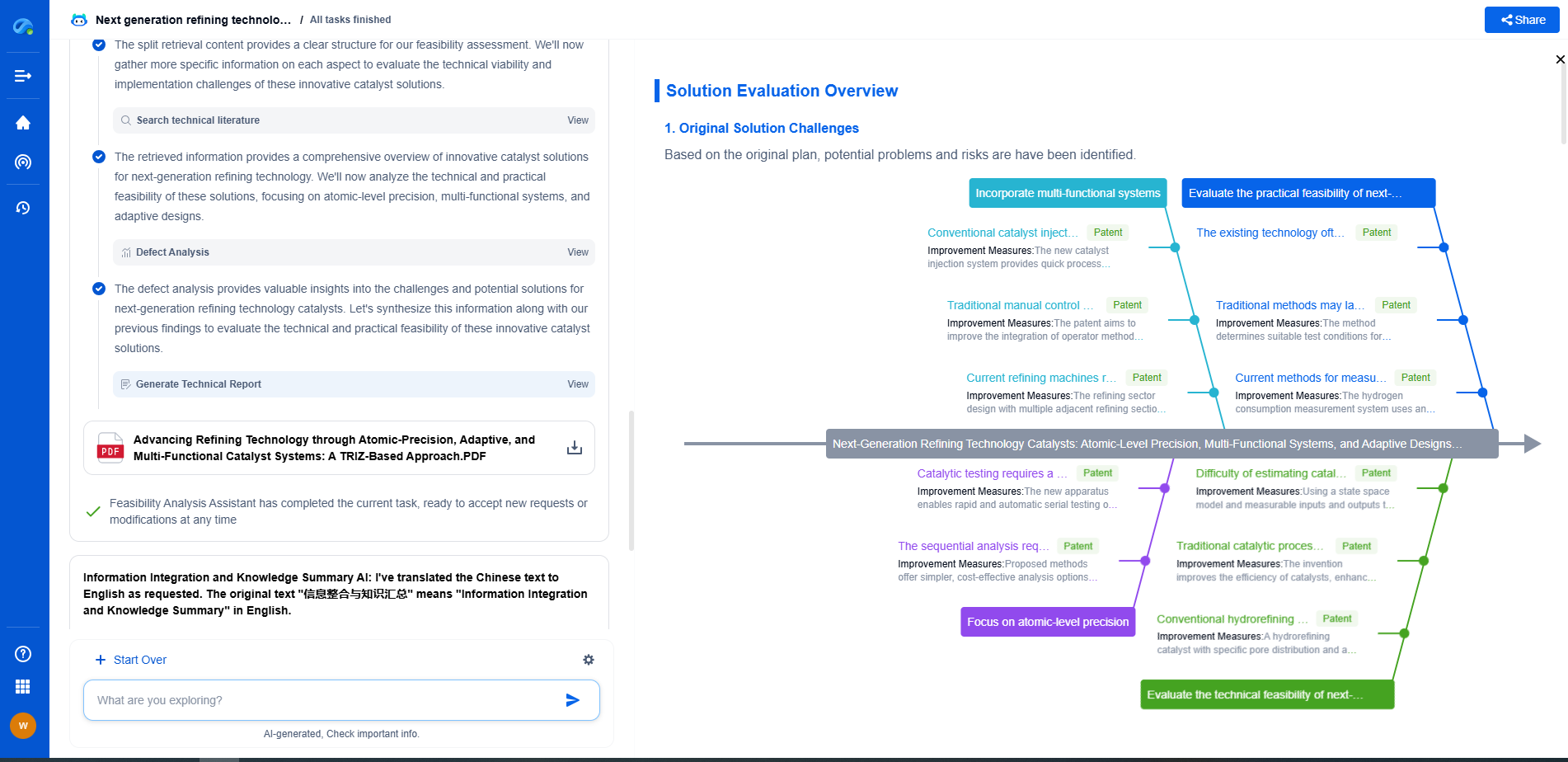
Discover Patsnap Eureka: AI Agents Built for Scientific Innovation
Whether you're designing the next generation of refining technologies or analyzing catalysts and process flows, keeping up with rapidly evolving research and IP data in petroleum processing is no easy task.
Patsnap Eureka, our intelligent AI assistant built for R&D professionals in high-tech sectors, empowers you with real-time expert-level analysis, technology roadmap exploration, and strategic mapping of core patents—all within a seamless, user-friendly interface.
Ready to accelerate your innovation process and make smarter, faster decisions? Discover Patsnap Eureka today and unlock the full power of confident, AI-driven innovation.