What is AI-assisted catalyst design in petroleum processing?
JUN 19, 2025 |
The petroleum industry is constantly seeking innovative methods to enhance efficiency, reduce costs, and minimize environmental impact. One such promising approach is the use of artificial intelligence (AI) in catalyst design for petroleum processing. Catalysts play a critical role in refining crude oil into valuable products, and AI-assisted catalyst design has the potential to revolutionize this process. This article explores the concept of AI-assisted catalyst design and its significance in the petroleum industry.
Understanding Catalysts in Petroleum Processing
Catalysts are substances that speed up chemical reactions without being consumed in the process. In petroleum processing, they are crucial in breaking down large hydrocarbon molecules into smaller, more useful products like gasoline, diesel, and lubricants. The design and optimization of catalysts can significantly affect the efficiency and cost-effectiveness of the refining process.
Traditional Catalyst Design Challenges
Traditionally, catalyst design has been a time-consuming and expensive process. It involves trial and error, extensive experimentation, and a deep understanding of chemical reactions. Researchers face challenges such as selecting the right materials, determining optimal operating conditions, and predicting catalytic performance. This lengthy process often limits the pace of innovation within the industry.
The Role of AI in Catalyst Design
Artificial intelligence is transforming industries by providing powerful tools for data analysis, pattern recognition, and predictive modeling. In catalyst design, AI helps overcome the limitations of traditional methods by offering new opportunities for innovation.
1. Data-Driven Insights
AI algorithms can analyze vast amounts of data from experiments and simulations, identifying patterns and relationships that might not be apparent to human researchers. This data-driven approach enables the rapid screening of potential catalyst materials, helping to narrow down the most promising candidates for further testing.
2. Predictive Modeling
Machine learning models can predict the performance of catalysts under various conditions, reducing the need for extensive physical testing. These models use historical data to simulate how a catalyst might behave in real-world scenarios, providing valuable insights into its effectiveness and efficiency.
3. Optimization and Design
AI can optimize catalyst design by exploring a wide range of parameters simultaneously. It can suggest optimal compositions, structures, and operating conditions, which can lead to the development of more effective and efficient catalysts. This capability accelerates the discovery and deployment of new catalysts for petroleum processing.
Benefits of AI-Assisted Catalyst Design
The integration of AI into catalyst design offers several benefits for the petroleum industry:
1. Increased Efficiency
AI-assisted design can significantly reduce the time and cost involved in developing new catalysts, leading to faster implementation and improved process efficiency.
2. Enhanced Performance
By optimizing catalyst properties, AI can lead to catalysts that perform better, resulting in higher yields of valuable products and lower energy consumption.
3. Environmental Impact
AI can contribute to the development of catalysts that enable cleaner processing, reducing emissions and minimizing the environmental footprint of petroleum refining.
4. Competitive Advantage
Companies that leverage AI in catalyst design can gain a competitive edge by staying ahead of technological trends and delivering superior products to the market.
Challenges and Considerations
While AI-assisted catalyst design holds great promise, it is not without challenges. The quality of AI models depends on the quality and quantity of data available, and there is always a risk of overfitting or bias in the models. Additionally, the integration of AI into existing workflows requires investment in technology and training.
Conclusion
AI-assisted catalyst design is transforming the petroleum industry by offering innovative solutions to traditional challenges. As AI technology continues to evolve, its role in catalyst design is expected to grow, driving the industry toward more efficient, cost-effective, and environmentally friendly processes. Embracing AI provides a unique opportunity for the petroleum sector to enhance its capabilities and meet the demands of a rapidly changing world.
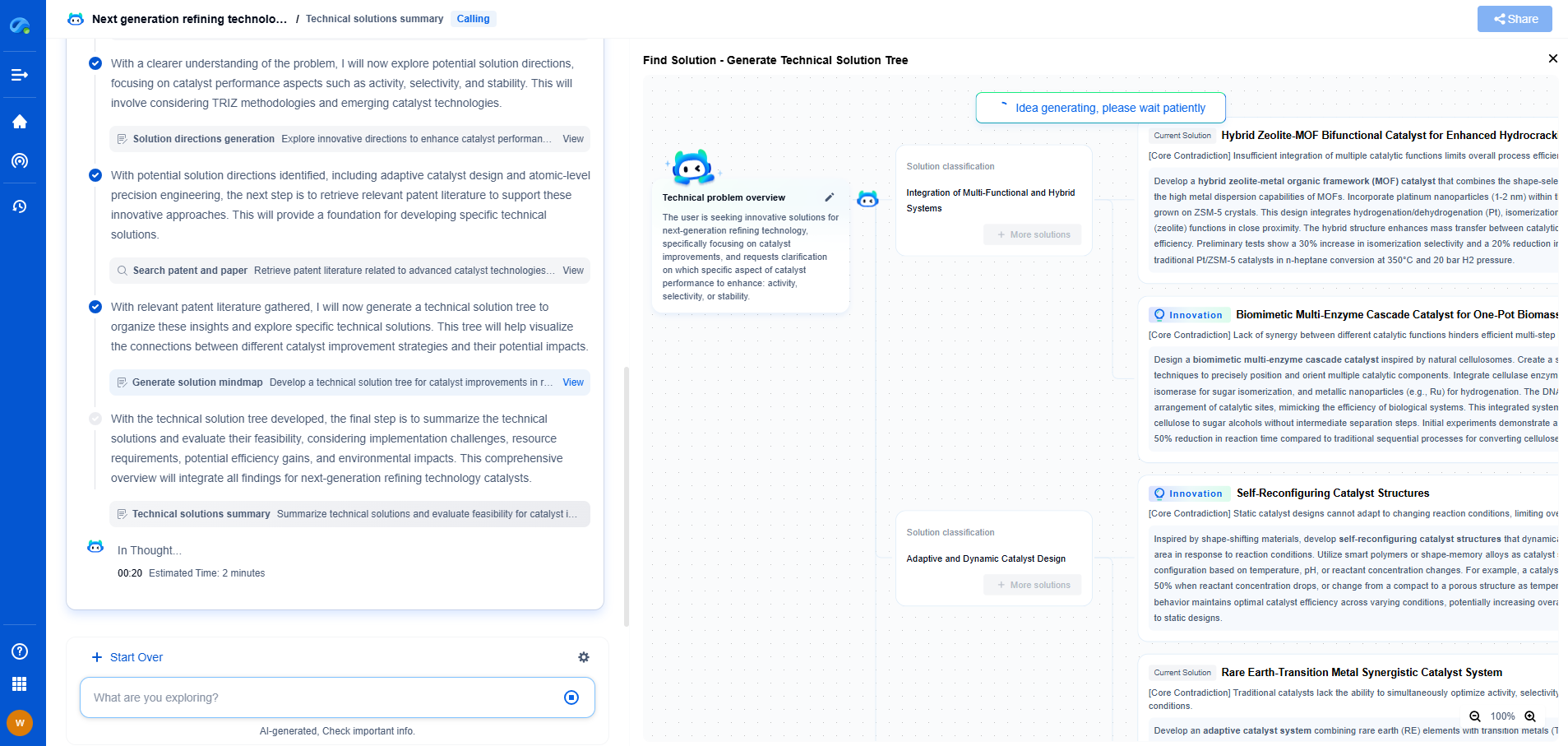
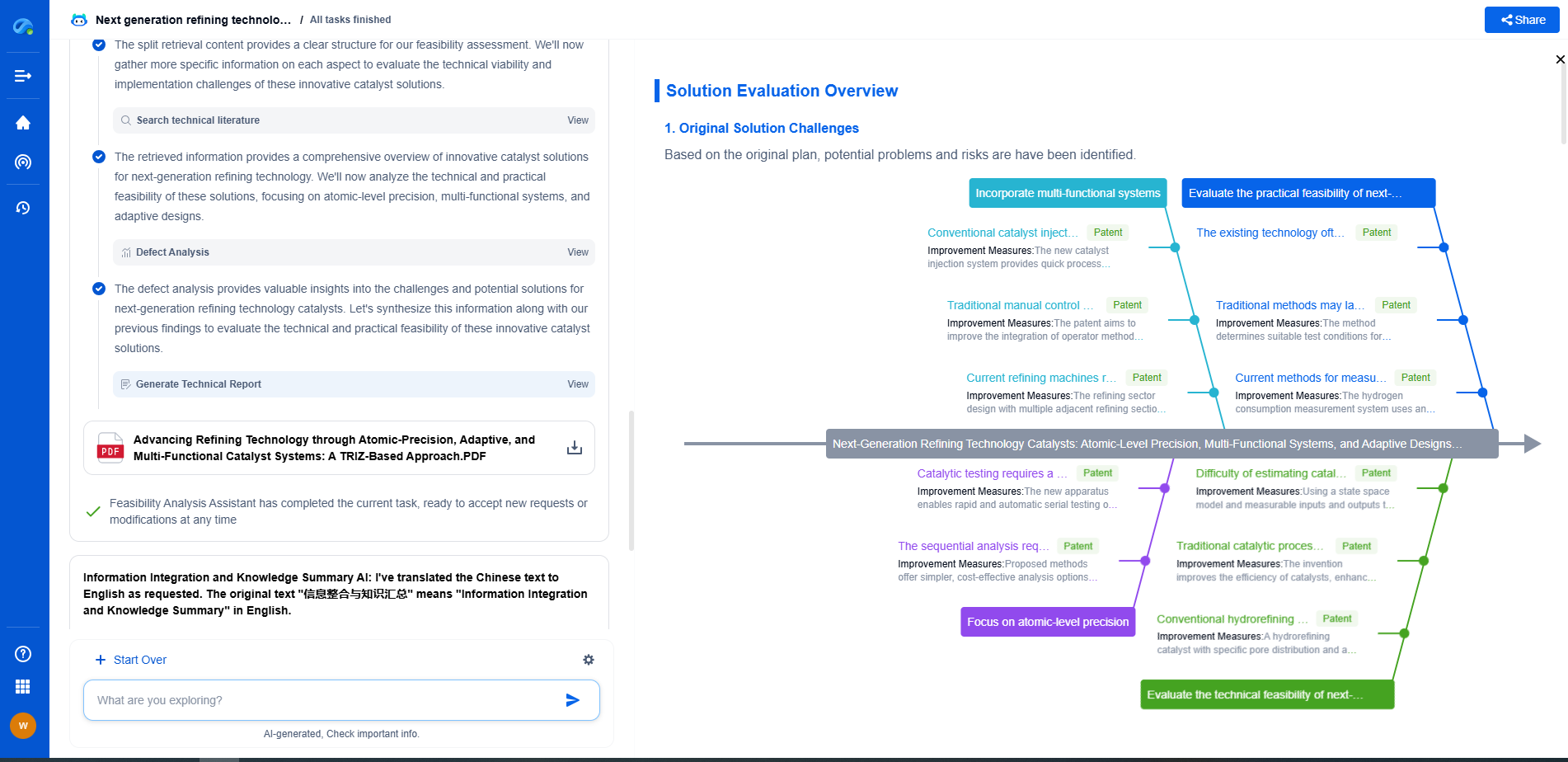
Discover Patsnap Eureka: AI Agents Built for Scientific Innovation
Whether you're designing the next generation of refining technologies or analyzing catalysts and process flows, keeping up with rapidly evolving research and IP data in petroleum processing is no easy task.
Patsnap Eureka, our intelligent AI assistant built for R&D professionals in high-tech sectors, empowers you with real-time expert-level analysis, technology roadmap exploration, and strategic mapping of core patents—all within a seamless, user-friendly interface.
Ready to accelerate your innovation process and make smarter, faster decisions? Discover Patsnap Eureka today and unlock the full power of confident, AI-driven innovation.