What is energy integration in petroleum processing?
JUN 19, 2025 |
Energy integration is a crucial concept in the field of petroleum processing, aiming to enhance efficiency, reduce waste, and improve sustainability. This article delves into the intricacies of energy integration, exploring its significance, methodologies, and benefits within the petroleum industry.
The Fundamentals of Energy Integration
Energy integration refers to the strategic design and operation of industrial plants to optimize the use of energy. In the context of petroleum processing, it involves the careful arrangement of heat exchangers, distillation columns, and other equipment to maximize energy reuse within the plant. The primary goal is to minimize the consumption of external energy sources by efficiently utilizing the energy already present in the system.
Traditional petroleum processing facilities often operate with significant energy losses due to heat dissipation, inefficient equipment, and outdated technologies. Energy integration seeks to address these issues by creating synergies within the plant’s process streams, thus reducing operational costs and environmental impact.
The Role of Heat Exchangers
One of the critical components of energy integration in petroleum processing is the use of heat exchangers. These devices transfer heat between two or more fluids without mixing them, allowing waste heat from one part of the process to be reused in another. By recovering and repurposing waste heat, heat exchangers significantly reduce the need for additional energy input.
In petroleum refineries, heat exchangers are often used to preheat crude oil before it enters the distillation column. This process not only saves energy but also enhances the overall efficiency of the distillation process. By integrating heat exchangers strategically, refineries can achieve substantial energy savings and improve their overall performance.
Pinch Analysis: A Methodology for Optimization
Pinch analysis is a powerful tool used in energy integration to identify and optimize energy flows within a petroleum processing plant. The methodology involves creating a graphical representation of temperature and heat flow, known as a composite curve, to pinpoint areas where energy savings can be achieved.
The "pinch point" is the most constrained part of the system, where the temperature difference between hot and cold streams is minimal. By analyzing this point, engineers can determine the optimal placement of heat exchangers and other equipment to maximize energy recovery. Pinch analysis helps refineries design more efficient processes, reducing their reliance on external energy sources and minimizing greenhouse gas emissions.
Benefits of Energy Integration
The integration of energy systems in petroleum processing offers numerous advantages. Firstly, it leads to significant cost savings by reducing the need for purchased energy. By efficiently reusing waste heat, refineries can lower their fuel consumption and, consequently, their operational expenses.
Secondly, energy integration contributes to environmental sustainability. By minimizing energy waste, refineries can reduce their carbon footprint and comply with increasingly stringent environmental regulations. This not only enhances the company’s reputation but also ensures long-term viability in a world increasingly focused on sustainable practices.
Challenges and Considerations
While energy integration offers myriad benefits, it also presents challenges that must be addressed. Implementing energy integration strategies often requires significant initial investments in new technology and infrastructure, which can be a barrier for some refineries. Additionally, the complexity of optimizing energy flows within a facility necessitates skilled personnel and advanced analytical tools.
Another consideration is the need for continuous monitoring and maintenance of integrated systems to ensure they operate efficiently over time. Despite these challenges, the long-term benefits of energy integration often outweigh the initial costs, making it a worthwhile investment for many petroleum processing facilities.
Conclusion
Energy integration in petroleum processing is a transformative approach that enhances efficiency, reduces costs, and supports sustainability. By understanding and implementing strategies such as heat exchangers and pinch analysis, refineries can significantly improve their energy management and environmental performance. As environmental concerns continue to rise and energy resources become scarcer, energy integration will play a vital role in shaping the future of the petroleum industry.
Discover Patsnap Eureka: AI Agents Built for Scientific Innovation
Whether you're designing the next generation of refining technologies or analyzing catalysts and process flows, keeping up with rapidly evolving research and IP data in petroleum processing is no easy task.
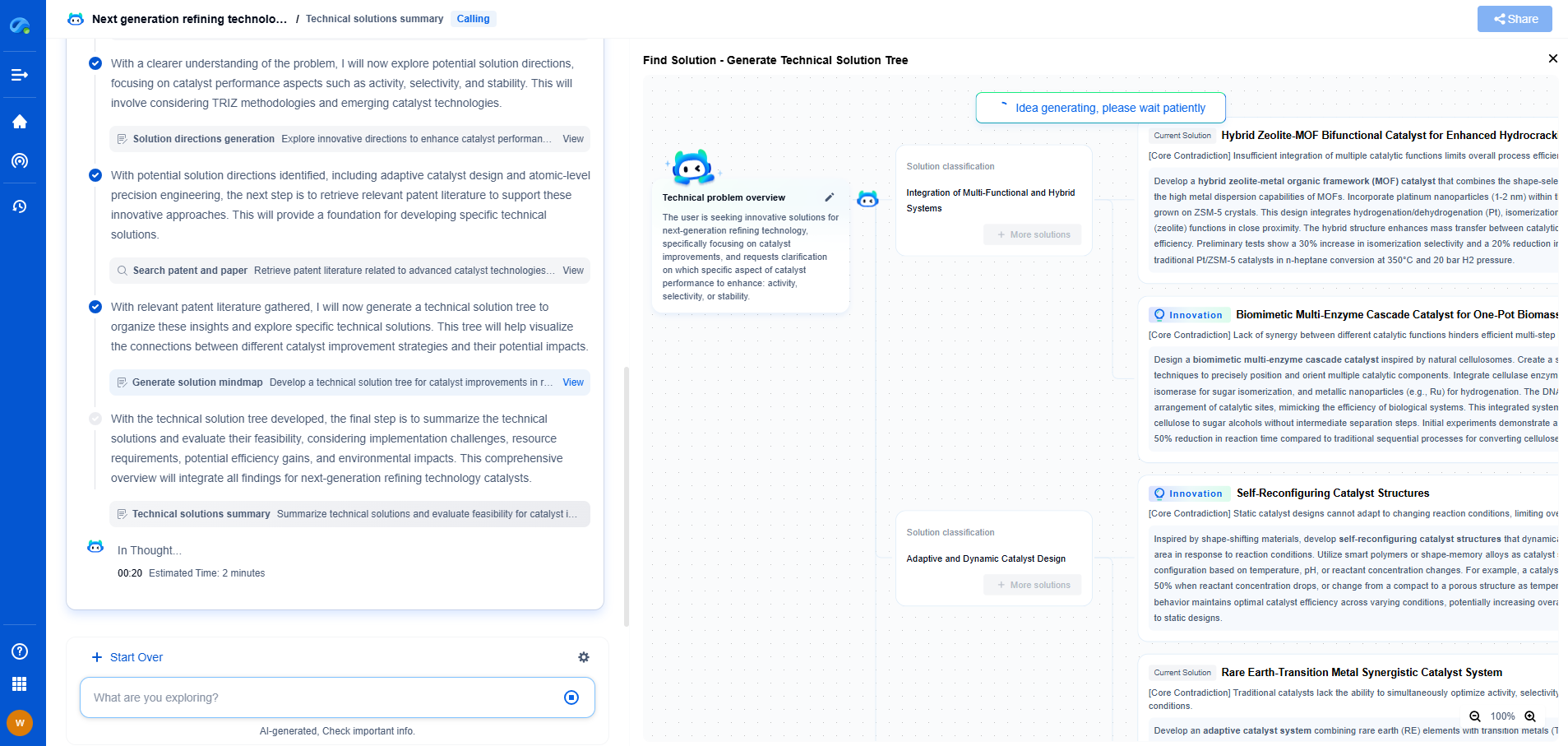
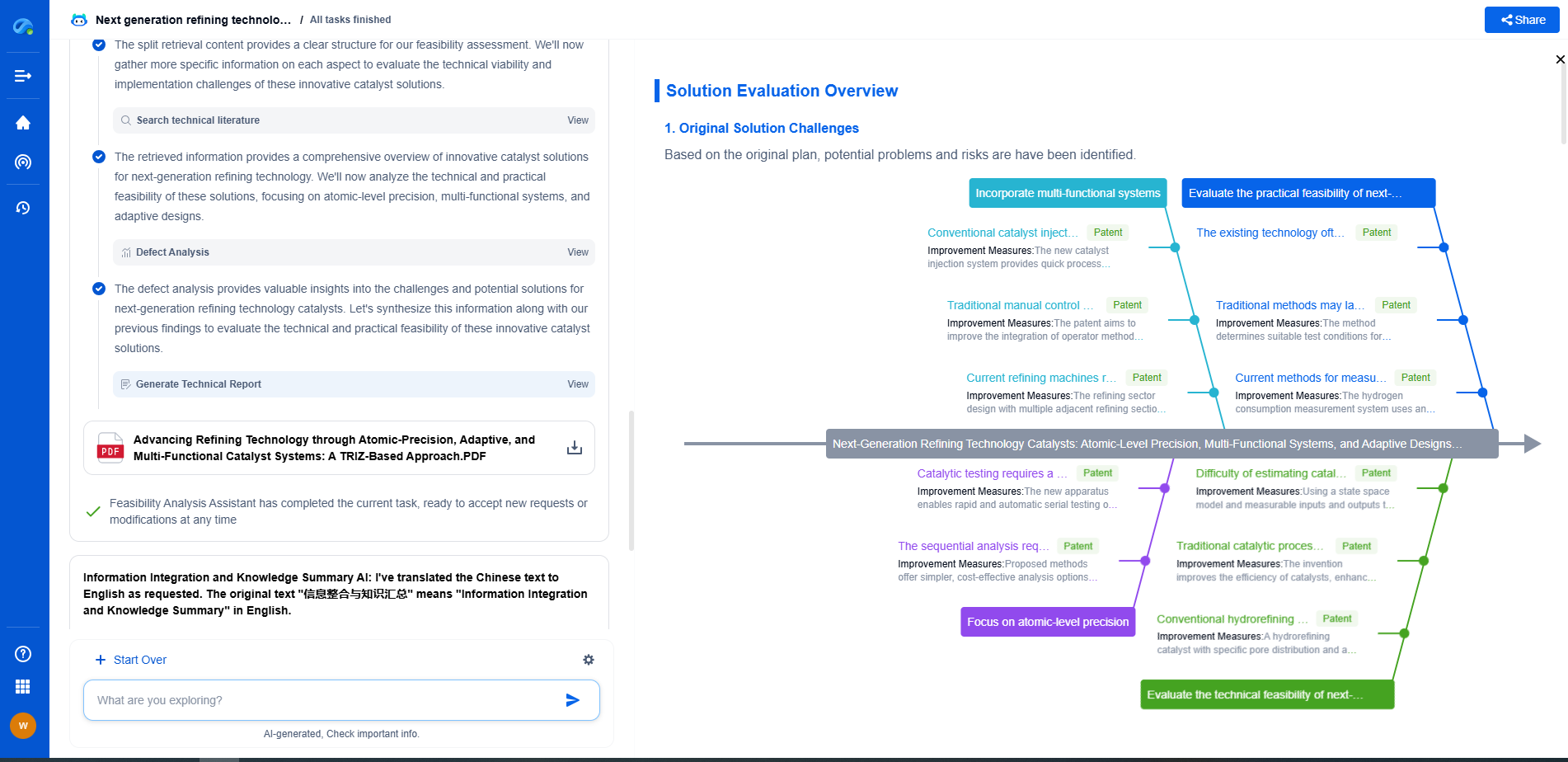
Patsnap Eureka, our intelligent AI assistant built for R&D professionals in high-tech sectors, empowers you with real-time expert-level analysis, technology roadmap exploration, and strategic mapping of core patents—all within a seamless, user-friendly interface.
Ready to accelerate your innovation process and make smarter, faster decisions? Discover Patsnap Eureka today and unlock the full power of confident, AI-driven innovation.