What is unit fouling and how does it affect process efficiency?
JUN 19, 2025 |
Unit fouling refers to the accumulation of unwanted materials on the surfaces of process equipment over time. These materials can include dirt, dust, chemical deposits, biological growth, or any particulate matter that can adhere to equipment surfaces. Fouling can occur in various types of equipment such as heat exchangers, boilers, cooling towers, and reactors, impacting the efficiency and performance of industrial processes.
Causes of Unit Fouling
Unit fouling can be caused by physical, chemical, or biological processes. Physical fouling occurs when solid particles or sediments deposit on equipment surfaces due to gravitational forces or fluid dynamics. Chemical fouling involves the formation of deposits as a result of chemical reactions or crystallization of solutes. Biological fouling, or biofouling, is caused by the growth of microorganisms, algae, or other biological materials within the equipment. Each type of fouling interacts differently with the equipment, but all lead to a decrease in process efficiency.
Effects on Process Efficiency
The impact of unit fouling on process efficiency is significant. Fouling reduces heat transfer efficiency in heat exchangers, leading to increased energy consumption and higher operating costs. It can cause pressure drops and restricted flow, requiring additional power to maintain process parameters. In severe cases, fouling can lead to equipment failures, unscheduled shutdowns, and costly maintenance interventions.
Heat Transfer Efficiency
Fouling acts as an insulating layer on heat exchanger surfaces, impeding the transfer of heat between fluids. This results in reduced heat transfer rates and necessitates higher energy input to achieve desired temperatures. As fouling increases, the effectiveness of heat exchangers diminishes, which can disrupt production schedules and escalate energy expenses.
Pressure Drops and Flow Restrictions
In pipelines and reactors, fouling contributes to pressure drops and flow restrictions. The accumulation of deposits narrows passageways, requiring pumps to work harder to maintain flow. This increases energy consumption and can lead to reduced throughput and inefficiencies in the production process. Over time, the buildup can become severe enough to necessitate equipment shutdown for cleaning.
Maintenance and Cleaning Costs
Regular maintenance and cleaning are required to manage fouling and restore equipment performance. These activities can be costly and time-consuming, often necessitating temporary process shutdowns. The cost of cleaning chemicals, labor, and equipment downtime can significantly impact the overall profitability of operations.
Mitigation and Prevention Strategies
To combat fouling and minimize its impact on process efficiency, several strategies can be employed. Regular monitoring and maintenance can help detect early signs of fouling and address them before they become severe. Utilizing anti-fouling coatings and materials can reduce the adhesion of foulants. Implementing water treatment systems and filtration can minimize the presence of foulants in process streams. Optimizing process parameters and temperatures can also help reduce the rate of fouling.
Conclusion
Unit fouling is a critical issue that affects the efficiency and reliability of industrial processes. By understanding the causes and impacts of fouling, industries can implement effective strategies to manage and mitigate its effects. Through regular maintenance, proper design, and innovative technologies, it is possible to enhance process efficiency, reduce operational costs, and extend the lifespan of equipment.
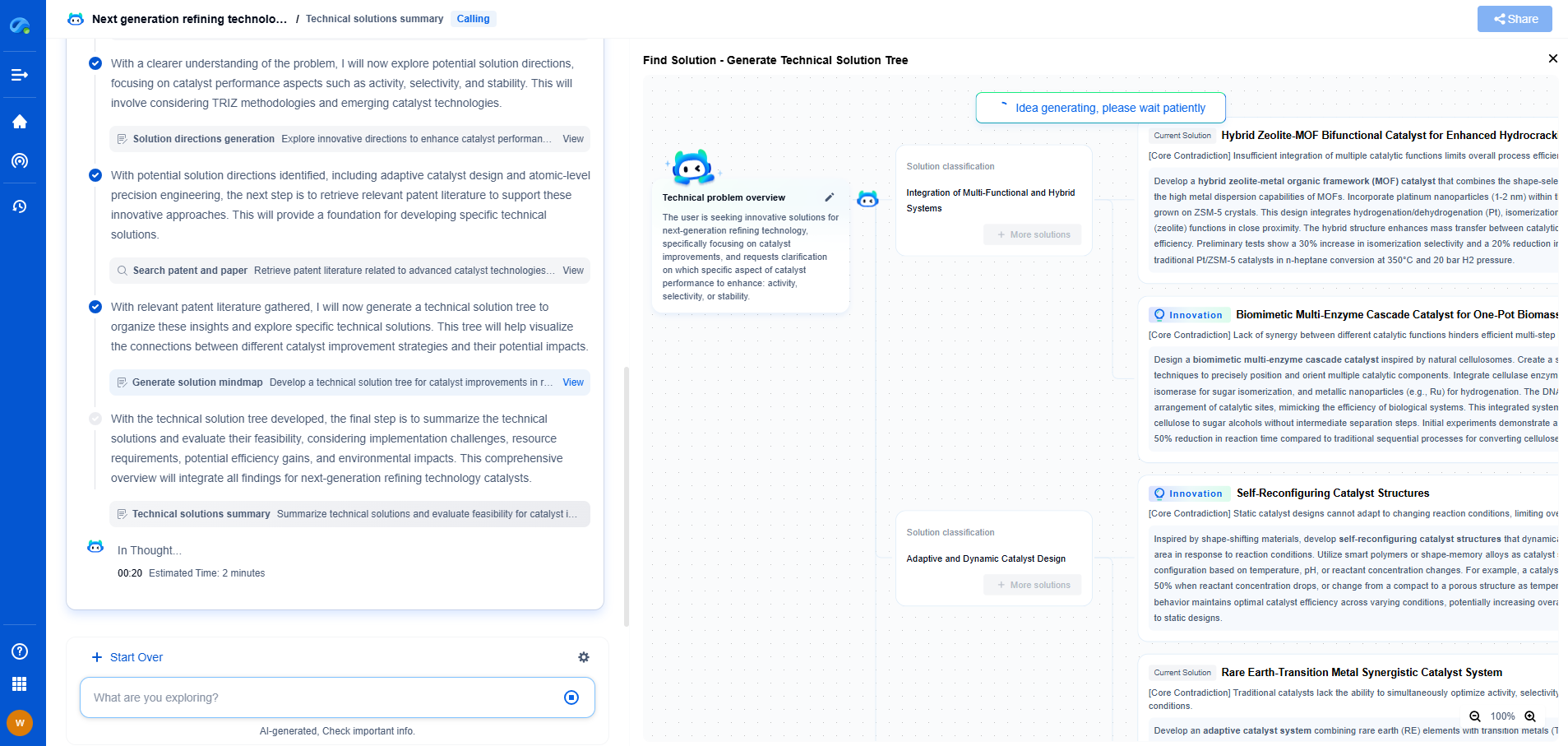
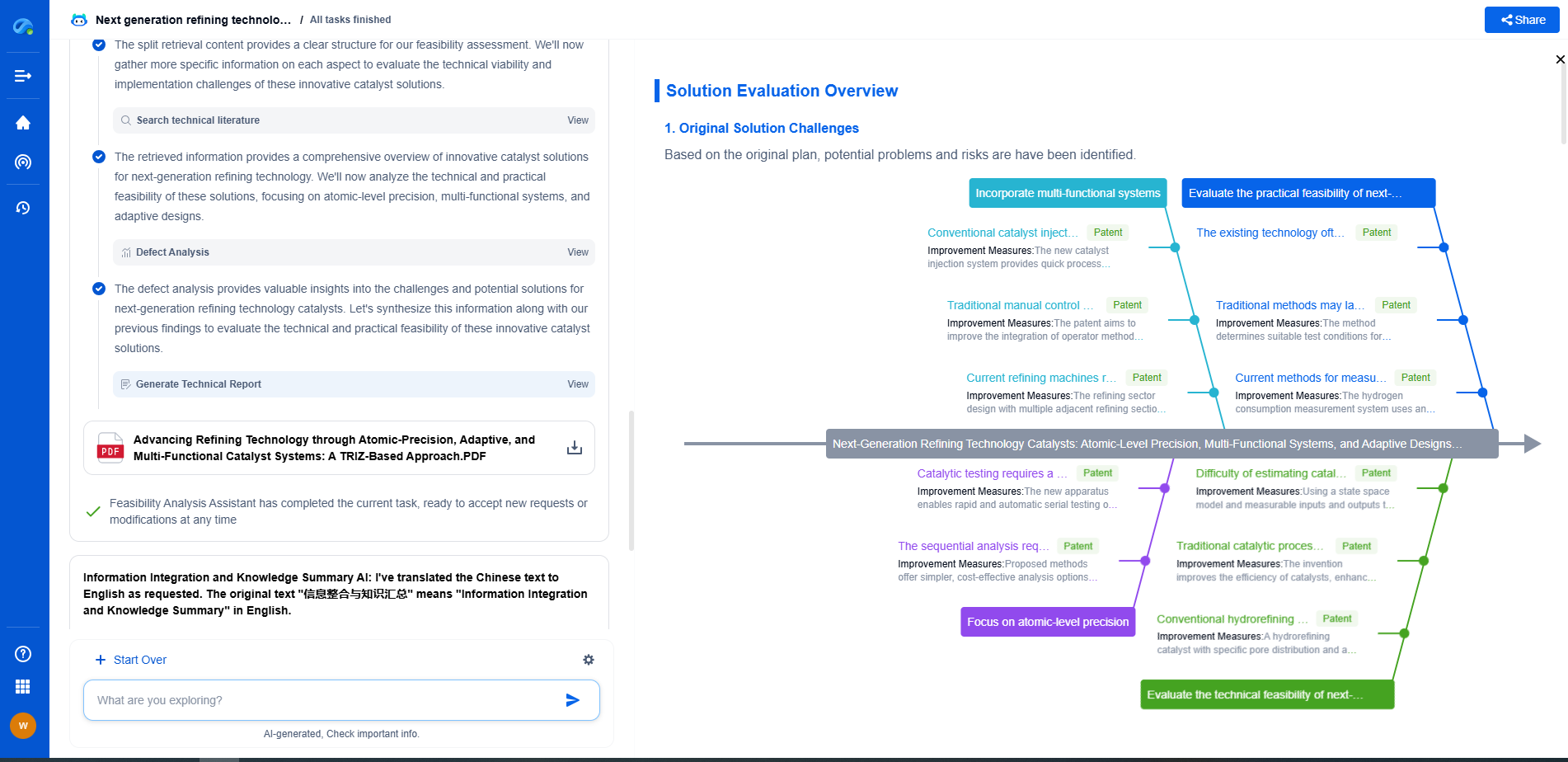
Discover Patsnap Eureka: AI Agents Built for Scientific Innovation
Whether you're designing the next generation of refining technologies or analyzing catalysts and process flows, keeping up with rapidly evolving research and IP data in petroleum processing is no easy task.
Patsnap Eureka, our intelligent AI assistant built for R&D professionals in high-tech sectors, empowers you with real-time expert-level analysis, technology roadmap exploration, and strategic mapping of core patents—all within a seamless, user-friendly interface.
Ready to accelerate your innovation process and make smarter, faster decisions? Discover Patsnap Eureka today and unlock the full power of confident, AI-driven innovation.