Why is heat integration important in refinery process units?
JUN 19, 2025 |
Understanding Heat Integration
At its core, heat integration involves the strategic planning and optimization of heat flows within a refinery to maximize energy utilization. This process reduces the need for external heating and cooling, which in turn conserves energy and enhances the overall efficiency of the refinery. By optimizing the transfer and recovery of heat from process streams, refineries can significantly reduce fuel consumption and emissions.
Energy Efficiency and Cost Reduction
One of the most compelling reasons for implementing heat integration is the substantial improvement in energy efficiency. Refineries are energy-intensive operations, and the cost of energy can constitute a major portion of the operational expenses. By effectively managing heat flows, refineries can reduce the demand for external energy sources such as natural gas or electricity. This not only decreases fuel costs but also provides a buffer against the volatility of energy prices.
Moreover, heat integration can lead to a reduction in the size and cost of heating and cooling utilities. For instance, by recovering heat from a hot process stream and using it to preheat another stream, the need for additional heating equipment, such as boilers, is minimized. This integration can result in significant capital and operational savings over the lifecycle of the refinery.
Environmental Impact and Sustainability
In today’s world, reducing the environmental footprint of industrial operations is paramount. Heat integration contributes to sustainability by lowering greenhouse gas emissions. As refineries optimize their heat recovery processes, they burn less fuel and, consequently, release fewer emissions. This not only helps in meeting regulatory requirements but also supports global efforts towards mitigating climate change.
Furthermore, by decreasing energy consumption, refineries can conserve natural resources and reduce their reliance on fossil fuels, aligning with broader environmental goals and enhancing their social responsibility credentials.
Operational Reliability and Flexibility
Another key benefit of heat integration is the improvement in operational reliability and flexibility. By stabilizing temperature profiles and optimizing heat transfer, refineries can achieve more consistent operating conditions. This stability often translates to smoother operations, reduced maintenance needs, and prolonged equipment life.
Additionally, heat integration provides the flexibility to respond to changes in process conditions or feedstock. Refineries can adapt their heat recovery strategies to accommodate different scenarios, ensuring that they continue to operate efficiently under varying conditions. This adaptability is vital in an industry that frequently deals with fluctuating market demands and feedstock availability.
Challenges and Considerations
Despite its numerous advantages, implementing heat integration is not without challenges. The complexity of designing and optimizing integrated systems requires a thorough understanding of the process and involves significant technical expertise. Computational models and simulations are often employed to map out heat flows and identify optimal integration points.
Additionally, refineries need to consider the potential for fouling, corrosion, and other operational issues that may arise from more complex heat exchange networks. Regular monitoring and maintenance are crucial to ensure that the integrated systems continue to function as intended.
Conclusion
In conclusion, heat integration is a vital component of modern refinery operations, offering a myriad of benefits ranging from cost savings to environmental protection. As the industry continues to evolve, the importance of energy efficiency and sustainability will only grow. By embracing heat integration, refineries can not only improve their bottom line but also contribute to a more sustainable future. The investment in heat integration technology and expertise is a prudent step towards positioning refineries on the path of energy-efficient growth and environmental stewardship.
Discover Patsnap Eureka: AI Agents Built for Scientific Innovation
Whether you're designing the next generation of refining technologies or analyzing catalysts and process flows, keeping up with rapidly evolving research and IP data in petroleum processing is no easy task.
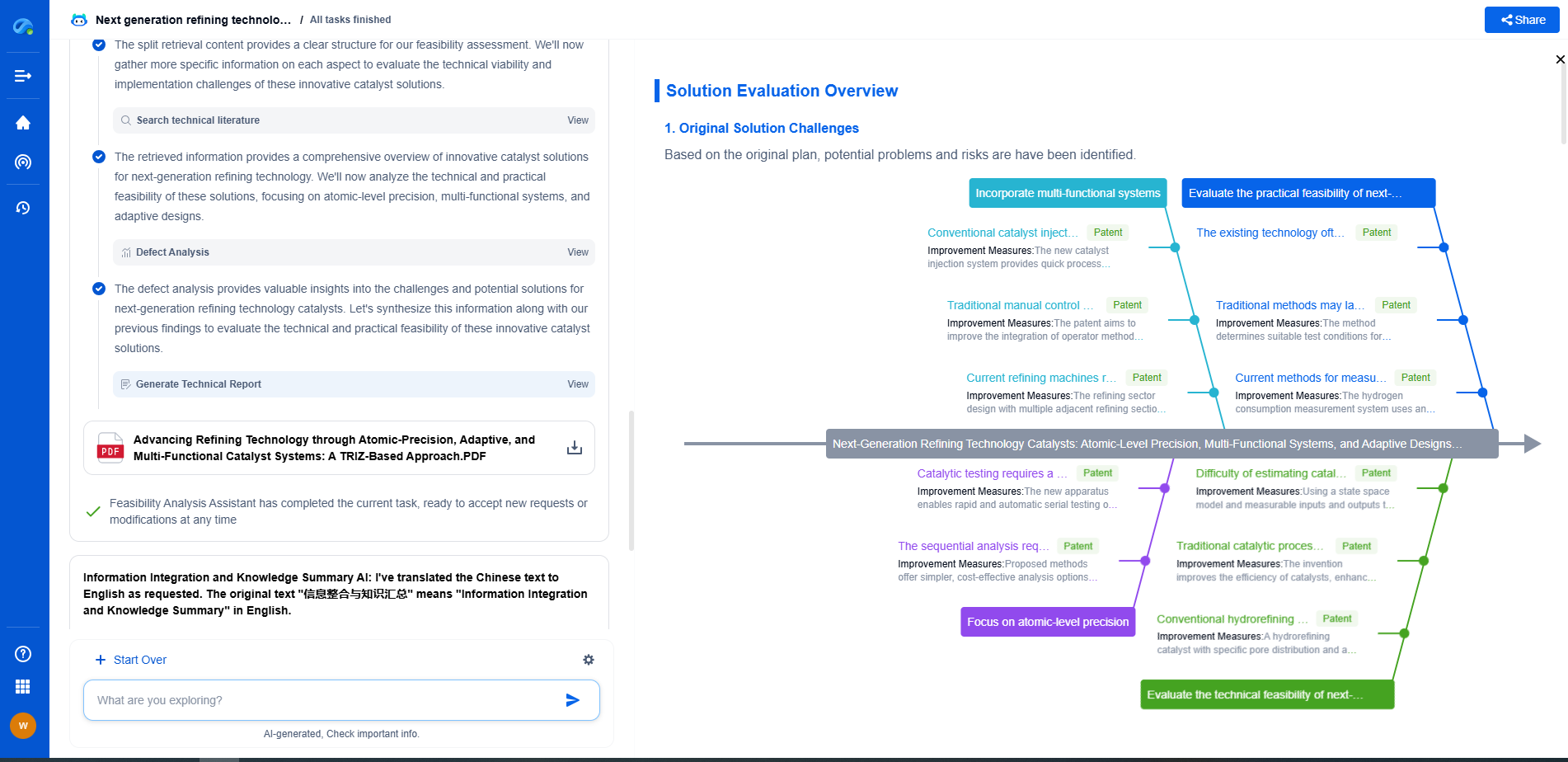
Patsnap Eureka, our intelligent AI assistant built for R&D professionals in high-tech sectors, empowers you with real-time expert-level analysis, technology roadmap exploration, and strategic mapping of core patents—all within a seamless, user-friendly interface.
Ready to accelerate your innovation process and make smarter, faster decisions? Discover Patsnap Eureka today and unlock the full power of confident, AI-driven innovation.