


Photosynthesis is a crucial biochemical process that sustains life on Earth. It’s the mechanism by which plants, algae, and some bacteria convert light energy into chemical energy, fueling the growth of plants and sustaining the food chain. At the core of photosynthesis lies a complex equation that governs this life-sustaining process. This article will explore the science behind the photosynthesis equation, its significance, and real-world applications, helping you understand how this fundamental process impacts the environment and life on Earth.
What is the Photosynthesis Equation?
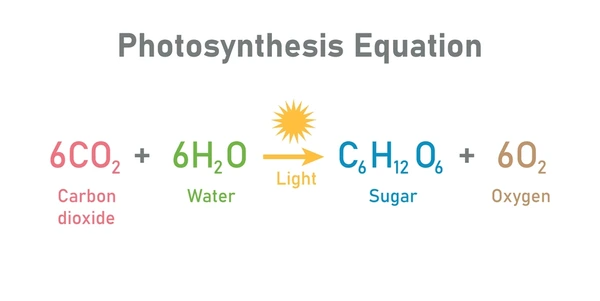
The photosynthesis equation represents the transformation of light energy into glucose (a form of sugar), which plants use as energy. This process occurs in chloroplasts, primarily in plant leaves. The equation is as follows:
6CO₂ + 6H₂O + light energy → C₆H₁₂O₆ + 6O₂
In this equation:
- CO₂ (carbon dioxide) is absorbed from the air.
- H₂O (water) is absorbed through the roots.
- Light energy is captured by chlorophyll in plant cells.
- C₆H₁₂O₆ (glucose) is the chemical energy stored in the form of sugar.
- O₂ (oxygen) is released as a byproduct.
This simplified version of the photosynthesis equation captures the essence of how plants use sunlight to create energy.
The Process of Photosynthesis: A Breakdown
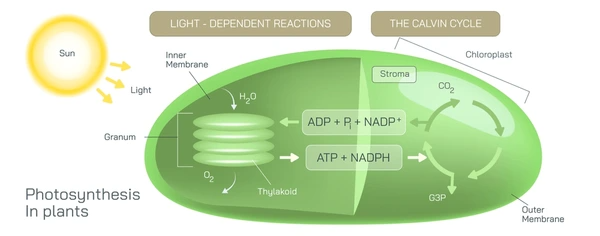
- Light-dependent reactions: These reactions take place in the thylakoid membranes of chloroplasts, where sunlight is absorbed by chlorophyll. The energy from light splits water molecules (H₂O) into oxygen (O₂), protons (H⁺), and electrons. We also call this cycle the Calvin Cycle, and it does not require light to occur.
- Light-independent reactions (Calvin Cycle): Occurring in the stroma of the chloroplast, this stage uses the ATP and NADPH produced in the light-dependent reactions to convert carbon dioxide (CO₂) into glucose (C₆H₁₂O₆). We call this cycle the Calvin Cycle, and it does not require light to occur.
When exploring the photosynthesis equation, Eureka Technical Q&A offers detailed explanations, helping you break down the complex process and better understand key components like light energy conversion and the role of chlorophyll.
Importance of Photosynthesis in the Ecosystem
Photosynthesis plays an essential role in the ecosystem by:
- Providing oxygen: The release of oxygen during photosynthesis is vital for the respiration of animals, including humans.
- Supporting the food chain: Plants serve as the primary producers in ecosystems, providing the base of the food chain for herbivores and, indirectly, for carnivores.
- Regulating carbon dioxide: Photosynthesis helps balance atmospheric CO₂ levels, acting as a natural carbon sink and combating climate change.
Photosynthesis and Energy Efficiency ⚡
One of the critical aspects of photosynthesis is its efficiency in energy conversion. Although the process isn’t 100% efficient (only about 1-2% of sunlight converts into chemical energy as glucose), it effectively sustains life on Earth.
In agricultural settings, researchers are continually exploring ways to enhance photosynthesis efficiency to improve crop yields and combat global food security challenges. This includes genetically modifying plants to use light more efficiently or reducing the energy loss during the Calvin Cycle.
Photosynthesis in the Context of Climate Change 🌡️
With the increasing levels of atmospheric carbon dioxide (CO₂), photosynthesis can play a pivotal role in combating climate change. Trees, plants, and algae help absorb CO₂, which is a significant greenhouse gas, thus mitigating global warming.
Carbon Sequestration: The process of photosynthesis acts as a natural carbon sequestration method, where plants capture and store carbon in their tissues. Forests, particularly rainforests, are critical in absorbing large amounts of CO₂, significantly reducing the concentration of this greenhouse gas in the atmosphere.
Performance Comparison: Photosynthesis vs. Artificial Systems ⚙️
| Feature | Natural Photosynthesis | Artificial Photosynthesis |
|---|---|---|
| Energy Source | Solar energy | Solar or artificial light |
| Efficiency | 1-2% of sunlight converted into glucose | Currently low, but research is improving |
| Byproducts | Oxygen (O₂) | Oxygen (O₂) and sometimes other gases |
| Key Limitations | Requires specific environmental conditions (light, water, temperature) | Technology is still in early stages of development |
Although artificial photosynthesis is a growing field with potential applications for renewable energy generation, natural photosynthesis remains far more efficient at the moment.
Applications of Photosynthesis
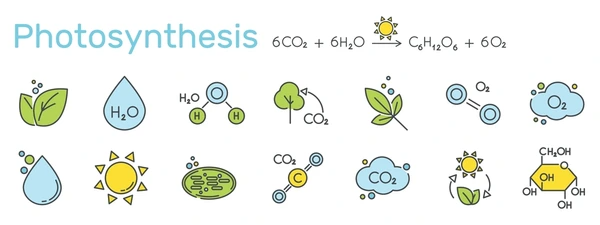
The photosynthesis equation is not only important for plant growth but also has various applications across different fields:
Agriculture:
- Improving Crop Yields: A deeper understanding of photosynthesis can help develop crops that use sunlight more efficiently, increasing food production 🌾.
- Sustainable Farming: Enhancing photosynthetic efficiency can reduce the need for fertilizers and pesticides, making farming more eco-friendly 🌍.
Renewable Energy:
- Artificial Photosynthesis: Scientists are developing systems that mimic natural photosynthesis to produce clean energy, like hydrogen or biofuels 🌱⚡.
- Carbon Capture: Plants capture carbon from the atmosphere. Improving this process can help reduce atmospheric CO₂ levels 🌿.
Environmental Conservation:
- Water Management: Studying plant water use in photosynthesis can improve irrigation systems for more efficient water use 💧.
- Reforestation: Replanting trees and preserving forests enhances global photosynthesis, reduces CO₂, and supports biodiversity 🌳.
Future Trends in Photosynthesis Research
Genetic Engineering: Advances in biotechnology may lead to genetically modified crops that photosynthesize more efficiently, which could have significant implications for food security and sustainability 🧬.
Biophotonics: The study of light interactions with biological systems could lead to innovations in improving the efficiency of photosynthesis, making agricultural systems more productive 🌞.
The Role of Eureka by PatSnap in Photosynthesis Research
Eureka is an advanced AI-powered tool that accelerates researchers’ work in photosynthesis and renewable energy fields.

- Patent Analysis: Eureka provides access to the latest patents and innovations in photosynthesis-related technologies, keeping researchers up-to-date on cutting-edge developments.
- Competitive Intelligence: With Eureka’s competitive intelligence tools, scientists and businesses can track the latest trends and innovations in the field, helping them stay ahead of the competition.
- Technology Roadmapping: Eureka enables users to track emerging trends and predict future developments in photosynthesis research, allowing them to align their projects with industry advancements.
Conclusion
Photosynthesis is a fundamental process that sustains life on Earth by converting sunlight into chemical energy. The photosynthesis equation highlights the simplicity yet complexity of this natural mechanism, which drives the food chain and supports the atmosphere. As research into photosynthesis and related technologies advances, tools like Eureka by PatSnap are accelerating progress in enhancing the efficiency of photosynthesis, developing better crops, and exploring renewable energy sources.
🚀 Stay ahead of the curve in photosynthesis research with Eureka by PatSnap. Explore the latest innovations, analyze patents, and uncover insights that can accelerate your work in plant biology and renewable energy technologies!
FAQs
1️⃣ What is the photosynthesis equation?
The photosynthesis equation is: 6CO₂ + 6H₂O + light energy → C₆H₁₂O₆ + 6O₂.
2️⃣ Why is photosynthesis so important for life on Earth?
Photosynthesis produces oxygen and converts solar energy into chemical energy, supporting the entire food chain and regulating the Earth’s carbon cycle.
3️⃣ Can we replicate photosynthesis for renewable energy?
Yes, researchers are exploring artificial photosynthesis technologies to create clean energy, mimicking the natural process.
4️⃣ What are the challenges in enhancing photosynthesis efficiency?
Improving the efficiency of photosynthesis, particularly in crops, and replicating it in artificial systems are key research challenges.
5️⃣ How does Eureka by PatSnap help in photosynthesis research?
Eureka by PatSnap provides access to patent analysis, competitive intelligence, and technology roadmapping tools to accelerate photosynthesis research and innovation.
To get detailed scientific explanations of photosynthesis equation, try Patsnap Eureka.
