


Introduction
When it comes to wireless communication technologies, RFID vs NFC is a common comparison that highlights their unique capabilities and applications. RFID (Radio Frequency Identification) is known for its long-range communication, making it ideal for inventory tracking and large-scale logistics. On the other hand, NFC (Near Field Communication), a subset of RFID, excels in short-range, secure interactions like contactless payments and access control. Both technologies play crucial roles in modern industries, but understanding their differences helps determine which is best suited for your needs.
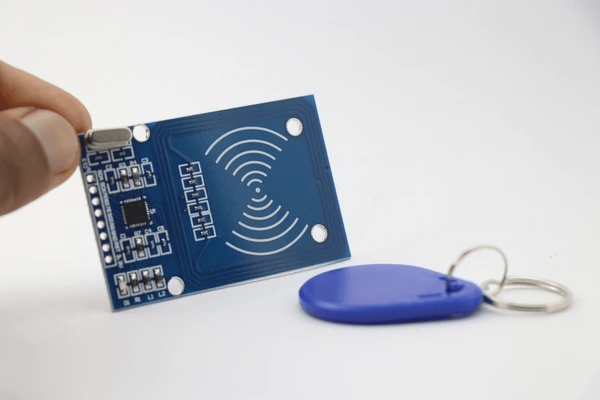
What is RFID?
RFID, which stands for Radio Frequency Identification, is a wireless technology used for identifying and tracking objects, animals, or people through the use of radio waves. It operates by attaching a tag, which contains a microchip and an antenna, to the object to be identified. The tag communicates with an RFID reader, which sends out radio waves to activate the tag and retrieve the stored information.
What is NFC?
NFC (Near Field Communication) is a subset of RFID that operates at a frequency of 13.56 MHz and is designed for short-range communication, typically within a few centimeters. NFC enables simple and secure two-way interactions between electronic devices, allowing for data exchange, contactless transactions, and device pairing. NFC is often used in mobile payment systems, such as Apple Pay and Google Wallet, as well as in applications like smart tickets and digital authentication.
RFID vs NFC: Key Differences
Principle and Technology
- RFID: RFID is a contactless identification technology that uses radio waves to communicate between a tag and a reader. It operates at various frequency ranges, including Low-Frequency (LF), High-Frequency (HF), and Ultra-High Frequency (UHF). RFID tags can be active or passive, with active tags having their own power source and passive tags relying on energy from the reader’s signal.
- NFC: NFC is a subset of RFID that operates at a specific frequency of 13.56 MHz and is designed for short-range communication. It is based on the ISO/IEC 14443 standard and is used for peer-to-peer communication between devices.
Communication Range
- RFID: The communication range of RFID can vary widely depending on the frequency used. UHF RFID can have a range of up to several meters, while HF RFID, which includes NFC, typically has a range of a few centimeters to a few meters.
- NFC: NFC has a very short communication range, typically up to 10 cm, which makes it more secure against eavesdropping and suitable for applications that require close proximity.
Power Source
- RFID: RFID tags can be either active or passive. Active RFID tags have their own power source, such as a battery, while passive RFID tags are powered by the electromagnetic field generated by the reader.
- NFC: NFC devices can operate in both active and passive modes. In passive mode, the NFC device is powered by the magnetic field of the reader, while in active mode, both devices generate their own field for communication.
Applications
- RFID: RFID is widely used in various applications such as inventory management, supply chain tracking, access control, and anti-theft systems. It is suitable for applications that require longer read ranges and the ability to communicate with multiple tags simultaneously.
- NFC: NFC is commonly used in applications such as mobile payments, electronic ticketing, and data transfer between devices. Its short range and ability for peer-to-peer communication make it suitable for applications that require secure and direct device-to-device communication.
Security
- RFID: RFID systems can be vulnerable to eavesdropping and tampering, especially in applications where the communication range is longer.
- NFC: The short range of NFC makes it more secure against eavesdropping, which is one of its advantages over RFID.
Data Transfer Rate
- NFC: NFC supports data transfer rates ranging from 106 kbit/s to 424 kbit/s, which is faster than many RFID systems.

Advantages and Disadvantages of RFID
Advantages of RFID
- Longer Range: RFID systems can operate over distances of several meters, making them suitable for large-scale applications.
- Higher Throughput: RFID can handle multiple tags simultaneously, increasing efficiency in environments with many items to track.
- Durability: RFID tags are often more robust and can withstand harsh environments better than NFC devices.
- Cost-Effectiveness: RFID technology can be more cost-effective for bulk applications, especially when using passive tags.
Disadvantages of RFID:
- Security Concerns: The longer range of RFID can be a security risk, as it may allow unauthorized access to data.
- Complexity: Implementing RFID systems can be more complex and require more infrastructure compared to NFC.
- Power Requirements: Active RFID tags require a power source, which can increase costs and maintenance needs.
Advantages of NFC:
- Security: The short range of NFC enhances security by limiting the potential for unauthorized access.
- Ease of Use: NFC is user-friendly and can facilitate simple, intuitive interactions between devices, such as mobile payments and data transfer.
- Integration with Mobile Devices: NFC is well-suited for integration with smartphones and other mobile devices, leveraging their capabilities for various applications.
- Standardization: NFC operates on standardized frequencies and protocols, promoting interoperability between devices.
Disadvantages of NFC:
- Complexity in Implementation: While NFC is user-friendly, implementing secure and reliable NFC systems can be complex.
- Short Range: The limited range of NFC can be a limitation for certain applications requiring longer distances.
- Cost: NFC technology can be more expensive than RFID, especially when considering the need for specialized mobile devices.

FAQ
- What is the main difference between RFID and NFC?
- RFID offers long-range communication, while NFC is designed for short-range, secure interactions.
- What are RFID tags used for?
- RFID tags are used for inventory tracking, asset management, and access control in industries like retail and logistics.
- What is NFC commonly used for?
- NFC is widely used for mobile payments, secure access, and device pairing.
- Is NFC a type of RFID?
- Yes, NFC is a subset of RFID technology, operating at a specific frequency and with shorter range.
- Which is better: RFID or NFC?
- It depends on the application; RFID is better for long-range tracking, while NFC excels in secure, short-range interactions.
To get detailed scientific explanations of RFID vs NFC, try Patsnap Eureka.

Learn more
Shock Cords: Versatile Strength for Every Need
Pressure Switches: Small Devices, Big Impact
Unveiling The Lead Screw: Its Mechanism, Benefits, And Beyond