


What is a Seven Segment Display?
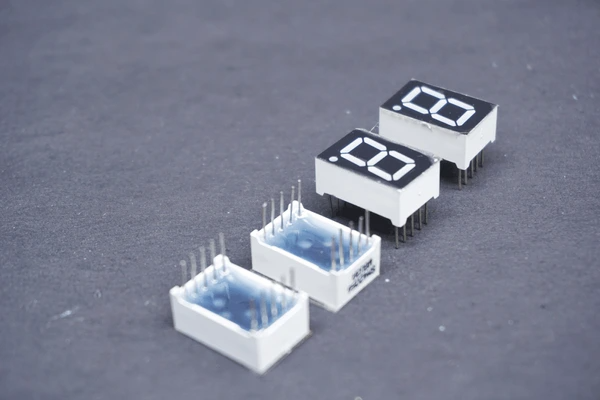
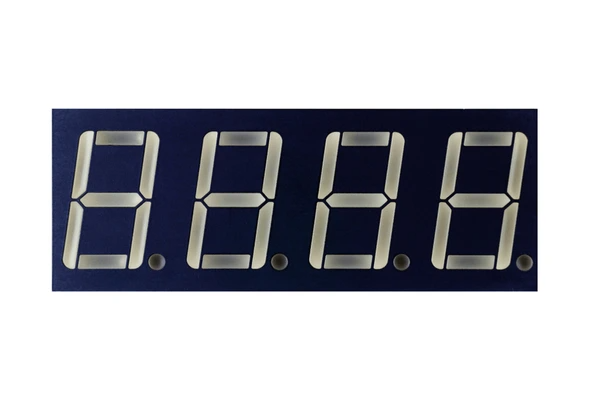
A Seven Segment Display (SSD) is an electronic device used to display numerical values or specific characters. It consists of seven segments, typically arranged in a specific format, which can be illuminated to form different digits or characters. SSDs are commonly used in various applications, including digital clocks, calculators, meters, and other electronic devices, due to their simplicity and effectiveness in displaying information.
How Does a Seven Segment Display Work?
The operation of a seven-segment display involves controlling the segments to display the desired digit. This is usually achieved using a decoder IC, such as the 7447 or 7448, which takes in a binary-coded decimal (BCD) input and activates the appropriate segments to display the corresponding digit. The display is often controlled by a microcontroller or other digital circuitry, which sends the BCD code to the decoder and updates the display accordingly.
Types of Seven Segment Displays
- Standard Seven Segment Displays: Basic displays used for numeric information.
- LED Seven Segment Displays: Use light-emitting diodes for illumination, offering better visibility and longer lifespan compared to traditional displays.
- Reversible Logic Seven Segment Displays: Utilize reversible logic gates to reduce heat dissipation and power consumption, making them suitable for nanotechnology and low-power applications.
- FPGA-Controlled Seven Segment Displays: Use Field-Programmable Gate Arrays (FPGAs) to control the displays, offering flexibility and customization in display operations.
Advantages of Seven Segment Displays
- Simplicity: They are relatively simple to design and implement, requiring fewer components compared to matrix displays.
- Cost-Effectiveness: They are inexpensive to produce and use, making them cost-effective for many applications.
- Ease of Use: They are easy to interface with microcontrollers and other electronic devices due to their straightforward control logic.
- Energy Efficiency: Reversible logic implementations can reduce power consumption and heat dissipation, making them suitable for energy-efficient designs.
- Versatility: They can be used to display numbers, letters, and symbols, making them versatile for various applications.
Challenges and Limitations
- Inter-digit Brightness Variations: One of the challenges is ensuring uniform brightness across all digits, which can be achieved by using constant current sources or pulse width modulation techniques.
- Heat Dissipation: Seven segment displays using traditional logic gates can generate heat, which can be a concern in high-density applications.
- Limited Display Options: They are not suitable for applications requiring the display of complex characters or images, necessitating the use of more advanced display technologies.
- Dependence on Technology: The use of seven segment displays can be problematic in safety-critical applications where more legible alternatives are preferred.
How to Drive a Seven Segment Display
- Microcontroller Control: Microcontrollers like PIC can be used to control the segments through digital outputs. Timers on the microcontroller can be utilized to create variable delays and manage the display refresh rate.
- Dedicated ICs: ICs such as the 7447 or 7448 can be used to decode input data and drive the segments. These ICs are often used in conjunction with switches or buttons for user input.
- Pulse Width Modulation (PWM): PWM can be employed to control the current to LEDs, ensuring uniform brightness across all digits, which is particularly useful in LED displays.
Applications of Seven Segment Display
Electronics and Consumer Devices
- Seven segment displays are commonly used in electronic meters, digital calculators, clock radios, digital clocks, and odometers. They are also found in home appliances for displaying settings or status.
Automotive Industry
- In the car industry, seven segment displays are used for various applications such as seminar presentation alarm clocks, and other information display systems like in-car navigation systems.
Retail and Advertising
- Digital displays are used in retail settings to attract customer attention and engage them in product consumption. They are employed in public places for advertising and social gaming platforms. The displays can be interactive, enhancing consumer interaction and involvement.
Industrial and Safety-Critical Applications
- Although seven segment displays are popular due to their simplicity and cost-effectiveness, they may not be the best choice for safety-critical applications or those requiring high legibility. Alternative, more legible displays should be considered in such cases.
Nanotechnology and Reversible Logic
- Reversible logic gates are used in seven segment displays to reduce heat dissipation, making them suitable for nanotechnology and low-energy CMOS designs. This approach allows for zero power consumption and information retrieval capabilities.
Manufacturing and Display Techniques
- The manufacturing of seven segment displays involves creating circuit boards and attaching light sources within cavities formed in materials. This technique is crucial for producing displays that can be integrated into various electronic devices.
Steganography and Data Encoding
- Seven segment display patterns are used as secret keys in steganography processes, particularly in hardware implementations using Field-Programmable Gate Arrays (FPGAs). This application highlights the versatility of seven segment displays in data encoding and security.
Application Cases
| Product/Project | Technical Outcomes | Application Scenarios |
|---|---|---|
| Seven Segment Display Decoder American Hotel & Lodging Educational Institute | Facilitates operation process and visualization of electronic equipment through seven segment display decoding. | Various electronic equipment requiring numerical display and operation convenience. |
| ANN-based Seven Segment Display Jammu University of | Applies ANN and randomization to recognize composed data and display updated contents for business strategies. | Displaying dynamic messages and contents for business strategies or activities. |
| Alternative Numerical Displays Swansea University | Highlights issues with seven segment displays and proposes more legible alternatives for safety-critical and dependable applications. | Safety-critical and dependable applications requiring high legibility numerical displays. |
| Display with Cavity-mounted Light Source Avago Technologies ECBU IP (Singapore) Pte Ltd. | Innovative display design with light source mounted in a cavity formed by attaching circuit board to a material. | Displays requiring efficient light source integration and manufacturing. |
| Display Panel with Backup Electrode Citizen Watch Co., Ltd. | Provides a sufficient gap between electrodes while minimizing visibility through a backup electrode design. | Display panels requiring gap between electrodes while maintaining visibility. |
Latest Technical Innovations in Seven Segment Display
Reversible Logic Gates
- Recent innovations have explored the use of reversible logic gates to design seven segment displays, which result in less heat dissipation and the ability to retrieve inputs from outputs, potentially reducing power consumption to zero.
Optical Character Recognition (OCR)
- Systems have been developed for recognizing seven segment display images using OCR, which can automate calibration processes in industries like process control, improving accuracy and reducing manual work.
Data Augmentation Techniques
- New data augmentation methods like the multiscale Radon transform have been proposed to enhance the robustness of seven segment display recognition systems, improving accuracy rates to 87.05%.
Integration with BCD Decoders
- Innovations have led to the development of seven segment displays with integrated BCD converters, reducing the number of components, power consumption, and space required.
Use in Steganography
- Seven segment display patterns have been used as secret keys in steganography applications, enhancing data hiding effectiveness.
Improved Display Technologies
- Advancements in glass design and process have enabled innovations in display performance, portability, and mechanical reliability.
FPGA Implementations
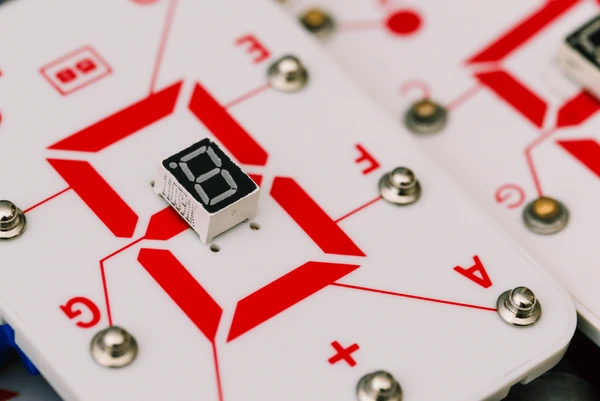
- Seven segment displays have been implemented on FPGA devices for educational purposes, allowing for simulations and practical implementations in digital design courses
To get detailed scientific explanations of seven segment displays, try Patsnap Eureka.

Learn more
Multiplexor: Efficient Data Selector for Electronics
Understanding STP Cable: Shielded Twisted Pair Explained
Understanding Twisted Pair Cable: Basics, Benefits, and Uses