


Solid-state battery technology is rapidly emerging as a game-changer in the electric vehicle (EV) industry, offering safer, faster-charging, and more energy-dense alternatives to traditional lithium-ion batteries. This article explores the core principles behind solid-state batteries, their advantages, recent breakthroughs, and the shifting global market trends driving their adoption in the EV revolution.
What Are Solid State Batteries?
Curious how solid-state batteries are shaping the EV revolution or what market trends mean for the future? Eureka Technical Q&A connects you with battery technology and materials science experts who can explain innovations, performance metrics, and commercialization challenges—giving you a clearer view of where the industry is headed.

Solid-state batteries are a type of energy storage technology that replaces the liquid or gel electrolyte in conventional lithium-ion batteries with a solid electrolyte. This fundamental change allows for more compact, energy-dense, and thermally stable batteries.
Key Features:
- Solid electrolyte: Made from ceramics, glass, or sulfides
- Lithium metal anode: Often used instead of graphite for higher capacity
- Compact architecture: Enables thinner, more efficient designs
How Solid State Batteries Work
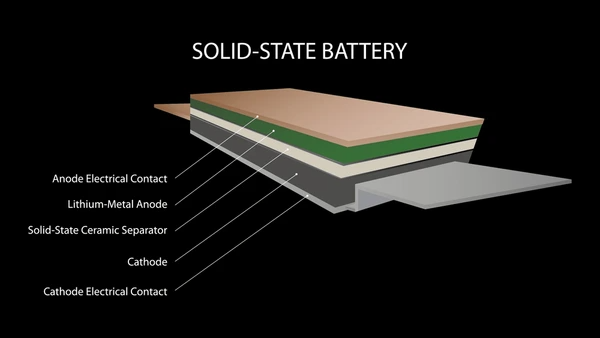
Solid-state batteries operate similarly to lithium-ion batteries in that they store and release energy through redox reactions between the anode and cathode. However, they replace the liquid electrolyte with a solid electrolyte, which can be made from materials such as ceramics, glass, or polymers. This solid electrolyte facilitates the movement of ions between the electrodes while maintaining a solid state, which enhances safety and stability.
- Anode and Cathode store and release lithium ions.
- Solid electrolyte transports these ions instead of a liquid.
- Charge/discharge cycle involves ions moving back and forth, generating electrical energy.
The use of a solid electrolyte improves ionic conductivity, reduces leakage risks, and supports higher voltage thresholds, enabling more robust battery performance.
Advantages Over Lithium-Ion Batteries
- Safety: Solid-state batteries are considered safer than lithium-ion batteries because the solid electrolyte reduces the risk of leaks, short circuits, and thermal runaway, which can lead to fires or explosions .
- Energy Density: These batteries can achieve higher energy densities, meaning they can store more energy in a smaller volume. This is particularly beneficial for electric vehicles, where space and weight are critical factors .
- Longevity: Solid-state batteries typically have a longer cycle life, with some estimates suggesting they can maintain 90% of their capacity after 5,000 charge cycles, compared to 1,000 cycles for lithium-ion batteries .
- Faster Charging: The solid electrolyte allows for faster charging times, as the battery can reach an 80% charge in about 15 minutes, compared to longer charging times for lithium-ion batteries .
| Feature | Solid State Battery | Traditional Lithium-Ion Battery |
|---|---|---|
| Energy Density | Up to 2–3x higher | Moderate |
| Charge Time | Faster (<15 min) | Slower (30–90 min) |
| Thermal Stability | High (safer) | Prone to overheating |
| Cycle Life | Longer | Moderate |
| Form Factor | Flexible/thinner | Bulkier |
Why It Matters for EVs:
- Extended driving range
- Rapid recharging at charging stations
- Lower fire risk
- Smaller, lighter battery packs
Major Players and Industry Developments
1. Honda
- Building a demonstration plant for solid-state battery production in Japan
- Aims for mass production in the late 2020s
2. Nissan
- Plans to launch EVs with solid-state batteries by 2029
- Targets a 65% cost reduction and charging in one-third the time
3. Toyota
- One of the earliest investors in solid-state R&D
- Exploring hybrid models with solid-state packs by mid-decade
4. QuantumScape
- Backed by Volkswagen
- Developing solid-state lithium-metal batteries with fast-charge capability in under 15 minutes
5. BYD, Samsung SDI, and Solid Power
- Rapidly accelerating R&D and pilot-scale production to compete globally
Solid State Battery Market Trends
Explosive Market Growth
According to Grand View Research:
- Market size in 2024: $1.18 billion
- Expected CAGR (2025–2030): 56.6%
- Key drivers: EV adoption, safety demands, range anxiety
Regional Breakdown
- Asia-Pacific leads due to EV manufacturing hubs (China, Japan, South Korea)
- Europe investing in giga-factories and clean tech subsidies
- North America gaining traction with companies like QuantumScape and Ford
Challenges Facing Mass Adoption
Despite immense potential, solid-state battery commercialization still faces hurdles:
1. High Production Costs
- Solid electrolytes and lithium-metal are more expensive
- Manufacturing processes are still being optimized for scale
2. Material Compatibility
- Interface resistance between solid components can reduce performance
- Research ongoing into better electrolytes (e.g., sulfide, oxide-based)
3. Scalability
- Existing lithium-ion infrastructure needs retooling for solid-state production
4. Durability and Reliability
- Some prototypes still face dendrite growth and performance degradation over cycles
Impact on the EV Revolution
The adoption of solid-state batteries could reshape the entire EV landscape:
| Metric | Lithium-Ion | Solid-State (Projected) |
|---|---|---|
| Range | 250–400 miles | 600+ miles |
| Charge Time | 30–90 min | 10–15 min |
| Battery Size | Large & heavy | Compact & lighter |
| Safety | Moderate | High |
Result: Lighter, safer, longer-lasting EVs with fewer compromises for consumers and manufacturers.
Future Outlook and Innovation
As research intensifies and pilot plants evolve into full-scale factories, the next five years are expected to witness:
- First commercial EVs with solid-state batteries by 2027–2030
- Blended battery strategies (semi-solid batteries, silicon anodes)
- Decline in cost-per-kWh, making EVs more accessible
Conclusion
Solid-state battery technology holds the key to unlocking the next generation of electric vehicles—offering unprecedented improvements in range, safety, efficiency, and sustainability. With major automakers, governments, and tech companies racing to perfect and scale this innovation, the EV revolution is set to accelerate faster than ever.
As the technology matures and enters mass production, solid-state batteries will likely become the gold standard for electric mobility, driving global electrification and transforming how we power our world.
FAQs
Unlike lithium-ion batteries, which use liquid electrolytes, solid-state batteries use solid electrolytes made from materials like ceramics or polymers.
Yes. They are non-flammable, reduce the risk of thermal runaway, and are more stable at higher temperatures.
Most estimates suggest by 2027–2030, with limited models appearing earlier in high-end markets.
Not immediately. Lithium-ion will continue to dominate in the near term, but solid-state is likely to take over in premium EVs and then scale down.
While research is ongoing, mass adoption in consumer electronics is expected after solid-state batteries are proven in automotive and industrial sectors.
To get detailed scientific explanations of Solid State Battery, try Patsnap Eureka.
