


In today’s fast-paced world, technology has revolutionized nearly every aspect of our lives, and the display industry is no exception. The Thin-Film Transistor Liquid Crystal Display (TFT LCD) has become the standard for high-quality visual displays across various industries, from smartphones and televisions to automotive dashboards and medical instruments. This article will delve into the significance of TFT LCD technology, how it works, its advantages, and the latest trends shaping the future of display technologies.
What is TFT LCD Technology?
To understand why TFT LCDs are a preferred display solution, we must first explore the basic principles behind their operation.
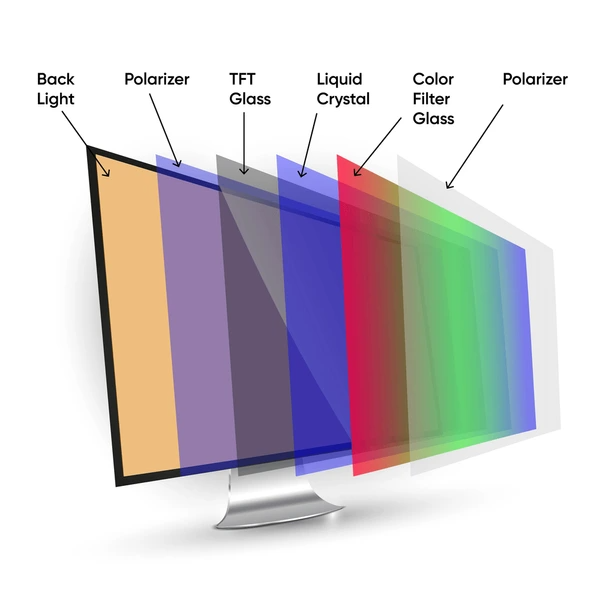
TFT (Thin-Film Transistor) is a technology that enhances the functionality of liquid crystal displays (LCDs) by incorporating a thin-film transistor for each pixel. This transistor controls the pixel’s individual brightness, allowing for sharper images and faster response times compared to traditional LCDs. TFT LCDs are commonly used in applications requiring high-definition resolution, vivid colors, and faster refresh rates.
How TFT LCD Works
TFT LCDs rely on liquid crystals to control the passage of light, while the thin-film transistors regulate each pixel’s voltage. This allows for precise control over the display, offering high-quality images and excellent contrast.
Key features of TFT LCDs:
- High-resolution displays with vibrant colors
- Faster refresh rates for smooth visuals
- Better energy efficiency compared to older display technologies
The Science Behind TFT LCDs
How TFT LCDs Achieve Better Visuals
Unlike conventional LCD displays, TFT technology allows each pixel to be independently controlled by a thin transistor layer. This makes it possible to produce clearer and sharper images, ensuring minimal motion blur and improved color accuracy.
Scientific benefits of TFT LCD technology
- Superior Color Reproduction – TFT LCDs support a broader color gamut, making them ideal for media devices and graphic-intensive applications.
- Faster Response Times – The individual pixel control allows for faster refresh rates, reducing ghosting or blurring, especially in fast-moving content.
- Higher Resolution – TFT LCDs deliver clear, sharp images, which is why they are widely used in devices that demand high-definition displays.
For example, in gaming consoles or smartphones, TFT LCD screens provide a crisp, fast, and vibrant experience that enhances visual appeal and performance.

Performance Comparison: TFT LCD vs. Other Display Technologies
| Feature | TFT LCD | OLED | LED | Plasma |
|---|---|---|---|---|
| Resolution | High (up to 8K) | High | High | Medium |
| Color Accuracy | Excellent | Excellent | Good | Fair |
| Energy Efficiency | Efficient | Very Efficient | Efficient | Less Efficient |
| Viewing Angle | Moderate | Excellent | Good | Good |
| Lifespan | Long-lasting | Moderate | Long-lasting | Shorter |
TFT LCDs offer a well-balanced solution, with excellent resolution, energy efficiency, and lifespan. However, OLEDs are known for their superior color accuracy and better viewing angles. Despite this, TFT LCDs remain a popular choice due to their affordability and solid performance.
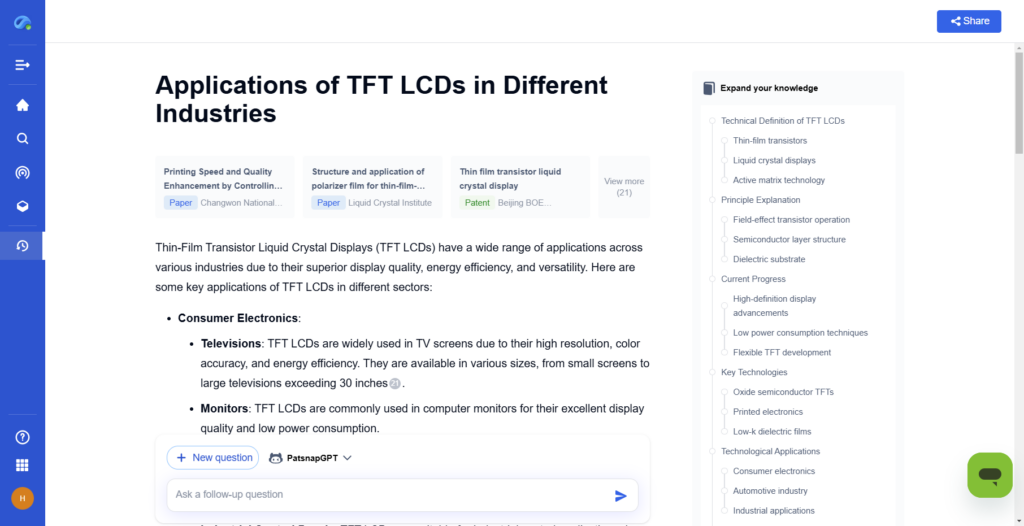
Applications of TFT LCDs in Different Industries
Consumer Electronics
● Smartphones & Tablets: High-quality displays with superior color reproduction and fast refresh rates.
● Televisions & Monitors: Offering sharp resolution and rich colors for cinematic experiences.
● Wearables: Efficient displays for smartwatches and fitness trackers.
Automotive Industry
● Dashboard Displays: TFT LCDs provide clear, readable information for drivers with vibrant visuals and fast response times.
● Infotainment Systems: Offering enhanced user interfaces with smooth touch responses and high-definition visuals.
Medical Devices
● Medical Imaging: TFT LCDs are used in medical displays for diagnostics, ensuring high image clarity and precise details in imaging processes.
● Patient Monitors: Provide real-time monitoring with clear and accurate information for healthcare professionals.
💡 TFT LCDs are transforming industries with clarity and precision. For expert insights and tailored solutions on your TFT LCD projects, Eureka Technical Q&A is here to help!

Application Cases
| Product/Project | Technical Outcomes | Application Scenarios |
|---|---|---|
| BOE TFT LCD Panels Beijing BOE Optoelectronics Technology Co., Ltd. | Enhanced stability and performance by optimizing post spacer positioning and light blocking bar shapes, addressing light leakage issues. | High-quality display applications requiring improved image quality and reduced light leakage. |
| SELTFT LCD Panels Semiconductor Energy Laboratory Co., Ltd. | Improved reliability and manufacturing yield through the use of fibrous bodies impregnated with organic resins, reducing cracking and enhancing adhesion. | Advanced LCD devices requiring high durability and resistance to external stress. |
| Samsung Advanced TFT LCDs Samsung Display Co., Ltd. | Improved image quality and uniformity across panels by addressing TFT misalignment and parasitic capacitance issues through alternative TFT structures and pixel designs. | High-end display applications demanding superior image quality and consistency. |
| BOE High-Efficiency LCDs BOE Technology Group Co., Ltd. | Enhanced TFT driving ability without occupying display region, improving both performance and efficiency through innovative pixel structure design. | Displays requiring high aperture ratio and improved performance in compact designs. |
| AUO Premium TFT-LCDs AUO Corp. | Improved TFT quality and increased capacitance by employing metallic electrodes as masks and controlling etching conditions to remove unwanted amorphous silicon. | High-performance displays for applications demanding superior TFT quality and enhanced capacitance. |
Challenges and Limitations of TFT LCD Technology
Despite the many advantages, TFT LCDs come with certain limitations:
❌ Limited Viewing Angles – Compared to OLED displays, TFT LCDs have moderate viewing angles, which may impact the experience from side views.
❌ Thickness – While thin, TFT LCDs are typically thicker than OLED panels.
❌ Contrast Ratios – The contrast in TFT LCDs can sometimes be lower compared to OLED technology, which uses self-emitting pixels.
Future Trends in TFT LCD Technology
🔹 Mini-LED and Micro-LED: Innovations like Mini-LED and Micro-LED are enhancing TFT LCD technology by providing better contrast and brightness without significantly increasing costs.
🔹 Quantum Dots: Quantum Dot technology is being integrated into TFT LCDs to improve color accuracy and brightness, bringing LCD performance closer to OLED displays.
🔹 Flexible Displays: The development of flexible TFT LCDs promises new form factors for wearables, foldable devices, and automotive displays.
How Eureka by PatSnap Accelerates TFT LCD Innovation
What is Eureka by PatSnap?
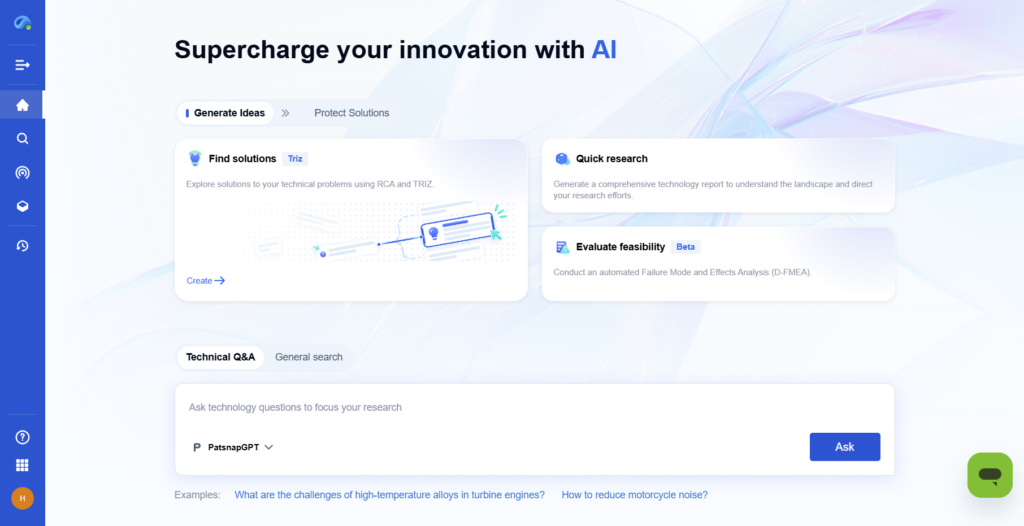
Eureka by PatSnap is an AI-powered innovation intelligence platform that helps researchers and engineers accelerate the development of new technologies like TFT LCDs.
How Eureka Benefits TFT LCD R&D
✅ Patent Analysis – Identifies emerging trends and technologies in the TFT LCD space.
✅ Competitive Intelligence – Helps manufacturers track and benchmark innovations by top competitors.
✅ Technology Roadmapping – Provides insights into future directions for TFT LCD development and industry applications.
If you’re in display technology R&D or manufacturing, Eureka by PatSnap can provide the tools to stay ahead of the curve and drive your TFT LCD innovations forward.
Conclusion
TFT LCD technology has become a cornerstone of modern displays, offering a blend of high performance, energy efficiency, and versatility. While it faces challenges in comparison to OLED technology, its affordability and wide application range continue to make it an industry standard. With future innovations, such as Mini-LED and Quantum Dots, the potential for further improvements in TFT LCD technology is immense.
🚀 Stay Ahead in Display Technology
Want to learn more about the latest trends in TFT LCD development? Sign up for Eureka by PatSnap today and accelerate your R&D journey!
FAQs
1️⃣ How does TFT LCD differ from OLED?
TFT LCDs offer excellent resolution and color reproduction but have limitations in viewing angles and contrast compared to OLED displays, which are more vibrant and have better contrast.
2️⃣ Are TFT LCDs energy-efficient?
Yes, TFT LCDs are highly energy-efficient, consuming less power compared to older display technologies like plasma.
3️⃣ What industries use TFT LCDs?
TFT LCDs are widely used in consumer electronics, automotive displays, medical devices, and more, thanks to their clear visuals, durability, and efficiency.
4️⃣ Are there any downsides to TFT LCDs?
While TFT LCDs are versatile and widely used, they have moderate viewing angles and lower contrast compared to OLEDs. They also tend to be thicker than newer display technologies.
5️⃣ What are the future trends in TFT LCD technology?
The integration of Mini-LED, Quantum Dots, and flexible displays is driving future advancements in TFT LCD technology, improving color accuracy, brightness, and flexibility.
To get detailed scientific explanations of TFT LCD, try Patsnap Eureka.
