


What is the Honda B16 Engine?
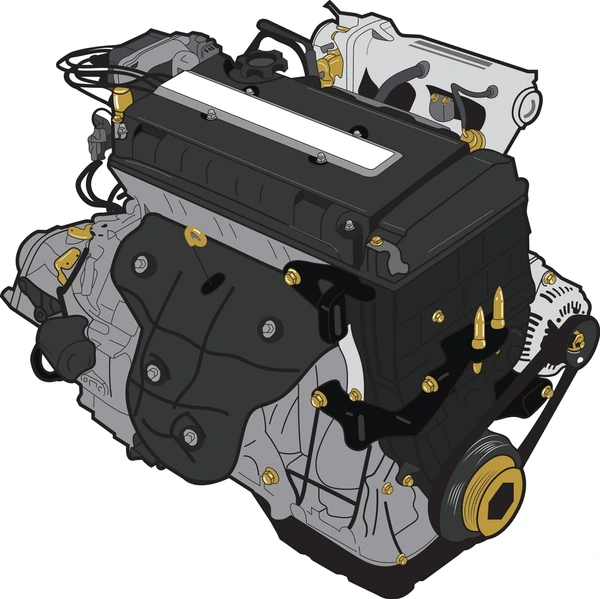
The Honda B16 engine is a renowned member of Honda’s B-series engine family, widely recognized for its performance and reliability. This engine has been a popular choice among car enthusiasts and tuners due to its advanced engineering and potential for modifications.
Specifications of the Honda B16 Engine
- Displacement: 1.6 liters (1595 cc)
- Bore x Stroke: 81 mm x 77.4 mm
- Compression Ratio: 10.4:1
- Valvetrain: DOHC VTEC (Dual Overhead Camshaft with Variable Valve Timing and Lift Electronic Control)
- Fuel System: Multi-point fuel injection
- Maximum Power Output: Approximately 160 horsepower at 7600 RPM
- Maximum Torque: Around 111 lb-ft at 7000 RPM
Key Variants of the B16 Engine
B16A
This is the first version of the B16 engine, introduced in 1989. It features a 1,595cc displacement, with a bore and stroke of 81mm and 77.4mm, respectively. The compression ratio is 10.2:1, and it produces 162 horsepower at 7,600 rpm and 15.5 kg·m of torque at 7,000 rpm. The VTEC system activates at 5,500 rpm. The B16A is known for its narrow power band, which results in a “transient” acceleration feel that requires frequent shifting.
B16A1, B16A2, B16A3, B16A5, B16A6
These are export variants of the B16A engine, with similar specifications but tailored for different markets.
B16B
Introduced in 1997, the B16B is an evolution of the B16A, used in the Honda Civic Type-R (EK9). It has the same bore and stroke as the B16A but with a longer connecting rod length of 142.42mm, increasing the cylinder height to 212mm. The compression ratio is 10.8:1, and it produces 185 horsepower at 8,200 rpm and 160 N·m of torque at 7,500 rpm. The B16B features a more robust design and higher performance capabilities compared to the B16A.
B16C
Although not mentioned in the provided information, the B16C is another variant of the B16 engine, known for its use in the Honda Integra Type R (DC2). It features a 1,796cc displacement, with a bore and stroke of 87mm and 84.5mm, respectively. The compression ratio is 10.0:1, and it produces 195 horsepower at 7,800 rpm and 17.5 kg·m of torque at 6,800 rpm. The B16C is renowned for its high-revving capability and is considered one of the most powerful variants of the B16 engine.
How the B16 Engine Revolutionized Compact Cars
Technological Advancements in Engine Design
- Compact and Lightweight Architecture: The engine introduced a modern, lightweight design perfect for compact cars. Its aluminum block and head reduced weight and improved heat dissipation. These features enhanced the vehicle’s power-to-weight ratio while also improving fuel efficiency.
- Advanced Fuel Injection System: The use of a multi-point fuel injection (MPFI) system brought precise control over the air-fuel mixture. This innovation improved combustion efficiency, reduced emissions, and enhanced throttle response, making the engine highly responsive and reliable.
- Variable Valve Timing Technology: The inclusion of Variable Valve Timing (VVT) technology was a game-changer. VVT optimized valve timing across RPM ranges, boosting both power output and fuel economy. This innovation made the engine versatile for varying driving conditions.
Performance and Efficiency Upgrades
- Impressive Power Output: Known for delivering around 160 horsepower and 111 lb-ft of torque, the engine offered substantial power for its compact size. This performance provided excellent acceleration and enhanced overall driving dynamics.
- Enhanced Fuel Economy: Lightweight materials, advanced fuel injection, and VVT combined to deliver remarkable fuel efficiency. The engine achieved approximately 30 mpg in city driving and up to 40 mpg on highways, making it a favorite among compact car drivers.
- Reduced Emissions: Efficient combustion and precise air-fuel control led to cleaner emissions. The engine met stringent environmental standards, aligning with the growing demand for eco-friendly vehicles.
Design Changes in Compact Cars
- Improved Vehicle Dynamics: The lightweight design contributed to better weight distribution, enhancing handling and stability. This improvement made driving more enjoyable and refined.
- Maximized Interior Space: The compact size of the engine freed up space under the hood, allowing for better interior layouts. This innovation increased passenger comfort and cargo space, adding practicality to compact cars.
- Advanced Safety Features: Weight and space savings enabled manufacturers to incorporate modern safety enhancements. Improved crumple zones, advanced airbags, and reinforced structures became standard without sacrificing performance or design.
B16A vs. B16B: What’s the Difference?
Performance Characteristics
- Power Output: The B16A engine, especially in its second generation, generates up to 170 horsepower at 7,800 RPM and a torque of 16 kg·m at 7,300 RPM. Meanwhile, the B16B delivers an impressive 185 horsepower at 8,200 RPM and a peak torque of 160 Nm at 7,500 RPM. These gains in the B16B stem from its advanced design enhancements.
- Compression Ratio: The B16A offers a compression ratio of 10.2:1, while the B16B’s higher 10.8:1 ratio contributes to its superior power and efficiency.
- VTEC Engagement: The VTEC system activates at 5,500 RPM in the B16A but engages later at 6,100 RPM in the B16B. This adjustment impacts the engines’ power delivery and driving dynamics.
Structural Differences
- Connecting Rod Length: The B16B features longer connecting rods, measuring 142.42 mm compared to the B16A’s 134 mm. This alteration influences the stroke and overall engine proportions.
- Block Height: To accommodate the longer rods, the B16B’s engine block is taller at 212 mm versus the B16A’s 203.9 mm. This difference affects installation dimensions and structural geometry.
- Cylinder Bore and Stroke: Both engines share identical bore and stroke measurements—81 mm and 77.4 mm, respectively—but differ in internal tuning and components to achieve distinct performance outcomes.
Manufacturing and Design Enhancements
- High-Quality Components: The B16B employs reinforced pistons and a more robust crankshaft, enabling it to handle higher RPMs and power demands.
- Optimized Airflow Systems: Improved intake and exhaust systems in the B16B enhance airflow and combustion, complementing its high-performance specifications.
Applications and Usage
- Vehicle Models: The B16A powered models like the Honda Integra XSi (DA6), CRX SiR (EF8), and Civic SiR (EF9). Its second generation also featured in the Civic EG6, CR-X (EG2), and Civic SiR (EK4). In contrast, the B16B was designed for the Civic Type-R (EK9), focusing on peak performance and racing.
- Market Variants: The B16A was available in various export versions, including B16A1, B16A2, B16A3, and others, tailored to meet different regulations. The B16B, with its performance-oriented design, remained primarily targeted at enthusiasts and was less commonly exported.
Applications of B16 Engine
Automotive Applications
The B16 engine has played a key role in enhancing the performance of various Honda models, particularly those designed for performance enthusiasts:
- Honda Integra XSI (DA6): The B16A engine was first introduced in this model, highlighting its high-revving nature and VTEC technology.
- Honda CRX SiR (EF8) and Civic SiR (EF9): These models benefited from the engine’s ability to produce peak power at high RPMs, making them a favorite among performance enthusiasts.
- Honda Civic Type-R (EK9): The B16B variant, developed from the B16A, was used in this iconic model. It offered even higher performance with 185 hp at 8,200 RPM and a torque of 160 Nm at 7,500 RPM.
Motorsport Applications
The B16 engine has earned a reputation for its robust performance and high-revving capability, making it a favorite in various motorsport disciplines.
- Drag Racing: With its ability to produce significant power at high RPMs, the B16 engine is ideal for drag racing, where quick bursts of power are essential.
- Circuit Racing: Known for its reliability and power, the B16 engine has become a go-to choice in circuit racing, where consistent performance over long durations is crucial.
- Autocross and Rally: The engine’s lightweight construction and responsiveness provide a clear advantage in autocross and rally events, which require quick acceleration and agility.
Aftermarket and Tuning Community
The B16 engine is deeply integrated into the aftermarket and tuning community, largely due to its modifiability and performance potential.
- Engine Swaps: Due to its compatibility with multiple models, the B16 engine is a popular choice for engine swaps, offering a substantial performance boost for various Honda vehicles and compact cars.
- Performance Tuning: The robust design of the B16 allows for extensive tuning options, including turbocharging, supercharging, and internal modifications aimed at increasing power output and overall efficiency.
- Customization: Thanks to a wealth of aftermarket parts, the B16 engine has fostered a dedicated community of enthusiasts who modify their engines for both street use and track performance.
Educational and Research Applications
The B16 engine also plays a vital role in educational and research settings, where its advanced technologies serve as valuable learning tools.
- Engineering Education: Automotive engineering programs often use the B16 engine to teach students about cutting-edge technologies like VTEC, variable valve timing, and high-performance tuning.
- Research and Development: The engine also serves as a platform for research into innovative automotive technologies, including alternative fuels, advanced materials, and state-of-the-art control systems.
Performance Advantages of the B16 Engine
The B16 engine stands out for its impressive performance capabilities, thanks to its advanced design and engineering:
- VTEC System: Honda’s VTEC system optimizes the engine’s performance by adjusting valve timing and lift. This results in high power output at higher RPMs while maintaining efficiency at lower RPMs.
- High-Revving Capability: The B16 engine thrives at high RPMs, where peak power is typically achieved above 7,000 RPM. This characteristic is particularly beneficial for performance and motorsport applications.
- Compact and Lightweight Design: The engine’s compact size and lightweight construction enhance the power-to-weight ratio, improving vehicle performance, acceleration, and handling.
Application Cases
| Product/Project | Technical Outcomes | Application Scenarios |
|---|---|---|
| Honda Integra XSI (DA6) | First introduction of the B16A engine, showcasing high-revving nature and VTEC technology. | High-performance automotive applications. |
| Honda CRX SiR (EF8) and Civic SiR (EF9) | Engine’s ability to deliver peak power at high RPMs, popular among performance enthusiasts. | High-performance automotive applications. |
| Honda Civic Type-R (EK9) | B16B variant offering higher performance with a maximum power output of 185 hp at 8200 RPM and a torque of 160 Nm at 7500 RPM. | High-performance automotive applications. |
| Drag Racing | Engine’s ability to produce significant power at high RPMs, ideal for short bursts of high power. | Motorsport applications. |
| Circuit Racing | Balanced performance and high-revving capability, making it suitable for various motorsport disciplines. | Motorsport applications. |
FAQs
- What is the redline of a B16 engine?
The redline varies by variant, but most B16 engines rev up to 8,000–8,500 RPM, making them some of the highest-revving production engines in their class. - How much power can you get from a turbocharged B16?
With proper tuning and supporting modifications, a turbocharged B16 can produce anywhere from 250 to 400+ horsepower, depending on the setup. - What makes the B16 engine unique?
The B16 was Honda’s first mass-produced engine with VTEC, combining high-revving performance with reliability. Its lightweight and compact design make it ideal for small, agile cars. - Is the B16 engine reliable for daily driving?
Absolutely! The B16 is known for its durability, as long as it’s maintained properly. Regular oil changes and timing belt replacements are key. - Can the B16 engine be swapped into modern vehicles?
Yes! The B16 engine remains a popular swap option for Honda enthusiasts due to its affordability, aftermarket support, and compatibility with older Honda chassis.
To get detailed scientific explanations of B16 Engine, try Patsnap Eureka.

Learn more
2024 Toyota Hilux Review: Everything You Need to Know
The LS3 Engine: Unleashing Power and Efficiency in Automobile
V12 Engine: Unleashing Ultimate Power, Performance, and Luxury