Technical Background and Objectives
Background
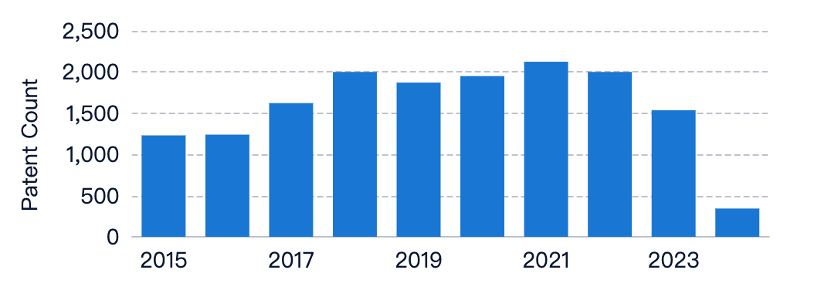
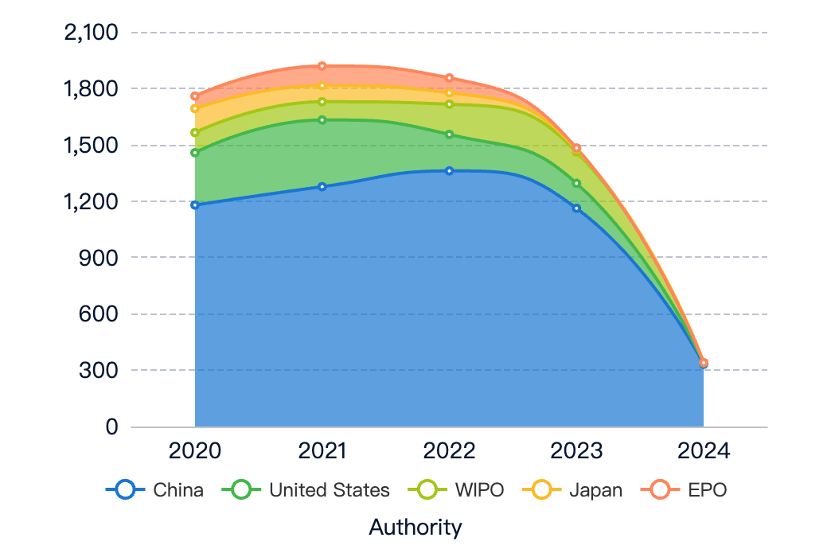
The technical field of ‘Fusion welding fast’ has seen a rise in patent applications, indicating growing interest and research efforts. Patent applications have increased year by year, peaking recently before starting to decline. In contrast, literature publications remain relatively low and stable, suggesting that innovations in ‘Fusion welding fast’ are primarily driven by industrial research and development efforts focused on commercialization and patenting.
Objectives
The primary objective is to develop innovative techniques and methodologies for accelerating the fusion welding process while maintaining high quality standards. This research aims to reduce overall welding time without compromising structural integrity, mechanical properties, or aesthetic appeal of welded joints.
To get a detailed scientific explanations of Fusion Welding, try Eureka.
Technical Current Status Analysis
Fusion Welding Overview
Fusion welding is widely used in various industries including automotive, aerospace, shipbuilding, and construction. The speed of fusion welding affects productivity, efficiency, and cost-effectiveness in manufacturing processes.
Applications and Impact:
- Automotive: Joining body panels, chassis components, and structural parts.
- Aerospace: Joining aircraft structures, engines, and critical components.
- Shipbuilding: Constructing and repairing ships and offshore structures.
- Construction: Joining structural steel components in buildings, bridges, and infrastructure.
Technical Characteristics and Challenges:
- Heat Input and Cooling Rates: Faster welding speeds can affect microstructure and mechanical properties, requiring control of heat input and cooling rates to prevent defects.
- Weld Pool Stability: Higher speeds increase weld pool instability, leading to defects.
- Arc Behavior and Process Control: Rapid speeds cause fluctuations in arc behavior, making process control challenging.
- Material Compatibility: Different materials respond variably to high speeds, affecting weld quality.
- Joint Design and Preparation: Proper joint design and preparation are crucial for high-quality welds at fast speeds.
Technological Paths:
- Advanced Welding Processes: High-speed laser welding, electron beam welding, or hybrid welding techniques.
- Process Modeling and Simulation: Computational tools to optimize welding processes.
- Real-Time Monitoring and Control: Systems to adjust parameters in real-time.
- Material Development: New materials compatible with high-speed welding.
- Joint Design Optimization: Advanced joint geometries and surface preparation methods.
- Automation and Robotics: Consistent and repeatable high-speed welding operations.
Research Content
Research Objectives
Develop innovative techniques and methodologies for accelerating the fusion welding process while maintaining high quality standards.
Research Direction and Focus
Advanced Welding Technologies
- Investigate high-energy beam welding, friction stir welding, and advanced arc welding processes.
- Leverage techniques offering higher energy densities, precise control, and increased welding rates.
Process Optimization and Modeling
- Develop computational models to predict and optimize process variables.
- Conduct experimental validation and iterative refinement of models.
Innovative Materials and Consumables
- Explore novel materials and consumables for high-speed welding applications.
- Develop specialized filler materials, flux compositions, and shielding gas mixtures.
Technical Development Roadmap
Key Areas of Advancement
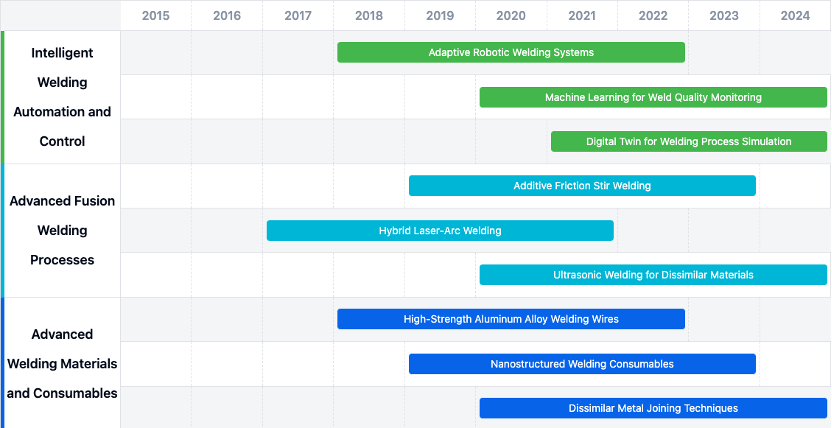
- Advanced Fusion Welding Processes: Additive friction stir welding, hybrid laser-arc welding, and ultrasonic welding for dissimilar materials.
- Intelligent Welding Automation and Control: Adaptive robotic welding systems, machine learning for weld quality monitoring, and digital twin technology.
- Advanced Welding Materials and Consumables: High-strength aluminum alloy welding wires, nano structured welding consumables, and dissimilar metal joining techniques.
Main Player Analysis
Key Players and Focus
- GE Aerospace: Focus on aerospace applications, materials science, metallurgy, and welding processes.
- Kalaivani College of Technology: Research on friction stir welding and optimization of welding parameters.
- NIPPON STEEL CORP.: Expertise in steel and alloy welding applications.
- Indira Gandhi Centre for Atomic Research: Research on welding of dissimilar metals and high-performance welded joints.
- Daiichi Shokai Co. Ltd.: Innovations in fusion welding processes across various industries.
Current Technical Solution Overview
Fusion Welding Process and Methods
- Process Optimization and Control: Monitoring and adjusting parameters like heat input and weld pool geometry.
- Fusion Welding of Dissimilar Materials: Techniques to prevent contaminant expulsion and ensure strong weld joints.
- Additive Manufacturing and Cladding: Combining fusion welding with additive manufacturing for complex geometries.
- Plastic and Composite Welding: Methods for welding plastic and composite materials.
- Hybrid Processes: Combining different welding techniques for improved quality and productivity.
Fusion Welding of Plastic Materials
- Machines and Devices: Plastic fusion welding machines and automatic fusion welding devices.
- Methods and Techniques: Methods for assembling plastic parts, rapid evaluation of weld quality, and welding of defective components.
- Plastic Composites and Specialized Materials: Techniques for welding advanced plastic materials.
- Fittings and Accessories: Fusion welding fittings and clamping devices for plastic components.
- Process Optimization and Control: Techniques for optimizing fusion welding processes for plastic materials.
Cladding and Additive Manufacturing Using Fusion Welding
- Laser Cladding and Additive Manufacturing: Systems for laser cladding with powder feeding mechanisms.
- Composite Additive Manufacturing: Combining laser cladding with other processes for improved properties.
- Powder Feeding and Nozzle Designs: Efficient and controlled powder feeding mechanisms.
- Process Monitoring and Modeling: Techniques for monitoring and optimizing the cladding process.
Fusion Welding Equipment and Control Systems
- Equipment and Control Systems: Machines and systems for controlling fusion depth and parameters.
- Methods and Processes: Techniques for optimizing fusion welding processes and controlling penetration depth.
- Plastic Component Welding: Methods for joining plastic components like pipe joints and fittings.
- Rapid Evaluation and Quality Control: Tools for assessing weld integrity and defects.
Fusion Welding of Specific Materials
- Methods for Specific Materials: Techniques for welding metals, alloys, and plastics.
- Equipment and Systems: Specialized equipment for consistent and high-quality welds.
- Pipe and Tube Applications: Techniques for joining pipes and tubes.
- Dissimilar Material Welding: Methods for welding different metals or alloys.
Key Patent Interpretation
Patent Highlights
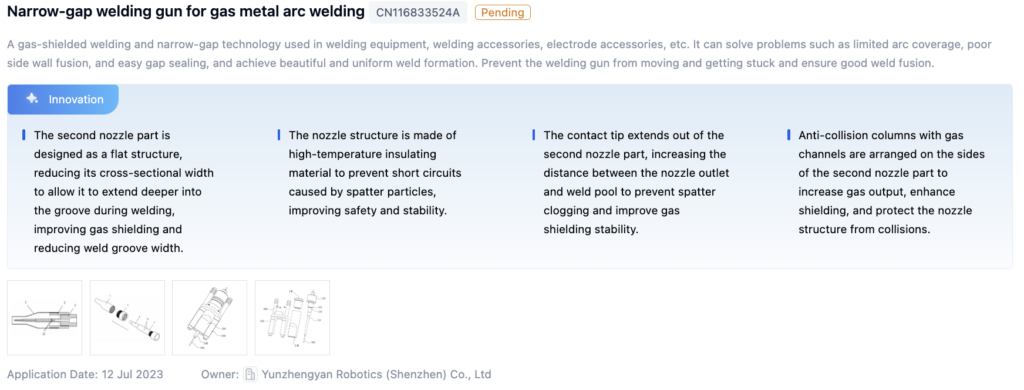
Patent 1: Narrow-Gap Welding Gun for Gas Metal Arc Welding
- Core Invention Points:
- Flat nozzle structure for improved gas shielding and reduced weld groove width.
- High-temperature insulating material to prevent short circuits.
- Extended contact tip for better gas shielding stability.
Patent 2: Intelligent Identification Method for Welding Current Process Intervals
- Core Invention Points:
- Collects real welding current data and divides it based on welding mechanism.
- Calculates representative current values through clustering.
- Filters and fuses scattered current intervals for accurate identification.

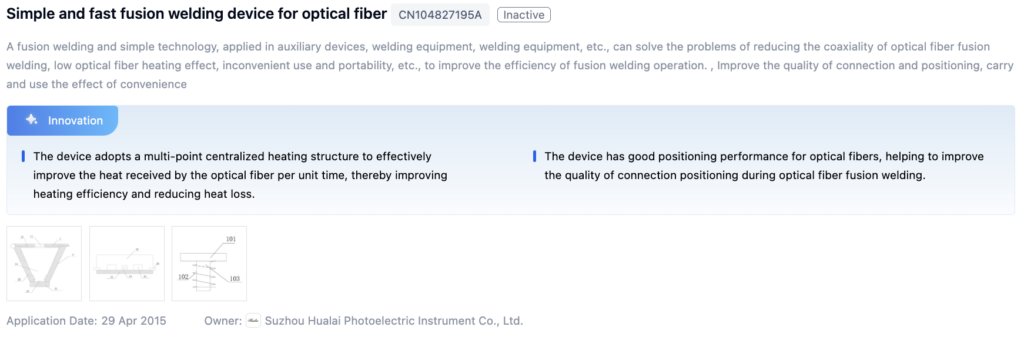
Patent 3: Simple and Fast Fusion Welding Device for Optical Fiber
- Core Invention Points:
- Multi-point centralized heating structure for improved heating efficiency.
- Good positioning performance for optical fibers.
Possible Research Directions
- Controlling Fusion Depth in Welding Processes: Techniques to optimize fusion depth during welding.
- Joining Dissimilar or Difficult-to-Weld Materials: Methods for welding challenging materials.
- Fusion Welding of Plastic and Polymer Materials: Techniques for joining plastic components.
- Cladding and Additive Manufacturing: Fusion welding processes for cladding and additive manufacturing.
- Purification and Defect Prevention: Techniques to minimize defects and impurities in the weld zone.
If you want an in-depth research or a technical report, you can always get what you want in Eureka Technical Research. Try now!