


Technical Background and Objectives
Background
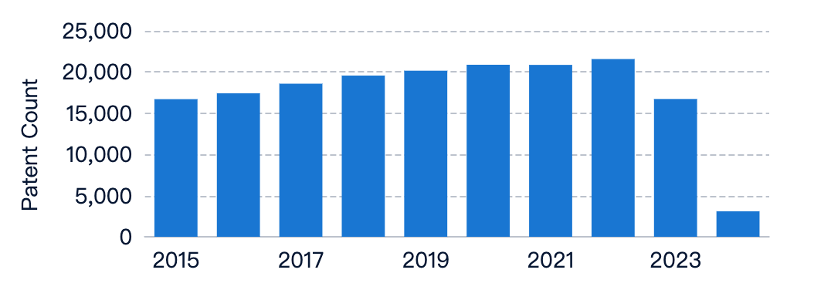
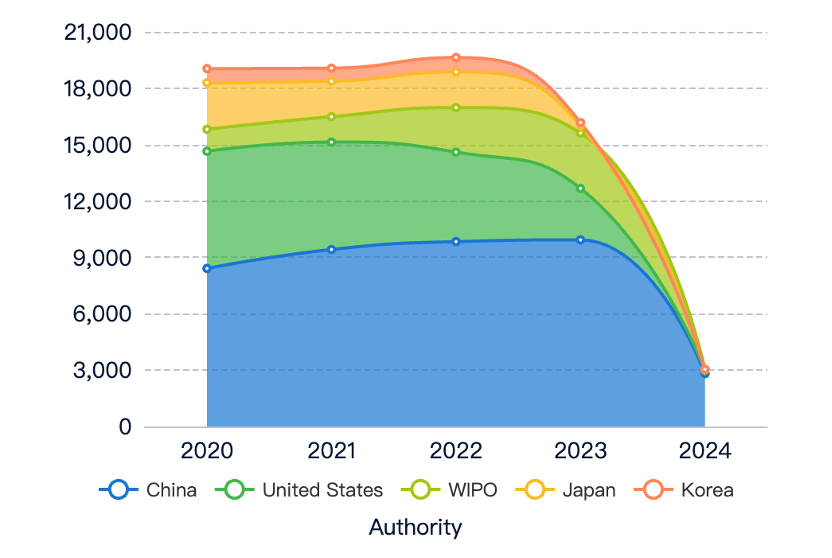
The field of low soldering temperature for soldering applications has seen a consistent upward trend in patent filings over the years, indicating sustained research and development efforts. The number of patent applications has steadily increased, suggesting a growing interest in developing technologies that enable lower soldering temperatures. In contrast, the trend in literature related to low soldering temperature has been relatively stable, implying a steady level of academic research. The divergence between patent applications and literature trends suggests a strong emphasis on developing practical solutions and commercializing technologies for low soldering temperature in the industrial sector.
Objectives
The primary objective is to investigate and develop innovative techniques and materials that enable low-temperature soldering processes. Conventional soldering methods often require high temperatures, which can be detrimental to sensitive electronic components and pose challenges in terms of energy consumption and environmental impact. By exploring low-temperature soldering alternatives, we aim to address these issues and contribute to the advancement of soldering technology.
To get a detailed scientific explanations of Low Soldering Temperature, try Eureka.
Technical Current Status Analysis
Soldering Overview
Soldering is crucial in various industries, including electronics, automotive, aerospace, and telecommunications. It involves joining metal components by melting and applying a filler metal (solder) to create a strong, electrically conductive bond. Traditionally, soldering has been performed at high temperatures, typically above 200°C, using lead-based solder alloys. Due to environmental and health concerns, there is a growing demand for lead-free soldering alternatives.
Applications and Impact:
- Electronics: Assembling and repairing delicate components such as integrated circuits, surface-mount devices, and flexible circuits.
- Automotive: Assembling and repairing electronic control units (ECUs), sensors, and other electronic components.
- Aerospace: Assembling and repairing avionics, navigation systems, and other critical electronic components.
- Telecommunications: Assembling and repairing fiber optic components, connectors, and other sensitive devices.
Technical Characteristics and Challenges:
- Solder Alloy Composition: Finding lead-free alloys with low melting points and good wetting properties.
- Wetting and Spreading Behavior: Achieving good wetting and spreading of the solder on metal surfaces.
- Intermetallic Compound Formation: Forming strong metallurgical bonds at lower temperatures.
- Flux Compatibility: Ensuring effective oxide removal and wetting at lower temperatures.
- Thermal Management: Maintaining precise control of soldering temperature.
- Component Compatibility: Ensuring compatibility of materials and components with low-temperature processes.
Technological Paths:
- Solder Alloy Development: Researching lead-free alloys with lower melting points and improved properties.
- Flux Formulation and Optimization: Developing new fluxes for better wetting and oxide removal.
- Surface Treatment and Metallization: Enhancing wetting through surface modifications.
- Process Optimization and Control: Refining temperature profiles and heating/cooling rates.
- Thermal Management Innovations: Developing advanced thermal management systems.
- Component and Material Compatibility Testing: Ensuring compatibility through extensive testing.
Research Content
Research Objectives
Develop innovative techniques and materials for low-temperature soldering to address issues related to high temperatures in conventional soldering methods.
Research Direction and Focus
Material Development
- Develop specialized solder alloys and flux formulations with low melting points and superior wetting properties.
- Explore novel alloy compositions, incorporating nanoparticles, or alternative materials.
Process Optimization
- Investigate alternative heating methods such as induction heating or laser-assisted soldering.
- Explore techniques like ultrasonic-assisted soldering or transient liquid phase bonding.
Application Testing
- Evaluate developed materials and processes in various scenarios, including different substrates and component types.
- Assess mechanical, electrical, and thermal properties of soldered joints for long-term reliability and durability.
Technical Development Roadmap
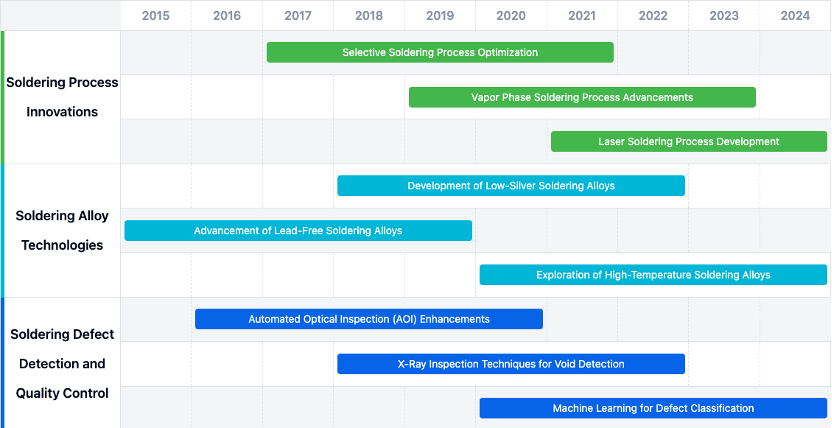
Key Areas of Advancement
- Soldering Alloy Technologies: Development of low-silver and lead-free soldering alloys.
- Soldering Process Innovations: Optimization of selective soldering, vapor phase soldering, and laser soldering processes.
- Soldering Defect Detection and Quality Control: Enhancements in Automated Optical Inspection (AOI) and X-ray inspection techniques.
Main Player Analysis
Key Players and Focus
- Matsushita Electronics Corp.: Leading with 10,292 patents, focusing on advanced soldering materials, processes, and equipment.
- Osaka University: 98 publications focusing on low-temperature solder alloys, microstructure evolution, and reliability.
- Kyocera Corp.: 7,741 patents on innovative soldering materials, processes, and equipment.
- Resonac Corp.: 6,777 patents focusing on lead-free solder alloys and process optimization.
- Georgia Institute of Technology: 119 publications on interdiffusion, intermetallic compounds, and low-temperature interconnections.
Current Technical Solution Overview
Low-Temperature Lead-Free Solder Alloys
- Sn-Bi and Other Alloys: Low melting points and improved wetting properties.
- Preparation Methods: Vacuum casting, alloying, and powder metallurgy.
- Solder Pastes: Combining alloy powders with flux for ease of application.
Low-Temperature Solder Pastes and Fluxes
- Lead-Free Solder Pastes: Formulated with low melting point alloys and environmentally friendly fluxes.
- Specialized Fluxes: Designed for efficient wetting and oxide removal at lower temperatures.
- Composite Solder Pastes: Containing additives like nanoparticles for enhanced properties.
Low-Temperature Soldering Processes and Techniques
- Injection Molded Solder: Efficient for low-temperature applications.
- Continuous Cast Extrusion: For consistent soldering quality.
- Heterojunction Soldering: Techniques for reliable joint formation.
Low-Temperature Soldering Applications
- Electronics Packaging: Assembling and repairing delicate components.
- Photovoltaic Modules: Ensuring reliable soldering without damaging sensitive materials.
- Temperature-Sensitive Components: Avoiding thermal damage during soldering.
Hybrid and Composite Low-Temperature Solders
- Hybrid Solders: Combining different alloys for enhanced properties.
- Temperature Control: Devices for precise temperature management.
- Composite Materials: Incorporating reinforcements for improved performance.
Key Patent Interpretation
Patent Highlights
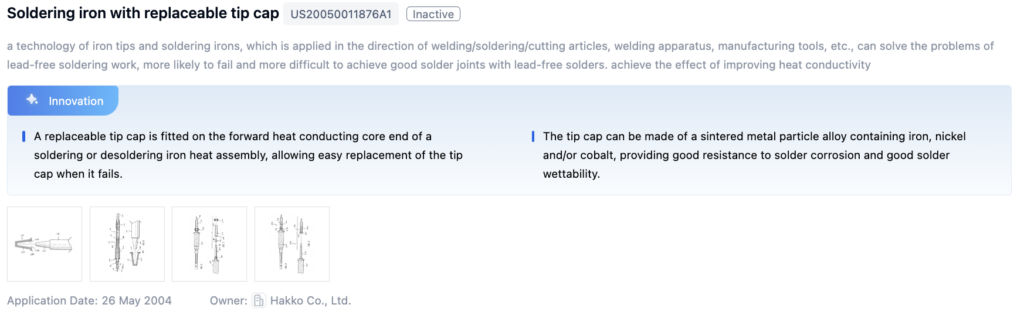
Patent 1: Soldering Iron with Replaceable Tip Cap
- Core Invention Points:
- Replaceable tip cap for easy replacement.
- Sintered metal particle alloy for good resistance to solder corrosion and wettability.
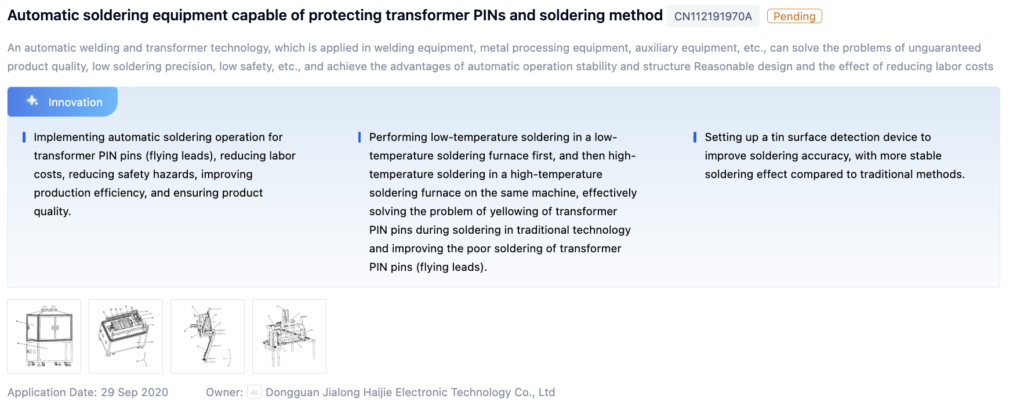
Patent 2: Automatic Soldering Equipment for Transformer PINs
- Core Invention Points:
- Automatic operation for transformer PINs, reducing labor costs and safety hazards.
- Dual low and high-temperature soldering furnaces to improve soldering quality.
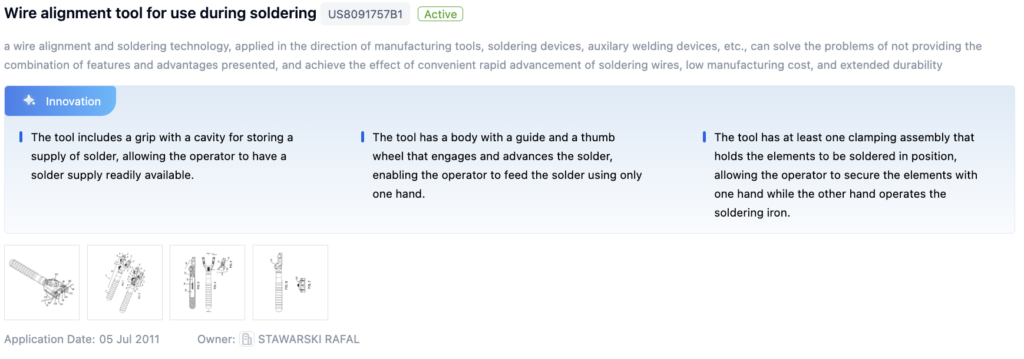
Patent 3: Wire Alignment Tool for Soldering
- Core Invention Points:
- Tool with a solder supply cavity and a thumb wheel for one-handed operation.
- Clamping assembly to hold elements in position during soldering.
Possible Research Directions
- Low Melting Temperature Solder Alloy Compositions: Developing alloys with melting points below 200°C.
- Low-Temperature Solder Pastes and Fluxes: Formulating pastes and fluxes for efficient low-temperature soldering.
- Low-Temperature Soldering Processes and Methods: Techniques for reliable solder joints at lower temperatures.
- Low-Temperature Solder Preforms and Wire: Preformed shapes for convenience and consistent solder volume.
If you want an in-depth research or a technical report, you can always get what you want in Eureka Technical Research. Try now!
