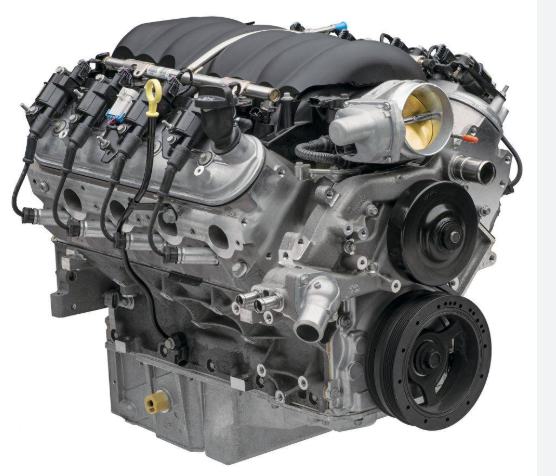
The 6.2L LS engine is more than just another V8—it’s a cornerstone of modern American performance engineering. Originally launched by General Motors in the early 2000s as part of the Gen IV small-block family, this engine has powered icons like the Corvette Z06, Camaro SS, and Cadillac CTS-V, while also finding its way into trucks, SUVs, and thousands of engine swap projects around the world. At its core, the 6.2L LS blends old-school muscle with new-age efficiency. It retains a pushrod OHV architecture—simple, compact, and lightweight—but integrates advanced technologies like variable valve timing, active fuel management, and even direct injection in later LT-series derivatives.
This article explores the patent history, component evolution, material innovation, key variants, features, performance legacy, and competitive edge through PatSnap Eureka AI Agent.

What Is the 6.2L LS Engine?
The 6.2L LS engine is part of GM’s third-generation small-block V8 family, introduced in the early 2000s and still evolving. Known for its lightweight aluminum construction, pushrod simplicity, and massive aftermarket support, it offers an exceptional power-to-weight ratio and scalability.
Displacement: 6.2 liters (376 cubic inches)
Architecture: OHV (Overhead Valve) / Pushrod
Fuel Delivery: Sequential Fuel Injection or Direct Injection (LT variants)
Applications: Performance cars, full-size trucks, crate motors, racing platforms
Key Features
- Compact Pushrod Design: Low profile, simple valvetrain
- Lightweight Aluminum Block: Ideal for performance tuning and swaps
- High Output: Stock power ranges from 420 hp to 650+ hp
- Tuning Flexibility: Wide range of aftermarket cams, heads, and boost support
- Durability: Strong bottom end with forged internals in high-performance versions
- Advanced Materials: Hypereutectic pistons, nodular iron cranks, high-flow heads
- Emissions Ready: Even high-output models meet modern EPA standards
Different Variations of the 6.2L LS Engine
| Variant | Horsepower | Use Case | Notable Traits |
|---|---|---|---|
| LS3 | ~430 hp | Corvette C6, Camaro SS, Crate Engines | High-flow heads, wide tuning range |
| L92 / L94 | ~403 hp | Escalade, Sierra Denali | Truck torque tuning, VVT capable |
| L99 | ~400 hp | Camaro SS (Auto) | Active Fuel Management (AFM), VVT |
| LSA | 556 hp | CTS-V, Camaro ZL1 (Gen 5) | Factory supercharged, forged internals |
| LS9 | 638 hp | Corvette ZR1 (C6) | Supercharged, dry-sump, titanium rods |
| LT1 / LT2 | 455–495 hp | Corvette C7/C8 | Direct injection, cylinder deactivation |
| LT4 / LT5 | 650–755 hp | Z06, ZR1 (C7) | Supercharged, advanced cooling systems |
Each version shares a core block architecture, but tuning, heads, pistons, and forced induction options vary—creating a highly modular platform.
Real-World Application & Performance
- Corvette & Camaro: The LS3 and LT1 gave these models world-class acceleration and smooth drivability.
- Trucks & SUVs: L92 and L94 versions offered towing-friendly torque with active fuel management.
- Motorsports: LS platforms dominate drag racing, autocross, and road course builds.
- Crate Engines & Swaps: GM’s Connect & Cruise packages make LS3s plug-and-play in hot rods, muscle cars, and even Miatas.
- Boosted Builds: LSA, LS9, and LT4 provide factory supercharged power with plenty of room for more.
Market Relevance & Competitive Positioning
The 6.2L LS engine has redefined GM’s performance image, rivaling both domestic and international powertrains. It offers a unique balance of power, affordability, and reliability.
| Engine | Displacement | Architecture | Horsepower | Pros |
|---|---|---|---|---|
| GM LS3 | 6.2L | Pushrod V8 | 430 hp | Light, compact, easy to tune |
| Ford Coyote | 5.0L | DOHC V8 | 450–480 hp | High-revving, advanced timing |
| Dodge 6.4L HEMI | 6.4L | OHV V8 | 485 hp | Torque-heavy, old-school feel |
| BMW S63 | 4.4L | Twin-turbo V8 | 600+ hp | Refined, complex, expensive |
| Toyota 3UR-FE | 5.7L | DOHC V8 | 381 hp | Reliable, but large and heavy |
The LS3 and LSA provide a sweet spot between accessibility and performance. With countless crate options and an unmatched community, the 6.2L LS is the default choice for engine swaps around the world.
Innovation & Technology
GM’s 6.2L LS and LT engines are not revolutionary by layout—they retain a traditional pushrod V8 design—but they are masterclasses in incremental, purpose-driven innovation. Here’s how GM refined and modernized the architecture to meet 21st-century performance and emissions demands without sacrificing simplicity.
1. High-Efficiency Cylinder Heads
- Cathedral Port (LS3): Designed to increase port velocity, enhancing low-end torque while maintaining high-RPM flow.
- Rectangular Port (L92/LSA): Optimized for top-end horsepower and improved cylinder filling at higher RPMs.
- Precision-Cast Aluminum Heads: CNC-porting in select variants like LS7/L92, and optimized valve angles (~15° vs. traditional 23°) for more direct airflow.
2. Variable Valve Timing (VVT)
- Introduced in L92 and L94, and refined in LT1, VVT helps extend the torque curve while improving fuel economy and emissions.
- It allows for cam phasing, letting the engine adjust valve timing dynamically under different loads and RPMs.
Benefit: Greater torque at low RPMs without compromising high-RPM power.
3. Advanced Fuel Delivery Systems
- Sequential Fuel Injection (LS3, L92): Reliable, responsive fuel metering with traditional injectors.
- Direct Injection (LT1, LT4, LT5): Injects fuel directly into the combustion chamber, improving thermal efficiency, cold start emissions, and throttle response.
- Multi-hole injectors and dual-path spray targeting optimize fuel dispersion.
4. Forced Induction Integration
- LSA: 1.9L Eaton TVS supercharger, integrated air-to-water intercooler, compact fitment with strong midrange.
- LS9: 2.3L supercharger with larger heat exchangers, dry-sump oiling, titanium internals.
- LT4: Supercharger mounted lower into the valley for reduced hood height, better CG.
- LT5 (ZR1 C7): Dual throttle bodies and 2.65L supercharger for 755 hp stock.
GM focused on packaging—making boost powerful but accessible for production—and thermal management, using integral intercooling and improved intake charge routing.
5. Advanced Lubrication & Cooling
- Dry-sump oiling (LS9, LT5): Removes parasitic losses, maintains oil pressure under high G-loads, essential for track duty.
- Oil-spray piston cooling: In select high-performance LS variants, jets spray oil underneath pistons to manage heat.
- Cross-bolted main bearing caps: Increase bottom-end strength.
- Mapped cooling circuits: Thermostatically controlled passages allow tighter thermal window management.
6. Material Engineering
- Hypereutectic Pistons (LS3): Resist thermal expansion, reduce oil consumption.
- Forged Pistons & Cranks (LSA/LS9): Withstand high cylinder pressures from supercharging.
- Titanium Rods (LS7, LS9): Reduce reciprocating mass, improve engine response.
- Composite Intake Manifolds: Reduce heat soak, enhance airflow velocity.
7. Electronic Controls & Emissions
- Torque-based ECU Mapping: Predictive control over throttle and spark timing.
- Active Fuel Management (AFM): Cylinder deactivation on some truck engines for fuel savings.
- Wideband O2 & Knock Sensors: Real-time closed-loop tuning across varying octane levels.
8. Crate Engine Modularity
- GM Performance Parts designed LS3 and LSA crate packages with plug-and-play ECUs, harnesses, and accessory drives.
- Modular bellhousing, oil pan, and accessory layouts make LS/LT engines ideal for engine swaps into vintage and modern chassis.
PatSnap Eureka AI Agent Capabilities
PatSnap Eureka AI Agent helps engine developers, modders, and engineers:
- Compare port geometry between LS3, LT1, and LSA
- Analyze cooling and oil routing systems for high-performance builds
- Track direct injection adoption curves and combustion pattern improvements
- Access crankshaft balancing innovations and lightweight material use
- Benchmark GM’s pushrod designs vs. OHC competitors (Ford, Toyota, BMW)
- Use real patent data to guide performance part development or R&D
Whether you’re building a track car, sourcing crate motors, or benchmarking GM architecture, Eureka connects you to the mechanical intelligence that powers LS dominance.
Conclusion
The 6.2L LS engine represents the best of GM’s small-block engineering—a package that delivers on power, modularity, and everyday usability. Whether in a stock Corvette or swapped into a vintage truck, the LS family has earned its legendary status.
It remains a blueprint for balancing simplicity, power, and flexibility—and with the support of PatSnap Eureka AI Agent, you can now explore this architecture from a data-driven, component-level perspective.
As emissions tighten and EVs rise, the LS engine proves that old-school engineering—done right—can still lead the pack.
FAQs
Stock: ~430 – 442 HP (varies by model, e.g., Corvette/Camaro SS). With mods (turbo, tuning), can reach 1000+ HP.
A 6.2L V8, LS – series engine. Successor to LS2, used in high – performance Chevy cars (Corvette, Camaro SS) and modified vehicles.
Yes. With upgrades (turbo/supercharger, forged internals, tuning), an LS3 can exceed 1000 HP.
Chevrolet Corvette (C6), Camaro SS, Pontiac G8 GXP, and modified/off – road vehicles (e.g., tuned SUVs).
To get detailed scientific explanations of the 6.2L LS engine, try Patsnap Eureka.