


If you’re a performance car enthusiast, you’ve probably heard the term “stroker engine” thrown around in conversations about power upgrades. But what exactly is a stroker engine, and why do so many engine builders swear by it?
A stroker engine is an internal combustion engine that’s been modified to increase its stroke length—the distance the piston travels within the cylinder. By extending the stroke, the engine gains displacement, torque, and, in many cases, overall power. This makes stroker builds especially popular in drag racing, muscle cars, and high-performance street applications.
This article breaks down what a stroker engine is, how it works, and why it matters for anyone chasing more power under the hood.
What Does “Stroker” Mean in an Engine?
Ever wondered what makes a stroker engine pack more punch? Eureka Technical Q&A breaks it down—by increasing the crankshaft stroke, these engines deliver greater displacement, more torque, and serious performance gains. Get expert insights and see if a stroker build is right for your next project.

In engine terminology, the “stroke” refers to how far the piston travels up and down inside the cylinder. The longer the stroke, the more air and fuel the engine can draw in and burn. When engine builders say they’re “stroking” an engine, they’re increasing this distance to boost displacement—usually by swapping in a crankshaft with a larger throw and adjusting the rods or pistons to match.
So, a “stroker engine” is simply a modified engine with a longer stroke than the original factory setup.
How a Stroker Engine Works
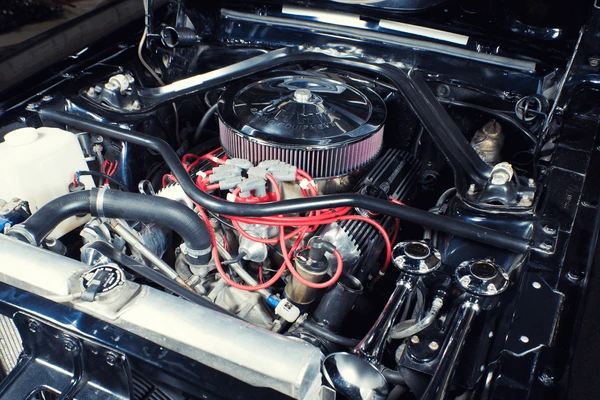
The main modification in a stroker build involves replacing the crankshaft. A stroker crankshaft has larger throws, which means the pistons travel a longer path within the cylinder. This increases the engine’s displacement, typically measured in cubic inches or liters.
To compensate for this change, builders may also install shorter connecting rods or pistons with altered compression heights to ensure everything fits within the cylinder without causing clearance issues.
By increasing the swept volume of the piston’s movement, a stroker engine can bring in more air-fuel mixture per cycle. This leads to more powerful combustion events, which directly translates to more torque and horsepower—especially at lower RPMs.
Why Build a Stroker Engine?
The main goal of a stroker engine is to improve torque. More stroke means more leverage on the crankshaft, which increases the engine’s ability to move mass—whether that’s a street car, a race car, or a heavy-duty truck.
In racing or street performance builds, strokers are often used to improve low-end power and acceleration. They’re ideal for drag racing, off-road trucks, and performance cars that need to deliver instant torque off the line.
Common Stroker Engine Builds
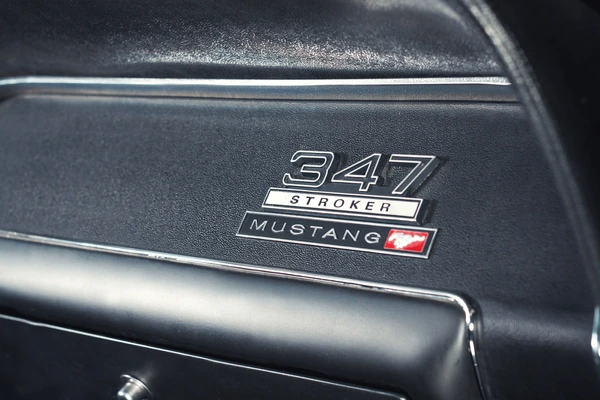
- Ford 302 → 347 stroker
This is a popular upgrade among Mustang enthusiasts, increasing displacement from 5.0L to 5.7L. - Chevy 350 → 383 stroker
One of the most iconic stroker conversions, offering excellent torque gains for muscle cars and hot rods. - LS Engines
GM’s LS platform is often stroked from 5.3L or 6.0L up to 6.6L or even beyond with custom cranks and rods. - Mopar 360 → 408 stroker
Used in classic Dodge and Plymouth builds, this upgrade delivers strong performance across the RPM range.
Pros and Cons of a Stroker Engine
Stroker engines remain a top choice for enthusiasts and professionals looking to boost torque and horsepower. They increase engine displacement, making them ideal for high-demand applications across muscle cars, racing, and heavy-duty trucks.
Advantages
- Increased torque and displacement
- Better low-end and mid-range power
- Customizable performance for specific driving needs
- Ideal for naturally aspirated power builds
Potential Drawbacks
- More internal stress due to increased piston speed
- Possible clearance and fitment issues
- Can shorten engine lifespan if not built properly
- Higher cost due to forged parts and custom machining
A well-built stroker engine can be incredibly reliable, but it demands precise engineering and balanced components to handle the added stresses.
Applications of Stroker Engines
Muscle Cars and Street Performance
Muscle car builders often choose stroker engines to gain more torque and horsepower. These engines improve acceleration and deliver a thrilling driving experience. For instance, the 383 stroker combines reliability and power, making it a favorite for street performance builds.
Racing Applications
Racers use stroker engines to gain a competitive advantage on the track. Increased displacement provides more power, essential for high-performance needs. In drag and off-road racing, the 445 stroker delivers exceptional performance and top-end speed.
Trucks and Towing Power
Truck owners rely on stroker engines for better towing and hauling. The added low-end torque helps with steep climbs and heavy loads. These engines provide the muscle needed for demanding work, especially in towing applications.
Application Cases
| Product/Project | Technical Outcomes | Application Scenarios |
|---|---|---|
| Free-Piston Stirling Machine Global Cooling, Inc. | Achieves reliable, lubricant-free, and high-power-density operation through coupling with rotary electromagnetic transducer and pulley system. | Applications requiring efficient, low-friction, and scalable power generation, such as portable cooling systems or small-scale energy production. |
| Active Honeycomb Crash Structure General Motors Co. | Expands transversely during crashes, offering high crush force with low mass, and can be reset for multiple uses. | Automotive safety systems, particularly in areas with limited space for traditional crash energy management structures. |
FAQs About Stroker Engines
Is a stroker engine good for daily driving?
Yes, with proper tuning and reliability-focused components, a stroker engine can serve as a daily driver. Just ensure it’s built for longevity, not just peak performance.
Can you stroke any engine?
Almost any engine can be stroked, but some platforms offer more aftermarket support than others. Always check crankshaft and block compatibility before planning a build.
Do you need forced induction with a stroker?
Not necessarily. Many stroker engines are naturally aspirated and still deliver strong performance. However, combining a stroker with a turbo or supercharger can produce massive power gains.
Will a stroker engine reduce RPM range?
A longer stroke can increase piston speed, which sometimes limits high RPM performance. That’s why stroker builds often favor torque over top-end revs.
How much does it cost to build a stroker engine?
Costs vary widely based on the engine platform and goals. A basic kit can start around $1,500, while a full custom build with forged parts may run $5,000 or more.
Conclusion
A stroker engine is all about turning up the torque. By increasing the stroke of the piston, you boost the engine’s displacement and gain more low-end power—something every gearhead loves. Whether you’re building a drag strip monster, a street bruiser, or a rock-crawling off-roader, a stroker setup can transform your engine’s personality.
With careful planning and the right parts, a stroker engine becomes more than just an upgrade—it’s the heart of a high-performance machine.
To get detailed scientific explanations of stroker engines, try Patsnap Eureka.
