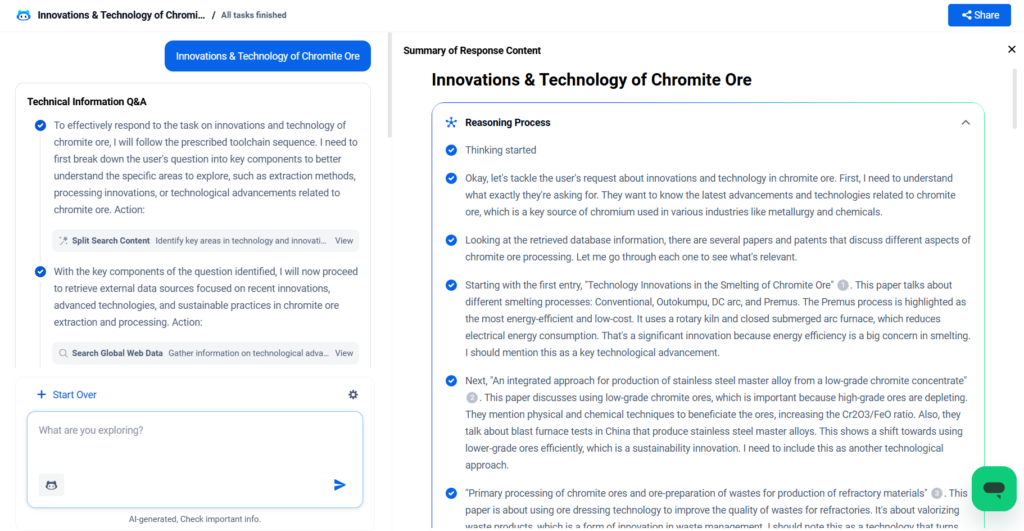
Chromite ore, the primary source of chromium, plays a pivotal role in the metallurgy and refractory industries. As global industries shift toward high-performance alloys, clean energy systems, and sustainable material processing, the demand for high-grade chromite is surging. Beyond its role in stainless steel production, chromite is now entering advanced use cases in foundry sand, chemical-grade reagents, and energy storage materials. This blog explores the technical makeup, key properties, commercial grades, and industrial relevance of chromite ore, helping engineers and sourcing professionals make informed decisions across multiple sectors through PatSnap Eureka AI Agent.

What is Chromite Ore and Why It Matters
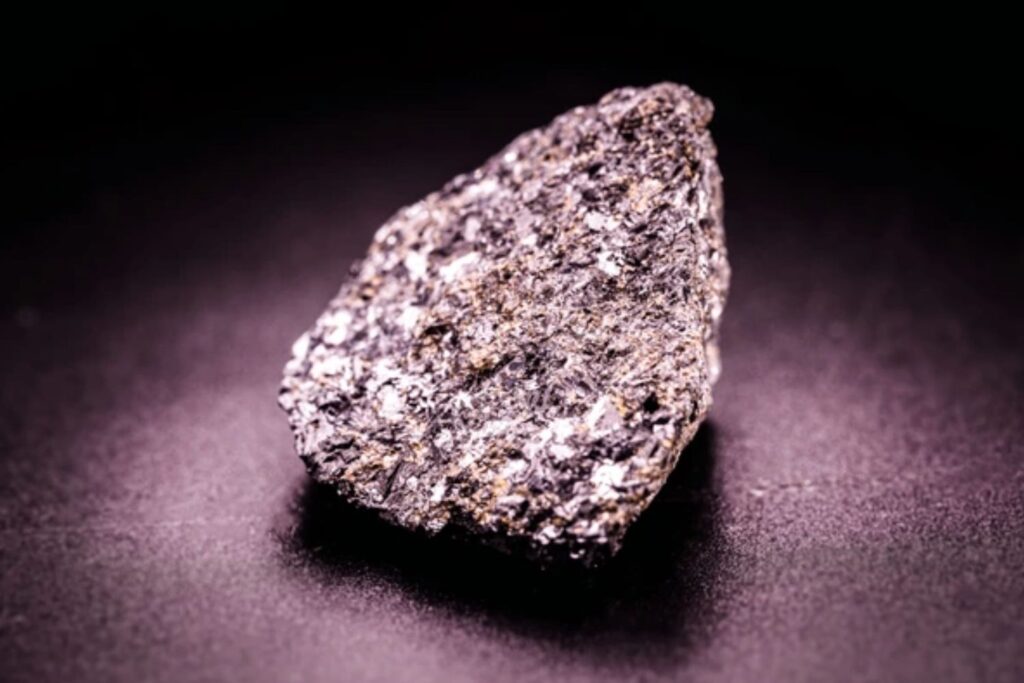
Chromite (FeCr₂O₄) is a naturally occurring mineral from the spinel group. It is the sole commercial source of chromium—an essential element in corrosion-resistant alloys, refractory materials, and certain catalysts. What makes chromite especially valuable is its high melting point, chemical inertness, and strong reduction-oxidation behavior in metallurgical applications.
South Africa, Kazakhstan, India, and Turkey are the major suppliers of chromite ore, with South Africa’s Bushveld Complex accounting for over 70% of global reserves. The ore’s strategic significance is reflected in its designation as a critical mineral by several governments, including the U.S. Geological Survey.
Material Composition and Grade Data
Chromite ore is typically graded based on Cr₂O₃ content and Cr/Fe ratio, which determine its end-use suitability.
| Grade Type | Cr₂O₃ Content | Cr/Fe Ratio | Use Case | Supplier Examples |
|---|---|---|---|---|
| Metallurgical Grade | 40–48% | >2.6 | Stainless steel and ferrochrome | Samancor, Yildirim Group |
| Refractory Grade | 30–40% | 1.5–2.5 | Foundry sand, kilns, crucibles | LKAB Minerals, IMERYS Refractory |
| Chemical Grade | 44–46% | ~1.5 | Chromium salts, pigments | Kazchrome, Albchrome |
| Foundry Sand Grade | ≥45% | ≥2.0 | Molds for precision castings | AMCOL, Lanxess |
Metallurgical-grade chromite is processed into ferrochrome (FeCr), a key alloying element in stainless steel, whereas chemical-grade is used for sodium dichromate and other chromates.
Key Properties That Define Chromite Ore
Chromite’s industrial utility stems from the following material characteristics:
- High Melting Point (2180°C): Enables use in high-temperature environments like furnaces and kilns.
- High Cr/Fe Ratio: Improves efficiency in ferrochrome production.
- Resistance to Slag and Basic Refractories: Makes it ideal for use in steelmaking ladles and rotary kilns.
- Moderate Thermal Expansion: Reduces cracking risk in foundry applications.
- Oxidation Resistance: Crucial for its role in corrosion-resistant stainless steel.
These properties make chromite indispensable in heat-intensive and chemically aggressive environments.
Core Applications Across Industries
Metallurgy & Ferrochrome Production
Chromite’s primary industrial application lies in the production of ferrochrome, an essential alloying element in stainless steel and high-strength alloys. Its high Cr₂O₃ content and refractory nature make it irreplaceable in processes demanding corrosion resistance, hardness, and structural integrity. Modern smelting operations use chromite in submerged arc furnaces to produce charge chrome and high-carbon ferrochrome, which feed global stainless steel markets.
Use case: Large-scale ferroalloy production for automotive-grade stainless steel.
Benefit: Improves wear resistance, tensile strength, and oxidation stability.
Refractory Materials
Due to its excellent high-temperature stability, chromite is widely used in refractory bricks, foundry sands, and lining materials in kilns, furnaces, and incinerators. It resists slag penetration and thermal shock, making it ideal for metallurgical operations and non-ferrous smelting processes. Chrome-magnesite bricks and monolithic linings based on chromite offer superior service life in harsh thermal environments.
Use case: Furnace lining in copper or nickel smelting facilities.
Benefit: Prolongs equipment lifespan and maintains thermal efficiency.
Foundry Casting & Molding
Chromite sand serves as a premium molding medium in precision foundries. Its high thermal conductivity and sintering temperature prevent casting defects in complex geometries, particularly in steel and heavy alloy parts. As foundries shift toward higher performance and precision, chromite plays an increasing role in resin-coated sand systems and core-making.
Use case: Core production for turbine housings and engine blocks.
Benefit: Minimizes deformation and improves surface finish.
Chemical Industry (Chromium Compounds)
Chromite is the only economic source of chromium compounds such as sodium dichromate, chromic acid, and potassium chromate—essential precursors for pigments, wood preservatives, corrosion inhibitors, and tanning agents. Hydrometallurgical extraction techniques allow the transformation of chromite ores into high-purity chemical intermediates for further industrial synthesis.
Use case: Manufacturing corrosion-resistant coatings and organic catalysts.
Benefit: Enables specialty chemical production at industrial scale.
Environmental & Catalytic Applications
Emerging applications include the use of chromium-based catalysts derived from chromite in oxidation, polymerization, and flue gas treatment systems. Novel catalytic formulations are under investigation for selective catalytic reduction (SCR) of NOₓ emissions, water purification, and hydrocarbon cracking in petrochemicals.
Use case: Catalyst support for VOC abatement systems.
Benefit: Enhances reaction efficiency and environmental compliance.
How Chromite Compares to Similar Materials
Compared to bauxite or magnesite-based refractories, chromite offers superior slag resistance and thermal stability under both acidic and basic conditions. While ilmenite is used for titanium production, it lacks the corrosion resistance and refractory benefits of chromite.
| Material | Key Property | Limitation |
|---|---|---|
| Chromite | High slag resistance, Cr yield | Limited thermal conductivity |
| Bauxite | High alumina content | Weaker slag interaction |
| Magnesite | Good basic resistance | Prone to hydration and cracking |
| Ilmenite | Titanium source | Poor refractoriness |
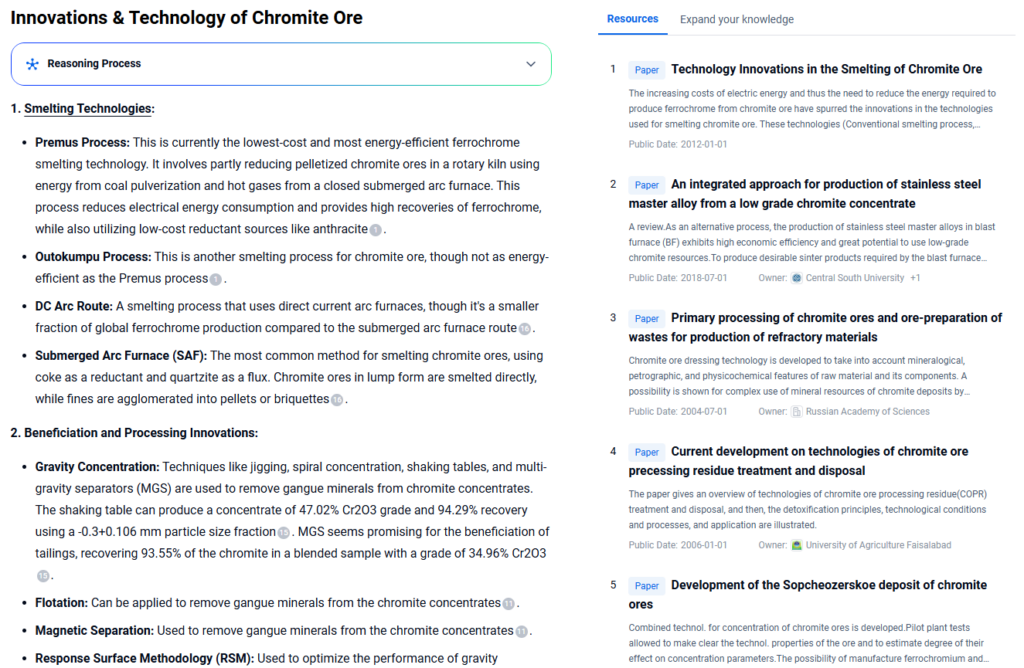
Innovations & Technology of Chromite Ore
Advancements in chromite technology focus on increasing resource efficiency, improving downstream processing, and reducing environmental impact. Below are key innovation trajectories:
- Pre-reduction and Preheating Technologies: To improve energy efficiency in ferrochrome smelting, researchers have developed pre-reduction systems using rotary kilns and fluidized beds that lower energy consumption and CO₂ emissions.
- Hydrometallurgical Leaching Techniques: Innovations in acidic and alkaline leaching of chromite ores allow cleaner extraction of chromium for chemical-grade applications, replacing traditional roasting with lower-emission processes.
- Chromite Tailings Recovery: New beneficiation technologies using flotation, gravity separation, and sensor-based sorting help recover chromite from mining tailings, improving yield and minimizing ecological footprint.
- Nano-Chromite Composites: Nanostructured chromite materials are being explored for use in catalytic membranes, solid oxide fuel cells (SOFCs), and advanced coatings due to their high surface activity and stability.
- Green Foundry Solutions: Reusable chromite sand formulations and resin-free casting processes are under development to reduce emissions and waste in metal casting industries.
- Digital Process Monitoring: AI-driven process control systems are enhancing chromite smelting and sintering by optimizing feed ratios, temperature profiles, and slag chemistry in real time.
These innovations not only improve the material’s economic efficiency but also align with global goals for sustainable resource utilization and industrial decarbonization.
Challenges and What’s Next for Chromite Ore
While chromite remains vital, its mining and processing face several headwinds:
- Hexavalent Chromium Risk (Cr⁶⁺): Requires stringent environmental controls during roasting and leaching.
- Ore Depletion and Geopolitical Risk: Overreliance on a few countries like South Africa threatens supply stability.
- Circular Economy Pressure: Push for chromium recycling from EAF dusts and spent refractories.
- Energy-Intensive Processing: Drives interest in hydrogen-based reduction and green metallurgical routes.
Conclusion
Chromite ore is far more than just a feedstock for stainless steel—it is a strategic material underpinning energy, aerospace, refractory, and chemical sectors. Its unique properties ensure it remains at the core of high-temperature and corrosion-resistant applications. However, sustainability, processing innovation, and secure sourcing are crucial for future resilience in this market.
FAQs
Metallurgical-grade has higher Cr₂O₃ and Cr/Fe ratios for ferrochrome production, while refractory-grade prioritizes thermal stability and slag resistance.
The ore itself is not toxic, but improper processing can generate hexavalent chromium (Cr⁶⁺), which is hazardous.
Yes. Spent refractories and stainless steel slag are being processed for chromium recovery as part of circular economy efforts.
South Africa, Kazakhstan, Turkey, and India account for the majority of global production.
Want to uncover patent trends, supplier landscapes, or R&D breakthroughs in chromium-bearing refractories or energy-related applications?
👉 Explore deeper insights using PatSnap Eureka AI Agent—your AI-powered tool for materials intelligence, technical scouting, and innovation strategy.