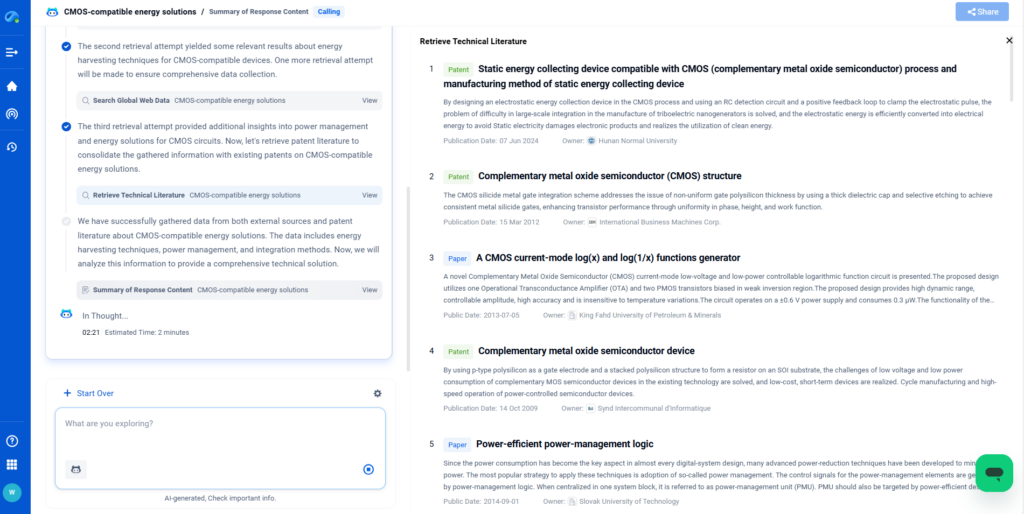
The CMOS battery is a small but vital component in computing systems, especially motherboards. It powers the CMOS (Complementary Metal-Oxide-Semiconductor) chip, which stores BIOS settings, system time, and hardware configurations. Despite its low profile, the CMOS battery ensures consistent system behavior across reboots and power-offs.
In this blog, we’ll break down its working principle, technical specifications, common battery types, application scope, and emerging technologies. We’ll also examine how the PatSnap’s Eureka AI Agent empowers innovation tracking and market foresight in battery and semiconductor domains.

What is a CMOS Battery?
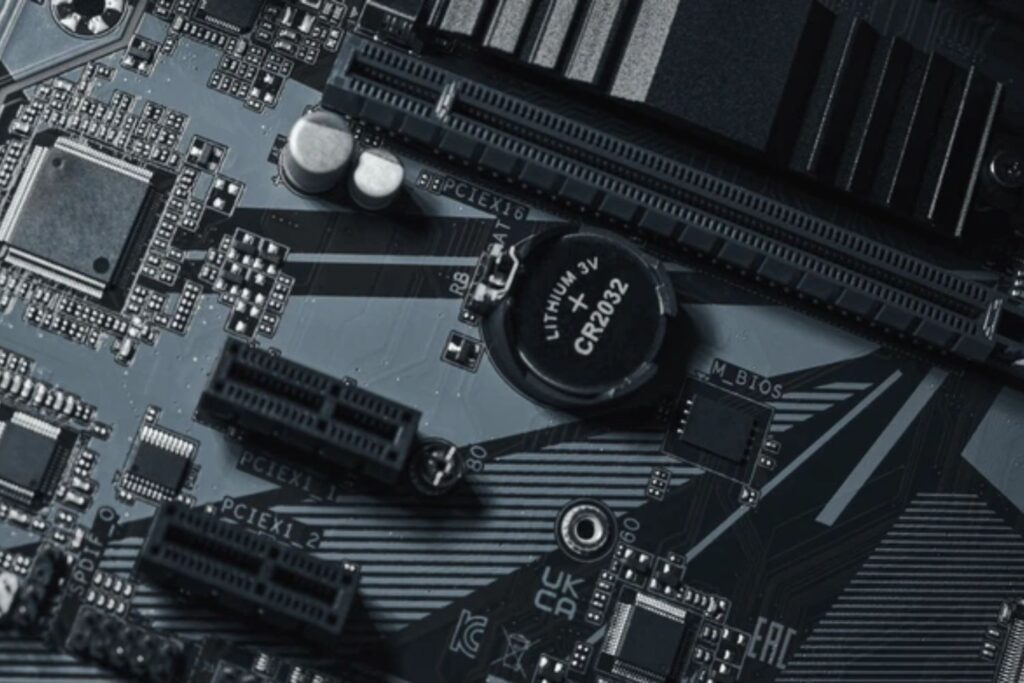
The CMOS battery is typically a coin-cell lithium battery (e.g., CR2032) used to power the motherboard’s real-time clock (RTC) and retain BIOS/UEFI settings when the system is off.
Composition & Performance
- Typical Battery Chemistry: Lithium manganese dioxide (LiMnO₂)
- Nominal Voltage: 3V
- Capacity: ~220 mAh
- Operating Temperature Range: -20°C to 70°C
- Shelf Life: 5–10 years (depending on usage and quality)
- Rechargeability: Generally non-rechargeable (primary cell)
The battery feeds a small current (~1 µA) to maintain memory and timekeeping functions with minimal power drain.
Material Grades & Designations
| Battery Model | Chemistry | Voltage | Dimensions | Typical Use |
|---|---|---|---|---|
| CR2032 | LiMnO₂ | 3V | 20×3.2 mm | Most desktops/laptops |
| CR2025 | LiMnO₂ | 3V | 20×2.5 mm | Space-constrained designs |
| ML2032 | Rechargeable lithium | 3V | 20×3.2 mm | Industrial/embedded systems |
Application Landscape
Common Use Cases
- Motherboards: Retains BIOS/UEFI configuration
- Laptops: Keeps system clock active
- Routers/IoT Devices: Maintains network settings and time sync
- Industrial PCs: Ensures persistent device parameters
Real-World Scenarios
- In a Dell OptiPlex, the CMOS battery helps resume system behavior without requiring BIOS reconfiguration after power loss.
- In legacy PLC systems, it prevents downtime by preserving timer-based automation sequences.
Application Trends
- Modular BIOS chip designs are reducing power draw, extending CMOS battery life.
- Smart CMOS backup systems are integrating supercapacitors for short-term power bridging.
CMOS Battery vs Other Memory Backup Methods
| Feature | CMOS Battery | Supercapacitor | EEPROM |
|---|---|---|---|
| Power Duration | 3–10 years | Minutes to hours | Not power-dependent |
| Replaceable | Yes | No | N/A |
| Cost | Low | Medium | High |
| Use Case | BIOS memory, RTC | Temporary memory hold | Permanent data storage |
Advantages of CMOS Battery
- Non-volatile RTC support: Maintains accurate system time
- Autonomy: Functions even with power completely off
- Compact & replaceable: Easy to access and change
- Low cost: Budget-friendly for OEMs and consumers
- Stable chemistry: Lithium cells offer long shelf life and reliability
Compared to supercapacitors or volatile RAM, it offers a low-maintenance, long-duration solution without the need for constant charge cycles.
Innovations & Technology
Emerging trends are driving the evolution of CMOS battery technology:
- Solid-state microbatteries: Enable thinner designs for compact electronics
- Hybrid CMOS backup systems: Use a combination of battery + capacitor for dual-mode storage
- Self-monitoring batteries: Integrated with health sensors to predict failures
- Smart motherboards: Automatically alert users when voltage dips below a threshold
Patents & Research Highlights
- A recent patent from Intel (US20240111234A1) details a dual-RTC timing system with adaptive battery usage to extend system lifespan.
- Research from Kyoto University explores nano-layered anode materials to double the CMOS battery’ capacity without increasing size.
Sustainability & Environmental Impact
Although CMOS batteries are small, their cumulative environmental footprint matters:
- Recyclability: CR-type batteries are recyclable but often improperly disposed of
- Toxic components: Lithium and manganese require specialized recycling protocols
- Energy-efficient BIOS: Reduced current draw lowers long-term battery waste
- Compliance Standards:
- RoHS: Limits hazardous substances in batteries
- REACH: Ensures chemical safety in EU markets
- UL2054: Governs safety of lithium battery packs
PatSnap Eureka AI Agent Capabilities
Want to benchmark CMOS battery technologies or predict when solid-state replacements will disrupt the market?
👉 Use PatSnap Eureka AI Agent to explore:
- Patent trends in micro-power energy storage
- Emerging suppliers of miniaturized lithium cells
- Academic research on CMOS-compatible energy solutions
- Cross-sector innovation patterns (e.g., medical wearables, embedded IoT)
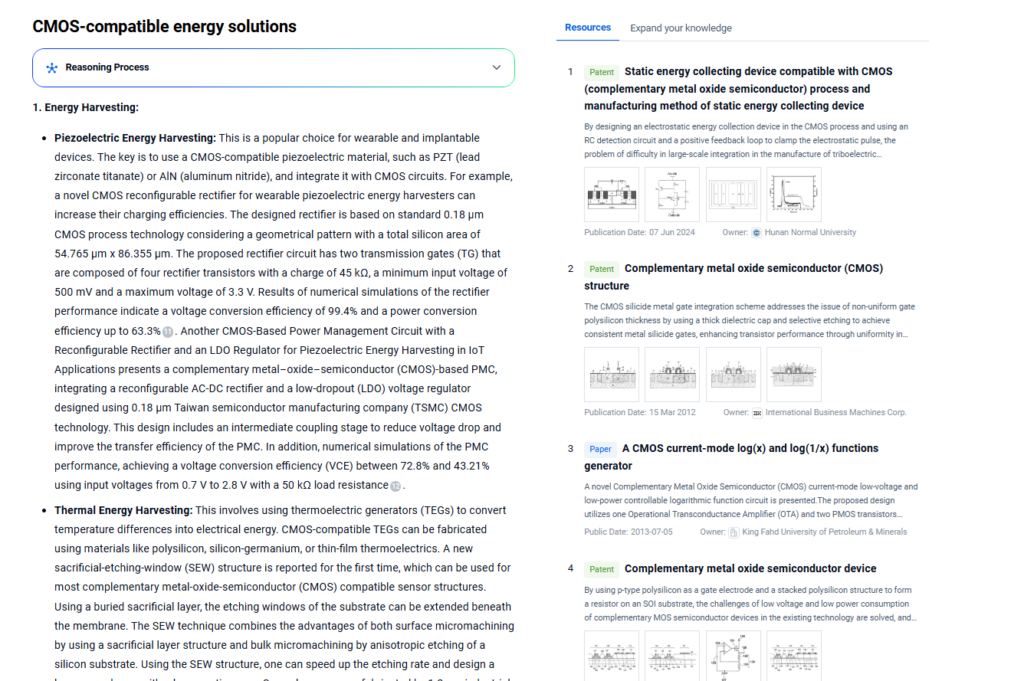
With Eureka, researchers can forecast the innovation curve, spot whitespace opportunities, and accelerate material design cycles.
Conclusion
Though often overlooked, the CMOS battery plays a critical role in ensuring computer systems remain accurate and operational. As computing platforms diversify—into embedded systems, industrial automation, and edge AI—the demand for more intelligent, long-lasting, and sustainable CMOS batteries alternatives is growing.
Innovation in microbattery technology, combined with predictive maintenance and smarter BIOS designs, is setting the stage for the next generation of energy-resilient electronics.
FAQs
A: Typically between 5 to 10 years, depending on usage and environment.
A: BIOS settings reset, system clock defaults, and boot errors may occur.
A: Yes. It’s usually user-serviceable and requires minimal tools.
A: Yes, models like ML2032 are rechargeable, though less common.
A: Most desktops and many laptops do, although some newer systems integrate RTC with non-volatile memory.