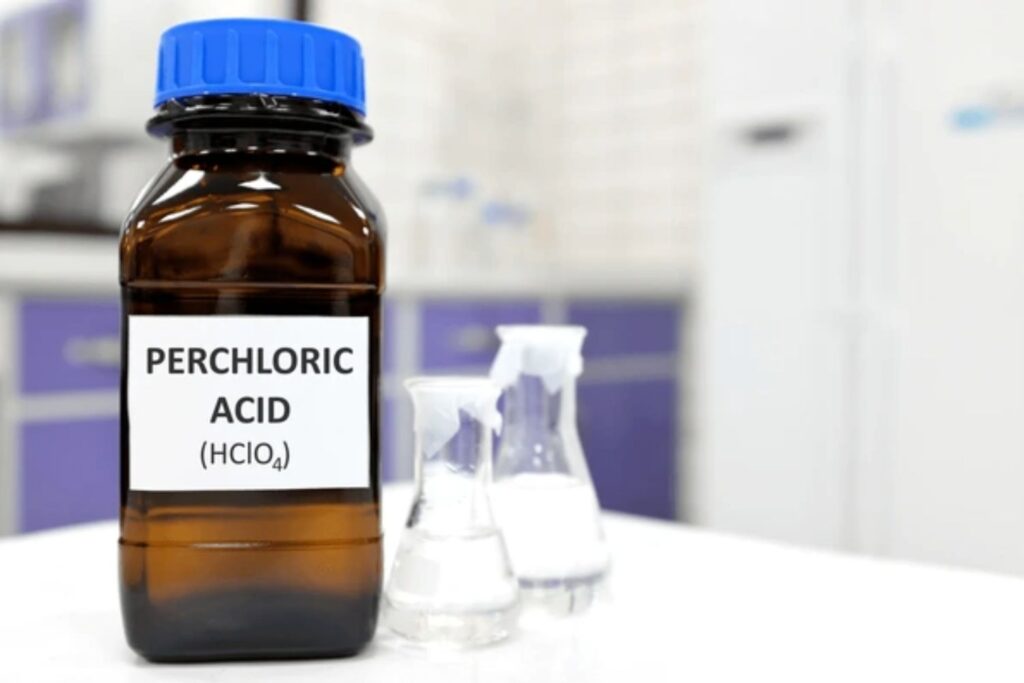
Perchloric acid (HClO₄) is a strong mineral acid known for its exceptional oxidizing capabilities, particularly at elevated temperatures. As a key reagent in analytical chemistry, high-purity synthesis, and surface treatment processes, it plays a critical role in industries ranging from pharmaceuticals and microelectronics to aerospace alloys. Despite its volatility and strict handling requirements, its utility in generating perchlorate salts, etching advanced materials, and preparing high-energy compounds makes it indispensable in specialized industrial workflows.
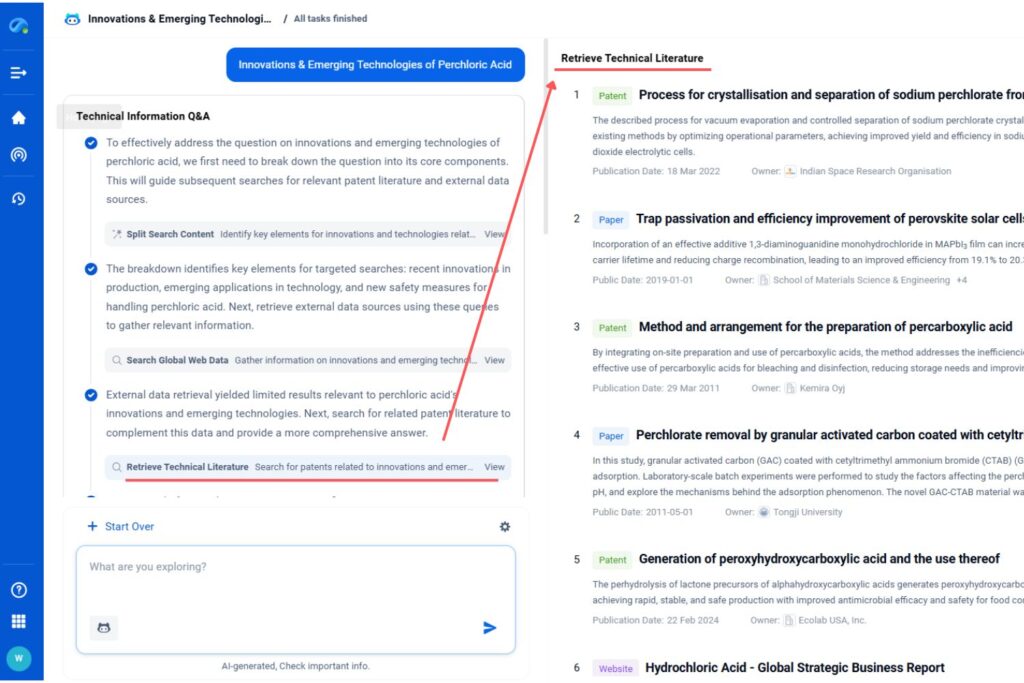
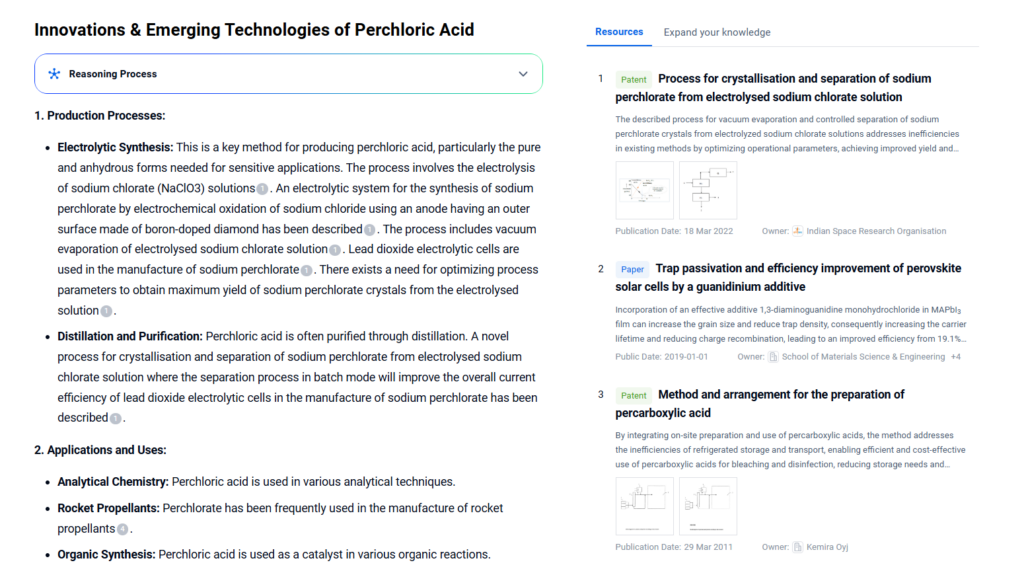
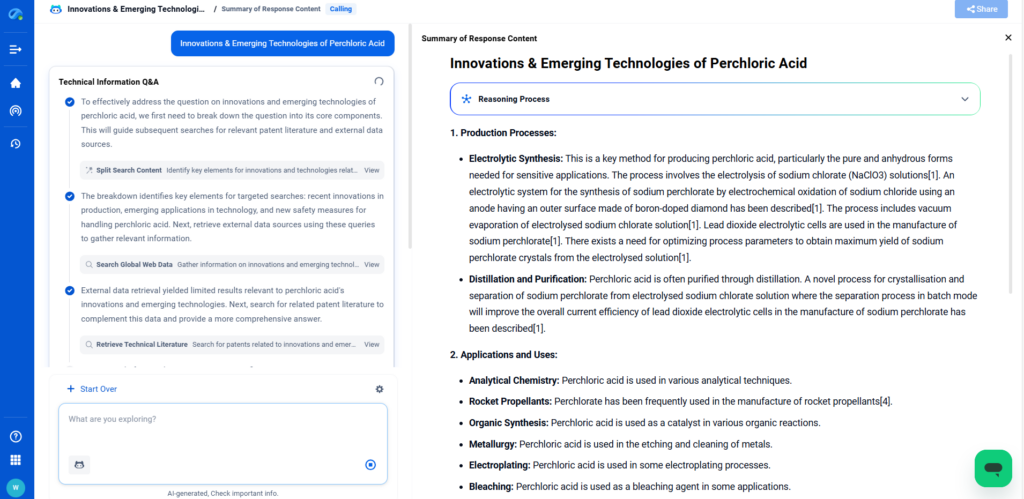
This blog dives into the molecular composition, commercial grades, technical advantages, and emerging applications of perchloric acid, offering engineers and technical sourcing specialists a complete reference point for industrial integration through PatSnap Eureka AI Agent.
Ask Patsnap Eureka AI
Patsnap Eureka AI provides instant, trusted answers to any technical questions.
Perchloric acid is one of the strongest Brønsted acids and serves as a powerful oxidizer under specific conditions. Structurally composed of a central chlorine atom bonded to four oxygen atoms, it forms a tetrahedral geometry that imparts high chemical reactivity, especially in aqueous and concentrated forms. In dilute concentrations, it behaves like a strong monoprotic acid, while in anhydrous or hot concentrated states, it becomes dangerously oxidizing. This dual behavior makes it highly adaptable—yet hazardous—thus requiring precise control systems in industrial settings.
Perchloric acid is especially valued for:
Its role in gravimetric analysis and digestion of samples
Production of ammonium perchlorate for solid rocket propellants
Etching of chromium-based compounds in microfabrication
Catalytic roles in specialty organic synthesis
Material Composition and Grade Data
Commercial perchloric acid is commonly available in aqueous concentrations ranging from 60% to 72%, with ultra-high-purity grades tailored for electronics and pharmaceutical sectors.
Common Grades and Suppliers
Grade
Concentration
Applications
Supplier
Notes
ACS Reagent
60–62%
Analytical chemistry, digestion
Sigma-Aldrich
Meets ACS reagent standards
Electronics Grade
70%
Semiconductor etching, wafer cleaning
Honeywell, GFS Chemicals
Ultra-low metal ion contamination
Rocket Propellant Grade
70–72%
Oxidizer for ammonium perchlorate
Albemarle, American Pacific
Regulated for energetic materials use
Lab Grade
60%
General-purpose acid/base reactions
Fisher Scientific
Lower purity, not for critical use
Notably, semiconductor-grade perchloric acid from suppliers like Honeywell’s Riedel-de Haën line guarantees <10 ppb heavy metals, essential for minimizing wafer contamination during photolithographic steps.
Key Properties That Define Perchloric Acid
Molecular Formula: HClO₄
Molecular Weight: 100.46 g/mol
Boiling Point: ~203 °C (72% aqueous solution)
Density: 1.67 g/cm³ (70% solution)
pKa: –10
Solubility: Miscible in water, ethanol, ether
Thermal Stability: Stable below 160 °C, becomes strongly oxidizing above this point
Functional Behavior
Acidic Strength: Stronger than sulfuric or nitric acid, allowing complete protonation in organic synthesis.
Oxidizing Potential: Under hot or anhydrous conditions, can ignite combustible materials.
Etching Capability: Selective reactivity with chromium, useful in passivated stainless-steel surfaces.
Core Applications Across Industries
1. Semiconductor & Microelectronics
In cleanroom environments, perchloric acid is used for wafer cleaning and metal removal, especially for etching chrome masks. Its high purity and minimal metal ion contamination make it ideal for VLSI/ULSI device fabrication.
2. Rocketry and Aerospace Propulsion
Used to produce ammonium perchlorate (AP), the oxidizing component in composite solid rocket fuels, including those in satellite boosters and missile systems.
Key benefit: Enables consistent burn rates and high thrust performance.
3. Analytical and Inorganic Chemistry
Perchloric acid is central to gravimetric analysis, metal digestion, and preparation of perchlorate salts used in laboratory standards.
4. Pharmaceuticals and Biotechnology
Functions as a strong acid catalyst in organic synthesis, especially in reactions where non-nucleophilic acidic conditions are needed. Also employed in protein precipitation protocols during sample prep.
5. Surface Treatment and Electroplating
Used in metal passivation processes and etching of stainless steels. Often combined with nitric acid for cleaning equipment in pharmaceutical and dairy industries.
How Perchloric Acid Compares to Similar Materials
Property
Perchloric Acid
Nitric Acid
Sulfuric Acid
Oxidizing Strength
Very high (especially hot)
High
Moderate
Volatility
High
Moderate
Low
Etching Use
Chromium, stainless steel
Copper, iron
Broad-spectrum
Compatibility
Requires dedicated fume hood
Standard lab hood
General use
Danger Level
Extreme (explosive risk)
High
Moderate
In contrast to nitric acid, perchloric acid demands dedicated fume hoods with wash-down systems, due to risks of perchlorate crystal buildup and potential explosions.
Innovations & Emerging Technologies
1. Perchloric Acid-Free Alternatives for Etching
Researchers are developing ionic liquid-based etchants and plasma treatments to reduce the use of highly oxidizing acids in microfabrication. However, perchloric acid still offers unmatched performance in specific chromium etching scenarios.
2. Green Chemistry Routes
New catalytic methods using perchloric acid aim to minimize waste during oxidative coupling reactions in organic synthesis, improving atom economy and solvent recovery.
3. High-Energy Material Design
Perchlorate salts derived from perchloric acid are being re-engineered using nanostructured additives to enhance stability and burn control in military and space-grade fuels.
🔍 Power Your R&D with PatSnap Eureka AI Agent
Map innovation pathways of Perchloric acid
Benchmark leading patent portfolios
Forecast material behavior across conditions
Challenges and What’s Next for Perchloric Acid
Key Challenges
Explosion Risk: Crystallized perchlorates are shock-sensitive; specialized wash-down hoods are mandatory.
Corrosivity: Requires careful material selection in piping (e.g., PTFE, glass-lined steel).
Environmental Concerns: Perchlorate contamination is strictly regulated due to its thyroid-disrupting effects in drinking water.
Future Outlook
Digital monitoring systems for acid concentration and fume hood airflow are being deployed to enhance lab safety.
Innovations in microreactor technology may enable safer, continuous-flow reactions involving perchloric acid.
Recycling and neutralization techniques are advancing to reduce environmental footprint, especially in pharma and semiconductor applications.
Conclusion
Perchloric acid remains a cornerstone in high-precision chemical processes—from microelectronics to solid fuel synthesis. Its unparalleled oxidizing strength and material compatibility in specific scenarios ensure it continues to serve as a powerful tool in the hands of experienced professionals. Yet, with that power comes the need for careful handling, innovation in safety protocols, and sustainability-minded practices.
FAQs
Q1: Is perchloric acid dangerous?
Yes. Especially in concentrated or hot conditions, it can cause explosions if not handled properly.
Q2: What are the key industries using perchloric acid?
Semiconductors, aerospace, pharmaceuticals, analytical labs, and surface treatment.
Q3: Can perchloric acid be stored long-term?
Only in tightly sealed containers made of compatible materials, and in temperature-controlled environments.
Q4: Are there green alternatives to perchloric acid?
Yes, but they often compromise performance, especially in precision etching or high-energy applications.
Q5: What safety equipment is required when using perchloric acid?
Dedicated perchloric acid fume hood with wash-down system, PPE, and explosion-proof storage.
Want to explore more about perchloric acid innovations, supplier trends, or patents in high-energy oxidizers? 👉Unlock deep technical insights with PatSnap Eureka AI Agent to forecast performance, compare grades, and benchmark global leaders—faster and smarter.