PMMA (Polymethyl Methacrylate), also known as acrylic or Plexiglas®, is a clear, lightweight thermoplastic. It offers excellent optical clarity, UV resistance, and weather durability. These traits make it a top choice across industries—from automotive lighting and medical devices to architectural panels and 3D printing.
This blog covers PMMA’s chemical structure, physical and mechanical properties, industrial grades, and application scenarios. We also explore innovation trends and highlight how the PatSnap Eureka AI Agent drives material research, IP exploration, and competitive intelligence.

What is PMMA?
PMMA is a synthetic polymer derived from methyl methacrylate (MMA) monomers.
- Chemical Formula: (C₅O₂H₈)ₙ
- CAS Number: 9011-14-7
- Appearance: Transparent, rigid solid
- Key Traits: High clarity, UV resistance, superior rigidity
It competes with glass in many applications due to its clarity and toughness.
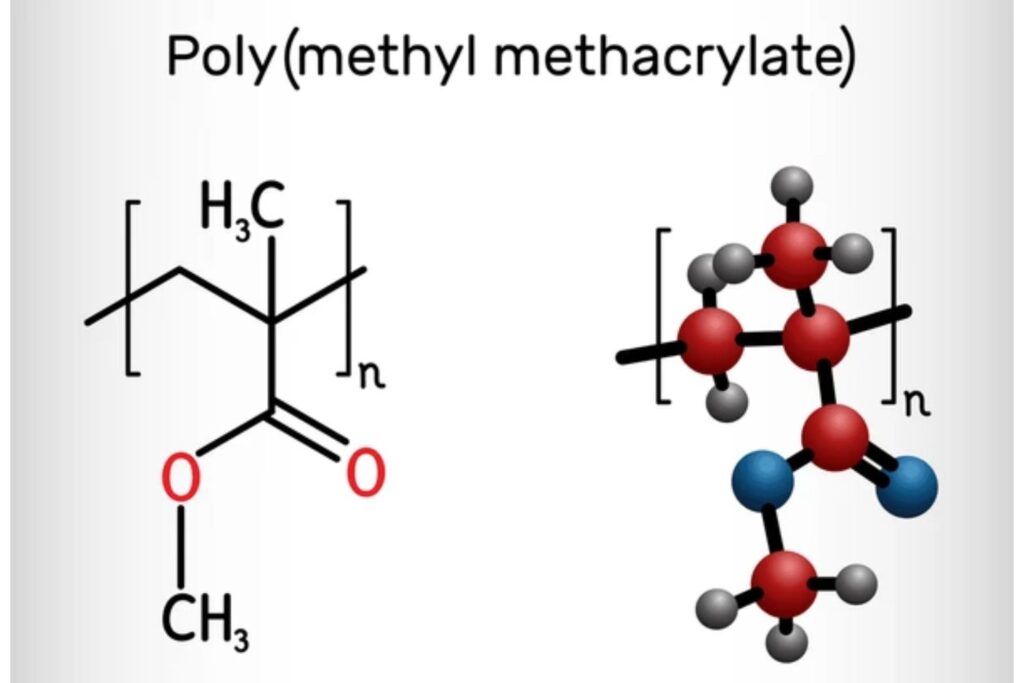
Composition & Properties / Performance
| Property | Typical Value |
|---|---|
| Density | 1.18 g/cm³ |
| Glass Transition Temp | 105°C |
| Tensile Strength | 60–70 MPa |
| Flexural Modulus | 3,100–3,400 MPa |
| Elongation at Break | ~5% |
| Light Transmittance | ~92% (visible spectrum) |
| UV Resistance | Excellent (self-extinguishing) |
| Surface Hardness | Shore D 80–90 |
Functional Strengths:
- Outstanding optical clarity for lenses and screens
- Excellent weather and UV durability
- Good scratch resistance vs polycarbonate
- Easy to thermoform and cast into complex shapes
Material Grades & Designations
PMMA comes in multiple grades tailored to specific needs:
| Grade Type | Designation | Typical Applications |
|---|---|---|
| Extrusion Grade | PMMA XT | Signage, displays |
| Cast Grade | PMMA CR | Lenses, automotive lighting |
| Medical Grade | USP Class VI | Implants, dental devices |
| Impact-Resistant | PMMA with impact modifiers | Sports gear, protective shields |
| UV-Resistant | UV-stabilized PMMA | Outdoor glazing, skylights |
Standards include ASTM D4802, ISO 12086, and FDA food and medical approvals.
Application Landscape
It is renowned for its optical clarity, weather resistance, and processability, making it a key material across multiple industries.
1. Architecture & Construction
- Glazing & Windows: PMMA is widely used in skylights, safety windows, and transparent roofing panels.
- Sound Barriers: Transparent acoustic barriers along highways benefit from PMMA’s durability and clarity.
- Interior Design: Decorative panels, light diffusers, and partition walls incorporate colored or frosted Polymethyl Methacrylate for aesthetic value.
- Greenhouse Panels: Its UV resistance ensures longevity in sunlight-heavy applications.
Why PMMA?
It’s lighter than glass and more resistant to shattering, reducing transport and installation costs.
2. Automotive & Transportation
- Lighting Systems: Headlamp lenses, tail lights, and interior ambient lighting elements frequently use PMMA.
- Dashboard & Instrument Clusters: Offers optical precision and impact resistance.
- Sunroofs & Side Windows (non-load-bearing): Especially in lightweight EV models.
Trends:
It is replacing polycarbonate in exterior lighting systems due to its better UV and scratch resistance.
3. Medical & Healthcare
- Intraocular Lenses (IOLs): It is one of the earliest and still-relevant materials for IOLs due to its biocompatibility.
- Dentures & Prosthetics: Used in dental bases and orthopedic devices.
- Medical Equipment Housing: Transparent casings for diagnostic tools, ensuring easy sterilization.
Highlight:
Medical-grade Polymethyl Methacrylate (USP Class VI) offers clarity and chemical resistance, ideal for optical implants and surgical tools.
4. Consumer Goods & Retail
- Display Stands & Signage: High transparency makes it ideal for illuminated or edge-lit signs.
- Furniture: Acrylic chairs, tables, and shelves—modern, durable, and easy to shape.
- Protective Shields: Widely adopted for sneeze guards and shop barriers post-COVID.
Market Insight:
DIY and home décor brands prefer PMMA for custom displays due to its aesthetic appeal and ease of CNC cutting or laser etching.
5. Electronics & Optical Devices
- Optical Lenses: Camera lenses, light guides, and solar concentrators.
- Screen Panels: Used as protective covers or light diffusers in LCDs and LEDs.
- Fiber Optics: Polymethyl Methacrylate-based plastic optical fiber (POF) is used in short-distance data transmission.
Edge:
Polymethyl MethacrylatePMMA provides ~92% light transmittance and can be precision-molded for photonics-grade applications.
6. 3D Printing & Additive Manufacturing
- SLA Resins: Specialized Polymethyl Methacrylate-based photopolymers allow for transparent 3D prints.
- Prototypes & Dental Models: High rigidity and aesthetic finish make Polymethyl Methacrylate ideal for visual prototypes.
PMMA vs Other Similar Materials
| Feature | PMMA | Glass | Polycarbonate |
|---|---|---|---|
| Clarity | Excellent (~92%) | Excellent (~92%) | Good (~90%) |
| Weight | Lightweight | Heavy | Lightweight |
| Impact Resistance | Moderate | Poor | High |
| Scratch Resistance | High | Very High | Moderate |
| UV Resistance | Excellent | Excellent | Requires coating |
| Brittleness | Higher | Very brittle | Low |
| Price | Mid-range | Varies | Higher |
Advantages of PMMA
- Crystal-clear transparency
- Excellent UV and weather resistance
- Lightweight and impact-moldable
- Scratch-resistant and easy to finish
- Biocompatible for medical use
- Available in specialized grades
Innovations & Technology
1. Impact-Modified PMMA
- Additives such as methacrylate-butadiene-styrene (MBS) improve toughness.
- Recent patents show blends boosting impact strength by 50% while maintaining clarity.
2. Nanocomposite PMMA
- Incorporation of silica or graphene oxide nanoparticles enhances thermal stability and flame resistance.
- These composites show higher HDT and improved surface hardness.
3. Bio-Based and Recycled PMMA
- Derived from renewable feedstocks or produced via chemical recycling of post-consumer Polymethyl Methacrylate.
- Promotes circular economy and supports eco-certifications.
4. UV-Stable Outdoor Grades
- New UV absorbers and stabilizers extend life span beyond 20 years.
- Ideal for architectural and signage applications.
5. 3D Printable PMMA Resins
- High-viscosity, low-shrinkage Polymethyl Methacrylateresins enable SLA and DLP prints.
- They yield clear, rigid parts suitable for dental and prototyping use.
Sustainability & Environmental Impact
- Recyclability: Fully recyclable via depolymerization or mechanical reprocessing
- Bio-Sourcing: Emerging bio-PMMA from plant-based methacrylates
- Energy Use: Engineered for long lifespans to lower lifecycle carbon footprint
- Compliance: Meets REACH, RoHS, FDA, and eco-label certifications
PatSnap Eureka AI Agent Capabilities
- Maps Polymethyl Methacrylate patents globally across application areas
- Tracks trends in bio-composites and impact-resistant PMMA
- Reveals strategic patenting and white space in implantable and smart PMMA
- Supports competitive monitoring and material substitution strategies
Conclusion
PMMA remains a top-clear plastic with unmatched optical qualities and long-term weather resistance. Continuous innovation in impact strength, sustainability, and 3D printing ensures its relevance.
With AI-driven tools like PatSnap Eureka AI Agent, material scientists and product developers can tap into evolving patent landscapes, optimize formulation strategies, and capture emerging market opportunities
FAQs
PMMA is lighter, impact resistant, and easier to mold, though glass is harder and scratch-resistant.
Yes, through mechanical grinding or chemical depolymerization.
Yes, USP Class VI grades are safe for implants and medical devices.
It resists scratches well but can be polished for better finish.
For more scientific explanations of PMMA , try PatSnap Eureka AI Agent.