


What Is Rigid Insulation?
It consists of materials that resist mechanical influences and physical stress, such as bending, while providing effective thermal insulation and maintaining structural integrity.
Different Types of Rigid Insulation
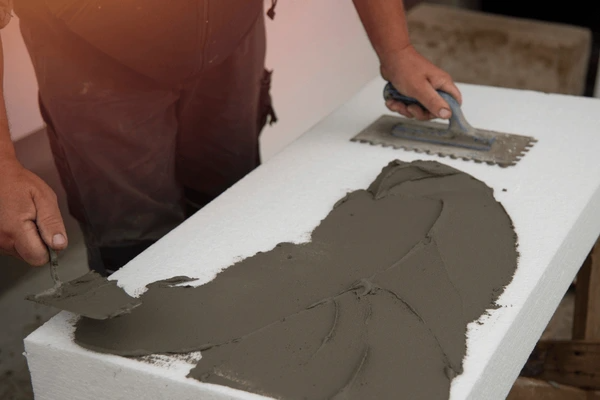
- Rigid foam insulation boards: made of cellular structures like polystyrene, polyurethane, polyisocyanurate, polyolefin, and elastomeric materials. They have low thermal conductivity and good insulation performance.
- Fibrous insulation: composed of small fibers like fiberglass and mineral wool, forming a loose mesh to trap air. It commonly appears in batts or loose-fill formats.
- Expanding foam insulation: Liquid foams sprayed/injected into cavities where they expand and cure in place, e.g., polyurethane and polyisocyanurate foams. They can serve as air and vapor barriers.
- Ceramic fiber rigid insulation tiles: lightweight, high-temperature stable tiles made of ceramic fibers, used in aerospace applications.
Benefits
- Excellent thermal insulation properties with low thermal conductivity
- High strength and dimensional stability
- Moisture resistance with closed-cell structure
- Versatile manufacturing methods: Extrusion, molding, lamination
- Suitable for various applications: Building, automotive, aerospace
Applications of Rigid Insulation Materials
Building and Construction Applications
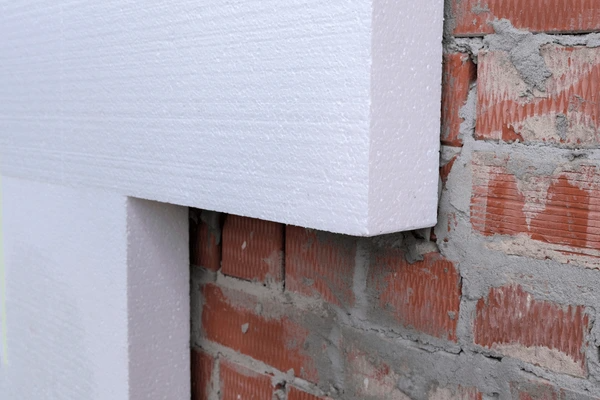
The construction industry uses the materials to reduce heat transfer and improve energy efficiency. We install rigid insulation panels edge-to-edge to create an insulated barrier that maximizes HVAC system efficiency.
Industrial and High-Temperature Applications
Industries like oil refineries, liquefied natural gas installations, and aerospace use these materials such as perlite silicate and ceramic fiber insulation tiles to insulate pipes, equipment, and structures exposed to extreme temperatures ranging from 125°F to 1200°F.
Protective and Insulating Enclosures
They help create enclosures and assemblies that protect and insulate components and molds. These enclosures often feature rigid insulation sidewalls, loops, or layers extending between the top and bottom ends for thermal insulation and structural support.
Specialized Applications
These materials find applications in diverse fields, including:
- Consumer electronics manufacturing for insulating components
- Underwater pipe insulation and buoyancy for subsea pipelines
- Insulation for electrical equipment and high-voltage applications
- Acoustic insulation and fire protection coatings
Application Cases
| Product/Project | Technical Outcomes | Application Scenarios |
|---|---|---|
| Rigid Foam Insulation Panels | Provide high thermal resistance and energy efficiency, reducing heating and cooling costs by up to 30%. Lightweight and easy to install, with moisture resistance and durability. | Building and construction industry for wall, ceiling, and roof insulation systems in residential, commercial, and industrial structures. |
| Aerogel Insulation Blankets | Offer superior insulation performance with extremely low thermal conductivity, up to 10 times better than traditional insulation materials. Lightweight, flexible, and resistant to high temperatures up to 1200°F. | Industrial applications such as oil refineries, chemical plants, and aerospace for insulating pipes, equipment, and structures exposed to extreme temperatures. |
| Vacuum Insulation Panels (VIPs) | Provide exceptional thermal insulation performance with minimal thickness, up to 7 times better than conventional insulation materials. Durable and resistant to moisture and aging. | Refrigeration and cold storage applications, as well as building and construction for insulating walls, floors, and roofs in energy-efficient buildings. |
| Polyisocyanurate Insulation Boards | Offer high thermal resistance and fire resistance, with a closed-cell structure that prevents moisture absorption. Durable and long-lasting, with an estimated service life of over 50 years. | Commercial and industrial building insulation, particularly for flat or low-sloped roofing systems, as well as insulating concrete forms (ICFs) for energy-efficient wall construction. |
| Mineral Wool Insulation Boards | Provide excellent thermal and acoustic insulation properties, as well as fire resistance and moisture resistance. Environmentally friendly and made from recycled materials. | Building and construction industry for insulating walls, ceilings, and floors in residential, commercial, and industrial buildings, as well as HVAC ductwork insulation. |
Latest Innovations in Rigid Insulation
Novel Flexible Insulation Compounds
Researchers have created a new flexible insulating material that has far higher flexibility and heat insulation properties comparable to syntactic foam. This compound is particularly well-suited for deep-water exploration and production applications due to its resistance to compression, water absorption, and ability to insulate subsea equipment and piping. The compound can be applied with greater precision and less labor cost compared to traditional insulation systems.
Insulation Enclosures
Insulation enclosures have been developed that incorporate rigid insulation materials supported by a structure with a top wall and bottom opening. The rigid insulation extends between the top and bottom ends and may consist of sidewall insulation loops extending along the enclosure’s circumference. These enclosures can receive mold within their interior for various applications.
Ceramic Fiber Rigid Insulation Tiles
Ceramic fiber rigid insulation tiles have been developed as lightweight, high-temperature stable, and low thermal conductivity insulation materials for space shuttles. The fabrication methods and performance improvements over three generations of these tiles in the USA are discussed, along with domestic research progress.
Rigid Insulation with Varying Density Zones
A novel rigid insulation material has been invented with at least one high-density zone and one low-density zone, where the high-density zone has an indentation hardness at least twice that of the low-density zone. This allows for rigidity for thermal/acoustic insulation while also providing compressibility to seal around protruding parts and uneven surfaces during installation.
Sustainable and Renewable Insulation Systems
There is growing research into sustainable, renewable, and environmentally friendly insulation systems to replace traditional petroleum-based materials. These new insulating materials offer improved functionality along with environmental and safety benefits. Efforts around the world are exploring renewable insulation systems for high-voltage applications.
Technical Challenges of Rigid Insulation
| Improving Thermal Insulation Performance | Developing rigid insulation materials with higher thermal resistance and lower thermal conductivity to enhance the overall insulation performance. |
| Enhancing Mechanical Properties | Improving the mechanical strength, compression resistance, and durability of rigid insulation materials to withstand external forces and environmental conditions. |
| Lightweight and Cost-Effective Solutions | Developing lightweight and cost-effective rigid insulation materials to reduce material and installation costs while maintaining insulation performance. |
| Moisture and Water Resistance | Enhancing the moisture and water resistance of rigid insulation materials to prevent degradation and maintain insulation properties in humid or wet environments. |
| Fire Resistance and Safety | Improving the fire resistance and safety of rigid insulation materials to meet building codes and regulations, and ensure occupant safety. |
To get detailed scientific explanations of rigid insulation, try Patsnap Eureka.
