Wollastonite, a naturally occurring calcium inosilicate mineral (CaSiO3), is increasingly valued in the materials world as a high-performance functional filler. With its acicular (needle-like) structure, low thermal expansion, and excellent reinforcing ability, wollastonite finds use across a broad range of industrial sectors. From enhancing scratch resistance in automotive plastics to improving dimensional stability in construction boards, this mineral’s unique morphology and chemistry offer performance and economic advantages. This blog explores wollastonite’s grades, key properties, and technical applications, with a focus on engineering materials, coatings, and emerging innovation platforms through PatSnap Eureka AI Agent.

What is Wollastonite and Why It Matters
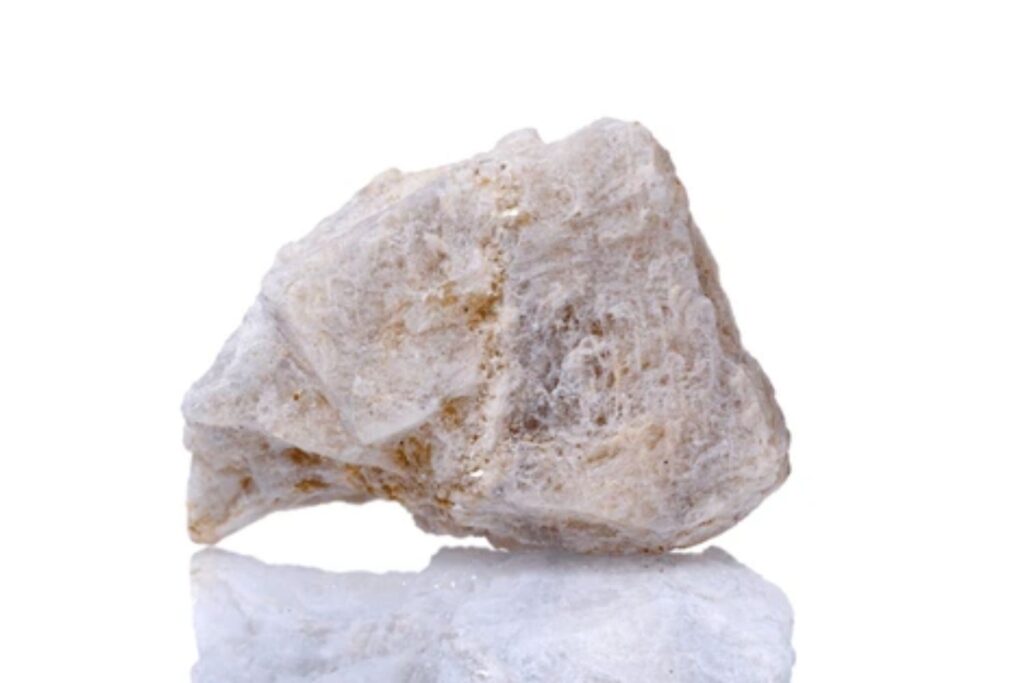
Wollastonite is a calcium silicate mineral formed through metamorphism of limestone and silica-rich rocks. Its crystal structure enables it to act both as a reinforcing agent and a functional filler. What sets wollastonite apart is its high aspect ratio, low moisture absorption, and compatibility with a wide range of polymers, ceramics, and cementitious systems.
Moreover, wollastonite is non-toxic, chemically inert, and thermally stable up to 1120°C, making it suitable for flame-retardant systems and high-temperature processing environments. These attributes have made it increasingly popular as a sustainable alternative to other fillers such as asbestos, talc, or glass fiber in specific contexts.
Material Composition and Grade Data
Wollastonite’s basic chemical formula is CaSiO3, but natural deposits may contain minor traces of Fe, Mg, and Mn. Industrial-grade wollastonite is classified by aspect ratio, purity level, particle size, and surface treatment.
Commercial Grades (Examples):
- NYAD 400 (Imerys): High-purity, acicular wollastonite with median particle size ~13µm. Used in thermoplastics and elastomers.
- NYAD M325 (Imerys): Fine-ground version for coatings, ceramics, and adhesives.
- Kemolit W20 (Wolkem): Surface-modified wollastonite with enhanced compatibility for polyolefins and PVC.
- Cimbar Wollastocoat Series: Designed for architectural coatings and polymers, offering improved opacity and weatherability.
Grades are often surface-treated with silanes or titanates to improve dispersion and matrix bonding.
Key Properties That Define Wollastonite
- High Aspect Ratio: Improves mechanical reinforcement and dimensional stability in filled systems.
- Low Thermal Expansion (8.6 x10⁶ /°C): Enhances thermal shock resistance in ceramics and composites.
- Good Electrical Insulation: Ideal for electronics-grade encapsulants and housings.
- Chemical Inertness: Stable in alkaline and moderately acidic environments.
- Moderate Mohs Hardness (4.5 – 5): Offers scratch resistance without causing excessive tool wear.
- Low Moisture Absorption (<0.2%): Prevents water-related degradation in polymers and paints.
Core Applications Across Industries
Wollastonite’s unique combination of high aspect ratio, low moisture content, excellent thermal stability, and inherent whiteness makes it a versatile functional filler and reinforcement material across various high-performance industries:
1. Plastics and Polymers
In polymer composites, wollastonite is widely used as a reinforcing agent to improve mechanical strength, dimensional stability, and flame retardancy. Its needle-like morphology enables stress transfer and crack deflection in thermoplastics such as polypropylene (PP), polyethylene (PE), polyamides (PA), and polybutylene terephthalate (PBT). Modified grades with surface treatments (e.g., silane-coated wollastonite) enhance compatibility with polymer matrices, reducing shrinkage and warping in automotive parts, appliance housings, and consumer electronics.
Typical Applications: Automotive under-the-hood parts, appliance panels, laptop enclosures, flame-retardant cable insulation.
2. Ceramics and Glass-Ceramics
Wollastonite serves as a fluxing agent in ceramic tile bodies, sanitaryware, and tableware, lowering sintering temperatures and improving vitrification. Its high calcium content contributes to a low thermal expansion coefficient, increasing thermal shock resistance. In glass-ceramics, wollastonite enhances strength and translucency while reducing energy consumption during processing.
Typical Applications: Floor and wall tiles, ceramic frits, technical ceramics, glass-ceramic cooktops.
3. Paints and Coatings
As a functional extender in architectural and industrial coatings, wollastonite provides anti-corrosive properties, improves hardness, and enhances surface durability. Its acicular structure reinforces the coating film and resists weathering and abrasion. Additionally, its chemical inertness makes it suitable for acidic and alkaline environments.
Typical Applications: Marine coatings, industrial primers, powder coatings, water-based paints for metal and concrete substrates.
4. Friction Materials
Wollastonite is used in brake pads and clutch facings as a partial replacement for asbestos or aramid fibers. It imparts thermal resistance, mechanical strength, and wear resistance, especially under high frictional heat. Its non-toxic, fibrous nature helps maintain performance without releasing hazardous particulates.
Typical Applications: Disc brake pads for passenger and commercial vehicles, railway brake blocks, heavy machinery friction assemblies.
5. Construction and Cement
In cementitious systems, wollastonite enhances the flexural and compressive strength of mortars and fiber-reinforced concrete. It helps mitigate shrinkage and cracking, especially in high-performance formulations such as engineered cementitious composites (ECC) or shotcrete. Its pozzolanic reactivity is modest, but it synergizes well with fly ash and silica fume.
Typical Applications: Repair mortars, bridge deck overlays, precast concrete, fiber cement panels.
6. Metallurgy and Slag Engineering
In steel production, wollastonite is used as a fluxing agent to facilitate slag formation and desulfurization. It reduces viscosity and promotes the formation of a stable, easily removable slag layer. This is particularly beneficial in continuous casting operations, where slag stability and purity directly impact steel quality.
Typical Applications: Steel ladle refining slag, continuous casting powders, desulfurization additives.
Comparative Advantages and Limitations
| Aspect | Advantages | Limitations |
|---|---|---|
| Thermal Properties | High thermal stability; low expansion coefficient; excellent flame retardancy | Not suitable for extremely high-temperature structural loads (>1200°C) |
| Mechanical Reinforcement | Acicular structure improves tensile and flexural strength in composites | Requires surface treatment for compatibility with non-polar resins |
| Chemical Inertness | Non-reactive in many chemical environments; corrosion-resistant | Limited acid solubility under low pH may restrict use in harsh acidic media |
| Eco-friendliness | Non-toxic, asbestos alternative; supports green material certifications | Dust generation during processing may require mitigation |
| Processing Efficiency | Acts as a flux in ceramics; reduces sintering temperature and energy usage | Irregular particle morphology can affect flowability in dry powder processing |
| Aesthetic Contributions | High whiteness and brightness in paints and ceramics | In coarse grades, can reduce gloss in surface coatings |
Comparison with Talc and Calcium Carbonate:
- Versus Talc: Wollastonite offers better thermal conductivity, acicular reinforcement, and less plate-like morphology, leading to superior dimensional stability.
- Versus CaCO₃: More expensive but offers significantly better reinforcement, heat resistance, and fire-retardant properties.
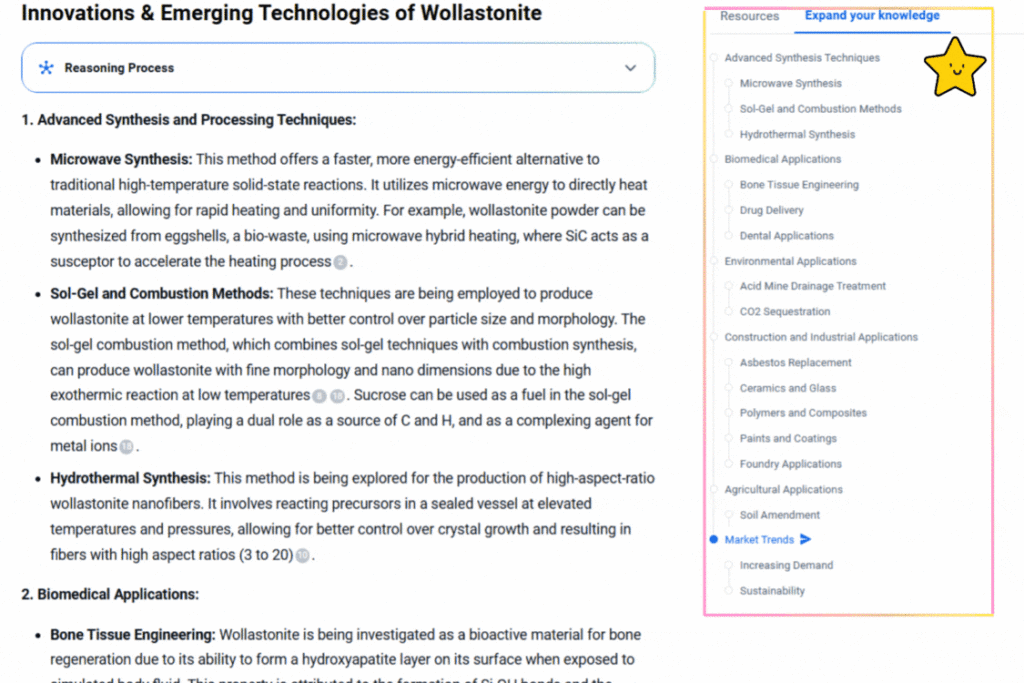
Innovations & Emerging Technologies
Recent research and industrial trends highlight several transformative directions for wollastonite:
1. Nano-Wollastonite Composites
Researchers are developing nano-sized wollastonite particles to achieve higher aspect ratios and more effective load transfer in polymers and cements. These materials show improved impact strength, heat resistance, and barrier properties in packaging and biomedical devices.
Example: Nano-wollastonite reinforced epoxy resins for aerospace-grade composites with high tensile-to-weight ratios.
2. Bio-Wollastonite for Bone Regeneration
Wollastonite’s bioactivity and Ca:Si ratio make it suitable for bioresorbable bone scaffolds. Modified forms promote osteoblast proliferation and can be 3D-printed into porous structures for bone grafting and dental fillers.
Example: Sintered wollastonite–hydroxyapatite bioceramics used in craniofacial reconstructive implants.
3. Hybrid Mineral Filler Systems
Advanced formulations use wollastonite in combination with glass fibers, graphite, or kaolin to create hybrid fillers with synergistic performance—especially in automotive under-hood parts that demand rigidity, thermal resistance, and weight reduction.
4. Geopolymer Cement with Wollastonite
In green construction, wollastonite is being incorporated into alkali-activated geopolymers to enhance structural integrity and reduce carbon footprint. It acts as a pozzolanic additive while improving the matrix density and durability.
5. Microwave-Assisted Wollastonite Synthesis
A growing number of labs are using microwave processing to rapidly synthesize wollastonite from industrial waste (e.g., blast furnace slag and silica sludge), enabling circular economy models and cost-effective scale-up.
Challenges and What’s Next for Wollastonite
Despite its advantages, the wollastonite market faces challenges including:
- Geological Constraints: Limited natural reserves in high-purity form outside China, India, and Mexico.
- Cost Competitiveness vs. Talc and Calcium Carbonate: Especially in price-sensitive paint or filler markets.
- Inconsistent Global Standards: Varying quality metrics hinder standardization across borders.
Looking forward, the development of engineered wollastonite hybrids, improved surface chemistry, and integration in green building certifications are expected to drive future demand.
Conclusion
Wollastonite continues to grow in strategic relevance across sectors seeking cost-effective, thermally stable, and sustainable filler materials. Whether enhancing polymers in automotive, improving fire resistance in boards, or elevating performance in coatings, its unique morphology and chemistry set it apart.
Want to unlock insights on wollastonite patents, suppliers, and R&D breakthroughs?
👉 Explore deeper insights using PatSnap Eureka AI Agent—your strategic partner for material discovery, technical scouting, and innovation mapping.