


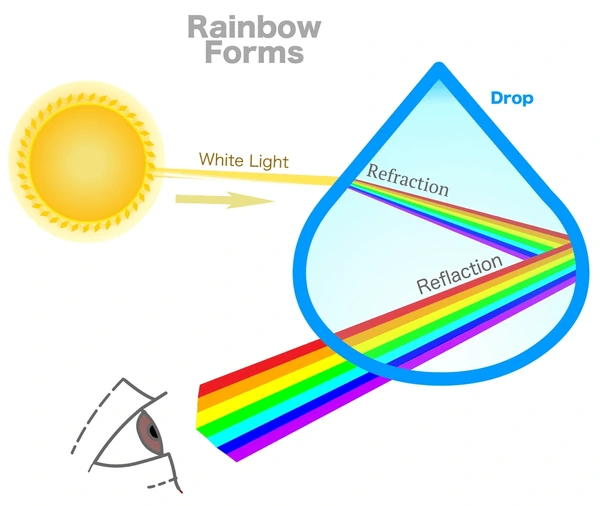
Light behaves in fascinating ways when it interacts with different surfaces and materials. Two key phenomena that define this interaction are reflection and refraction. Reflection occurs when light bounces off a surface, while refraction happens when light bends as it passes through a new medium. Understanding these principles not only explains everyday occurrences, like seeing your reflection in a mirror or the bending of a straw in water, but also reveals the science behind optical technologies. This article will explore the differences between reflection vs. refraction, how they work and their real-world applications.
Principles of Reflection: How Light Bounces Back
Reflection occurs when light bounces off a surface and changes direction. The law of reflection governs this process, stating that the angle of incidence always equals the angle of reflection. This phenomenon explains how light interacts with surfaces and forms the basis of many optical applications.
Understanding the Angle of Reflection
The angle of reflection refers to the angle at which light bounces back from a surface. It always matches the angle of incidence, both measured from the normal. The normal is an imaginary line perpendicular to the surface where the light ray strikes.
Types of Reflection
- Specular Reflection
Specular reflection happens on smooth surfaces, such as mirrors or calm water. Light reflects in an organized, mirror-like manner. The reflected rays appear to diverge from a single point, creating sharp and clear images. - Diffuse Reflection
Diffuse reflection occurs on rough surfaces like paper or walls. Light scatters in many directions, making the reflection less organized. This type of reflection gives matte surfaces their characteristic appearance.
The Huygens-Fresnel Principle
The Huygens-Fresnel principle helps explain how light waves propagate during reflection and refraction. It describes how every point on a wavefront acts as a source of secondary spherical wavelets. The resulting wave forms the sum of these wavelets, providing a deeper understanding of how light behaves.
Applications and Importance of Reflection
Studying light reflection is vital in fields like optics, photonics, and optical engineering. It aids in designing lenses, mirrors, and advanced optical components. Reflection also plays a key role in technologies like fiber optics, which rely on total internal reflection for efficient light transmission. These insights into reflection drive innovations across multiple industries.
Principles of Refraction: How Light Bends
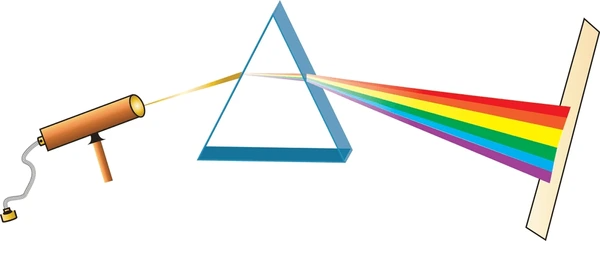
Refraction is a key optical phenomenon that occurs when light passes from one medium to another with a different density or refractive index. This change in medium causes the light to bend, altering its direction. The degree of bending depends on the difference in refractive indices and the light’s wavelength.
Definition and Principles of Refraction
- Definition
Refraction refers to the bending of light waves as they move between media with different refractive indices. This bending happens because the speed of light changes at the boundary between the two media. - Refractive Index
The refractive index measures how much a material bends light. It is calculated as the ratio of the speed of light in a vacuum to its speed in the medium. Materials with higher refractive indices bend light more sharply, influencing how light behaves in various environments.
Applications and Examples of Refraction
- Optics and Vision
Refraction plays a vital role in optical devices like lenses and mirrors. Eyeglasses and contact lenses rely on refraction to correct vision by properly focusing light onto the retina. - Atmospheric Science
Atmospheric refraction alters the path of light as it passes through layers of air with varying densities. Scientists study this phenomenon to understand its effects on radiative transfer and light polarization in the atmosphere. - Robotics and Navigation
In robotics, refraction is used in sensors and navigation systems. It helps delivery robots accurately detect obstacles and deliver goods efficiently in complex environments.
Advantages and Challenges of Refraction
- Advantages
Refraction enhances the performance of optical systems and visual aids. It also optimizes the design of advanced technologies, improving functionality across multiple industries. - Challenges
Refraction can create errors in measurements and images if not carefully managed. Systems that rely on precise light path calculations must account for refraction to ensure accuracy and reliability.
Reflection vs. Refraction: Key Distinctions
Key Differences Between Reflection and Refraction
- Interaction with the Surface
Reflection occurs when light hits a surface and bounces back. In contrast, refraction happens when light passes through a surface and bends as it enters a new medium. - Path of Light
Reflection changes the light’s direction at the surface. Refraction causes a gradual change in direction as light travels through the second medium. - Energy and Phase Changes
Reflection does not alter the energy or phase of the light wave. However, refraction can change the wavelength and frequency, leading to effects like dispersion.
Similarities Between Reflection and Refraction
- Both reflection and refraction involve changes in the direction of light rays.
- Both are essential for the functionality of optical devices like lenses, mirrors, and prisms.
- They play a significant role in how light behaves in different environments and media.
Understanding these similarities and differences helps explain how light interacts with surfaces and materials, revealing its versatile nature in various applications.
To get detailed scientific explanations of Reflection vs. Refraction, try Patsnap Eureka.
