


Resonant frequency is a fundamental concept in physics and engineering, referring to the natural frequency at which a system oscillates with maximum amplitude when subjected to an external force. It plays a vital role in various applications, from electrical circuits to mechanical systems and structural engineering. This article explores the definition, calculation, real-world applications, and key factors affecting Resonance frequency.
What is Resonant Frequency?
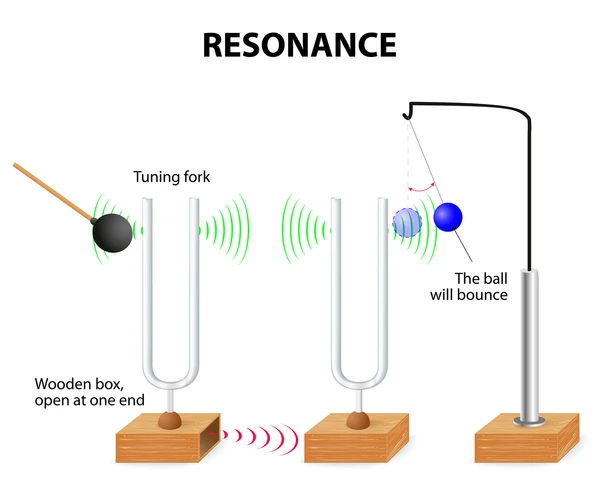
Resonant frequency is the specific frequency at which a system experiences maximum oscillation with minimal external input. In simple terms, when the external frequency matches the system’s natural frequency, resonance occurs, leading to amplified vibrations.

The formula for Resonance frequency in a simple RLC circuit is: 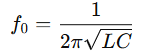
Where:
 = Resonant frequency
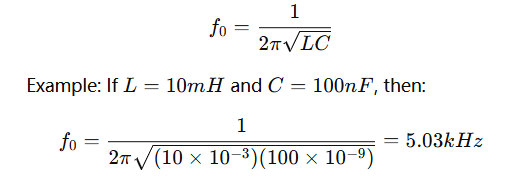
- L = Inductance (H)
- C = Capacitance (F)
For mechanical systems like a mass-spring system, the Resonance frequency is: 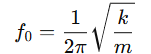
Where:
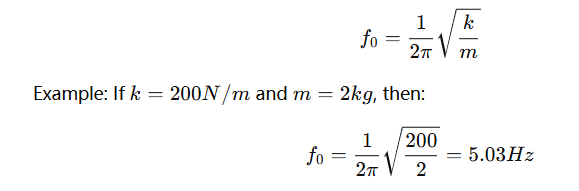
- k = Spring constant (N/m)
- m = Mass (kg)
Resonant Frequency vs. Natural Frequency
| Aspect | Resonant Frequency | Natural Frequency |
|---|---|---|
| Definition | Frequency at which a system oscillates with maximum amplitude when driven by an external force | Frequency at which a system oscillates freely without external input |
| Dependency | Dependent on external excitation | Inherent to the system |
| Application | Used in engineering applications like circuits and structures | Studied in vibration analysis and mechanical dynamics |
How to Calculate Resonant Frequency?
To determine the Resonance frequency, the following methods are used:
- For Electrical Circuits: Use the formula
- For Mechanical Systems: Use the formula
Graphical Representation
A frequency response graph illustrates resonance by showing the peak amplitude at the Resonance frequency. For electrical circuits, impedance is at its minimum, and for mechanical systems, displacement is maximized.
Real-World Applications of Resonant Frequency
Want to explore real-world applications of resonant frequency? Eureka Technical Q&A provides expert insights into how resonance is used in engineering, medical imaging, and wireless communication, helping you understand its impact on modern technology and innovation.

1. Electrical and Communication Systems
Resonance is widely used in electrical engineering, particularly in:
- Radio Tuners: Resonant circuits allow tuning to specific frequencies for radio transmission.
- Filters in Circuits: Band-pass and band-stop filters rely on resonance to allow or block signals.
2. Structural Engineering
Understanding resonant frequencies helps engineers design buildings, bridges, and towers resistant to destructive vibrations.
- Example: The Tacoma Narrows Bridge Collapse (1940) occurred due to wind-induced resonance, highlighting the importance of considering resonance in construction.
3. Medical Imaging
Resonance frequency is critical in medical diagnostics:
- Magnetic Resonance Imaging (MRI): Uses nuclear magnetic resonance (NMR) to generate high-resolution body scans.
4. Space Exploration
Satellites and spacecraft require precise velocity adjustments based on Resonance frequency calculations.
- Example: NASA’s Mars landers rely on resonance principles to optimize landing trajectories.
5. Sports Science
Motion capture technology tracks athlete performance by analyzing the body’s resonance.
- Example: Sprinters optimize running efficiency by studying foot strike resonance.
Application Cases
| Product/Project | Technical Outcomes | Application Scenarios |
|---|---|---|
| LDS V8900 Shaker Brüel & Kjær | Provides up to 289 kN force, frequency range 5-2000 Hz, supports resonance testing up to 80 kN | Vibration testing for large aerospace structures, automotive components, and industrial machinery |
| R&S FSW Signal Analyzer Rohde & Schwarz | Supports resonant circuit analysis up to 90 GHz, with resolution bandwidth down to 1 Hz | RF circuit design, wireless communication systems testing, and radar signal analysis |
| OmniScan X3 Flaw Detector Olympus | Uses resonant frequency for non-destructive testing, with phased array capabilities up to 64 elements | Flaw detection in industrial pipelines, aerospace components, and welded structures |
| Type 8763B Triaxial Accelerometer Kistler | Resonant frequency >25 kHz, measuring range ±500 g, for high-frequency vibration analysis | Structural health monitoring, modal analysis of mechanical systems, and shock testing |
| Model 793 Controller MTS Systems | Supports resonance testing with closed-loop control, frequency range up to 1000 Hz | Material fatigue testing, seismic simulation for buildings, and automotive suspension analysis |
Key Factors Affecting Resonant Frequency
- Mass and Stiffness
- Increasing mass lowers resonant frequency.
- Increasing stiffness raises resonant frequency.
- Damping Effects
- Damping reduces the amplitude of resonance and prevents excessive oscillations.
- External Forces
- Continuous external forces at the resonant frequency can amplify vibrations.
Conclusion
Resonant frequency is a critical concept with applications in electrical engineering, structural design, medical imaging, and space exploration. Understanding its principles helps engineers optimize designs, prevent failures, and enhance performance in real-world systems. By carefully managing resonance, industries can develop safer and more efficient technologies.
FAQs
1. How is Resonance frequency different from natural frequency?
Resonance frequency occurs when an external force matches a system’s natural frequency, amplifying oscillations. Natural frequency is an inherent property of the system, defining its free vibration rate.
2. Can Resonance frequency be harmful?
Yes, excessive resonance can cause structural failures, such as in bridges and aircraft. Engineers use damping techniques to minimize its effects.
3. How is Resonance frequency measured?
It is measured by applying varying frequencies and identifying the peak response using sensors or frequency response analysis.
4. Can a system have multiple resonant frequencies?
Yes, complex structures have multiple modes of resonance, each corresponding to different vibration patterns.
5. How do engineers mitigate resonance effects?
Engineers use damping materials, tuning mechanisms, and structural modifications to reduce unwanted resonance.
To get detailed scientific explanations of resonant frequency, try Patsnap Eureka.
