


Electric field lines are an essential concept in electromagnetism, helping us visualize the behavior of electric forces around charged objects. These visual representations are crucial in understanding how charges interact. In this article, we will explore the definition, properties, and real-world applications of these lines in physics and engineering.
What Are Electric Field Lines?
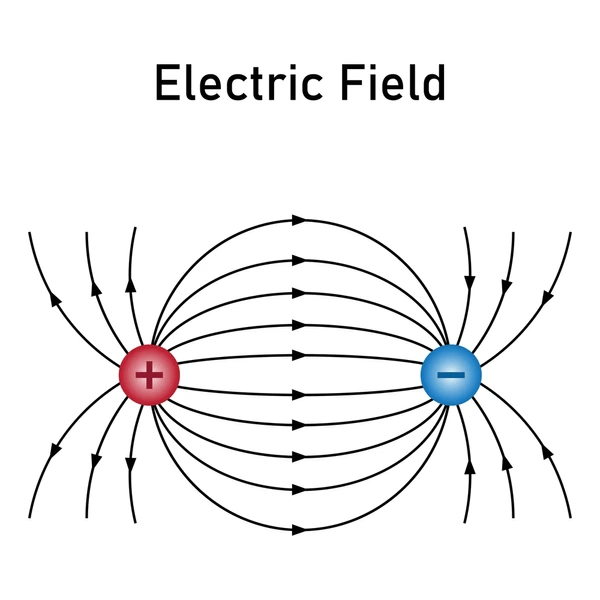
Electric field lines are a visual tool used to represent the electric field around a charged object. They indicate the direction of the field and provide insight into how electric forces act on other charges. Here are some important characteristics:
- Direction of the Field:
The lines point away from positive charges and toward negative ones. A positive test charge would follow the direction of these lines, illustrating the field’s behavior. - Line Density:
The density of these lines is a measure of the field’s strength. Areas with closely spaced lines indicate a stronger field, while widely spaced lines indicate a weaker field. - Other Key Features:
- The lines never intersect.
- They start at positive charges and end at negative charges, or extend to infinity.
- Electric fields are continuous, meaning the lines form an unbroken path.
How Are They Visualized?
To visualize the electric field, we use several methods:
- Diagrams:
Electric field patterns are often drawn in two dimensions. The closer the lines are to each other, the stronger the field in that region. - Test Charge Method:
A small positive test charge is placed in the field, and its movement traces the electric field lines. This technique allows us to map out the direction of the field. - Simulations:
Computer simulations are now commonly used to model complex charge configurations, generating precise patterns of electric fields. These are particularly useful for complicated systems that cannot be easily drawn.
Fundamental Concepts Behind Electric Fields
💡 Looking to grasp the fundamental concepts behind electric field lines? Eureka Technical Q&A provides expert insights into the behavior, characteristics, and applications of electric field lines, helping you understand this core principle in electromagnetism with clarity and depth.

1. Coulomb’s Law
Coulomb’s law explains the force between two point charges, which is fundamental to understanding the field’s behavior. The formula for Coulomb’s law is: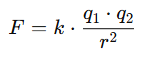
Where:
- F is the force between the charges
- k is Coulomb’s constant
 and
and  are the magnitudes of the charges
- r is the distance between them
This law shows that the force between charges decreases as the distance increases, which is why the field lines spread out with distance.
2. Superposition Principle
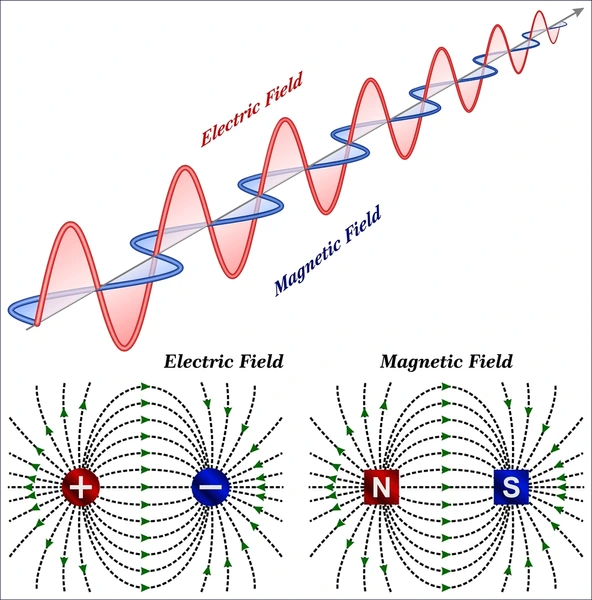
The superposition principle allows us to calculate the total electric field when multiple charges are present. The field at any point is the sum of the individual fields from each charge. This principle is crucial for understanding systems with more than one charge.
Types of Electric Field Configurations
1. Point Charge
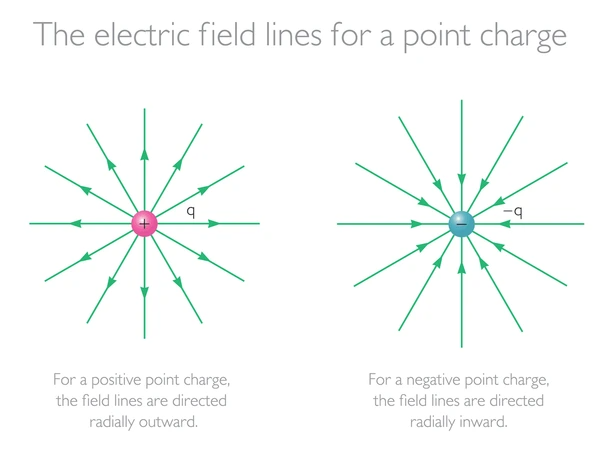
For a point charge, the electric field radiates symmetrically outward from positive charges and inward toward negative charges. The field weakens as the distance from the charge increases, and the lines become more spread out.
2. Dipole
A dipole consists of two equal and opposite charges, creating a characteristic field pattern. The lines emanate from the positive charge and curve toward the negative charge, forming a distinct configuration observed in polar molecules.
3. Uniform Electric Field
A uniform electric field occurs when the field lines are parallel and evenly spaced. This situation is typically seen in a parallel plate capacitor, where the field strength remains constant between the plates.
4. Complex Charge Distributions
In systems with multiple charges, the field lines can form complex patterns. These patterns depend on the relative positions and magnitudes of the charges, with lines converging or diverging as needed.
Applications in Science and Engineering
1. Electrostatics
In electrostatics, the study of stationary charges, electric field lines provide a simple way to understand how charges interact. They help explain forces such as attraction and repulsion and are essential for calculating potential differences and electric forces in various systems.
2. Capacitors
In capacitors, electric field patterns help you visualize how energy stores between two conductive plates. As you bring the plates closer together, the strength of the field increases, which boosts the capacitance.
3. Particle Accelerators
Electric fields are used to accelerate charged particles in particle accelerators. The configuration of the field determines the path and velocity of particles, which is critical for experiments in high-energy physics.
4. Lightning and Natural Phenomena
The concept of electric fields also explains natural phenomena like lightning. When the electric field between clouds and the ground becomes sufficiently strong, a discharge occurs, resulting in lightning. Understanding the behavior of electric fields can improve safety measures related to lightning.
Real-World Example: Capacitors and Electric Field Patterns
In the design of capacitors, understanding electric field patterns is crucial. The electric field between two plates depends on factors like plate spacing and the dielectric material between them. This knowledge helps optimize capacitor performance in electrical circuits, ensuring efficient energy storage and release.
Conclusion
Electric field lines are an invaluable tool for understanding and visualizing electric fields. From explaining fundamental interactions between charges to designing electrical components like capacitors, they play a vital role in both theoretical and applied physics. By mastering the concepts surrounding electric fields, we unlock a deeper understanding of electromagnetism and its many practical applications.
FAQs
1. What do these lines represent?
They represent the direction and strength of the electric field. The lines show how a positive test charge would move under the influence of the field.
2. Can electric field lines intersect?
No, electric field lines do not intersect. If they did, it would imply that the field has multiple directions at a single point, which isn’t possible.
3. How do electric fields relate to potential?
Electric field lines are perpendicular to equipotential lines. The density of the lines indicates the field strength, with closer lines representing a stronger field.
To get detailed scientific explanations of Electric Field Lines, try Patsnap Eureka.
