


Introduction
When it comes to light-emitting materials, fluorescence and phosphorescence are two fascinating processes often confused with each other. Both involve absorbing light and re-emitting it, but they differ in how long the glow lasts and the mechanisms behind it. In this guide, we’ll explore Fluorescence vs. Phosphorescence, breaking down their differences, real-world examples, and applications in science and technology. By the end, you’ll know exactly what sets these glowing processes apart.
What is Fluorescence?
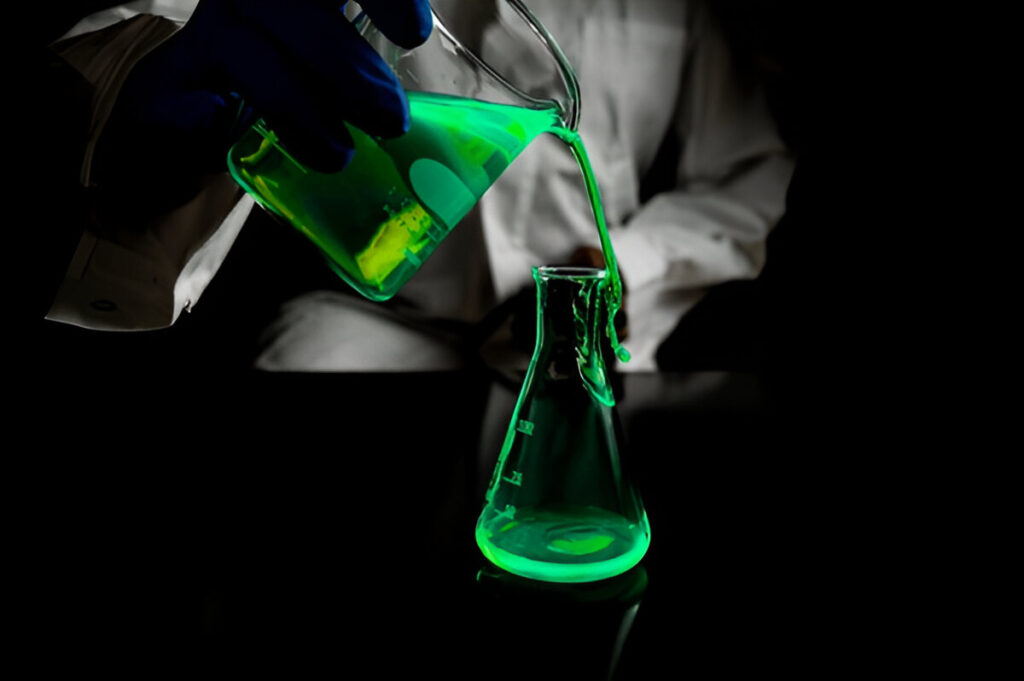
Fluorescence is a fascinating phenomenon where a substance absorbs light or electromagnetic radiation and emits it at a longer wavelength and lower energy. This process begins when electrons absorb energy, get excited to a higher energy state, and then return to their ground state, releasing photons. Fluorescent materials, known as fluorophores, are essential for this process and are characterized by their quantum yield, fluorescence lifetime, and emission wavelengths. The quantum yield measures the efficiency of light emission, while fluorescence lifetime reflects the time electrons spend in their excited state before emitting light.
Components and Mechanisms of Fluorescence
- Fluorophores: Fluorophores are the key players in fluorescence. These molecules often feature conjugated double bonds and aromatic rings, which stabilize the absorbed energy before releasing it as light. Common examples include NADH, tryptophan, and structural proteins like collagen and elastin. Their unique properties make fluorophores indispensable in biological and chemical applications.
- Excitation and Emission Spectra: Each fluorophore exhibits specific excitation and emission spectra, defining the wavelengths it absorbs and emits. The excitation spectrum highlights the range of wavelengths that energize the fluorophore, while the emission spectrum identifies the wavelengths of emitted light. These spectra are vital for accurately detecting and analyzing fluorophores in diverse scientific and industrial fields.
- Fluorescence Lifetime:Fluorescence lifetime measures how long a fluorophore stays in its excited state before emitting light. Ranging from nanoseconds to microseconds, this property depends on the molecular environment and interactions with nearby molecules. Understanding fluorescence lifetime is critical for applications in imaging, diagnostics, and material science.
What is Phosphorescence?
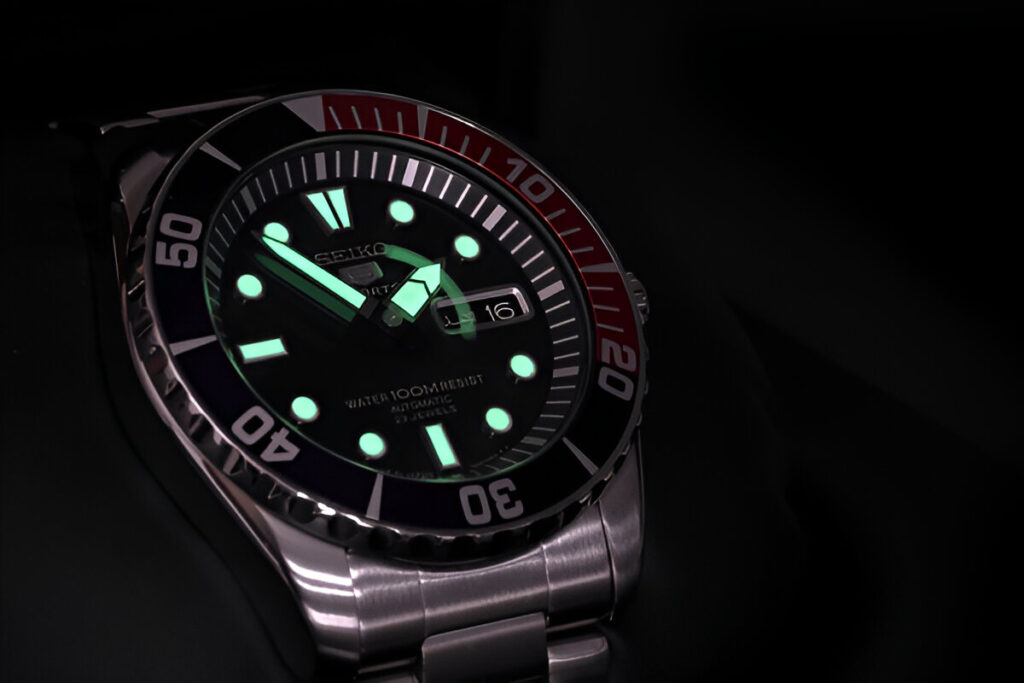
Phosphorescence is a type of photoluminescence where light is emitted by a substance without combustion or noticeable heat. This occurs when molecules absorb photons, transition to an excited state, and then slowly return to the ground state, emitting light over an extended period. Unlike fluorescence, which emits light in nanoseconds, phosphorescence features longer lifetimes ranging from microseconds to hours, making it unique in various applications.
Components of Phosphorescent Materials
- Host Matrix: The host matrix provides a stable framework for the phosphorescent centers. These matrices can be organic or inorganic, with common examples including crystalline materials like zinc sulfide or strontium aluminate. Organic hosts often involve polymer matrices that offer flexibility in applications.
- Activators and Sensitizers: Activators are dopants that drive the luminescence process. Examples include rare earth ions like Eu²⁺, Tb³⁺, or transition metals such as Pt and Ir. Sensitizers play a supporting role by trapping and transferring energy to activators, boosting phosphorescence efficiency.
- Heavy Atoms: Incorporating heavy atoms like bromine, iodine, or platinum group metals enhances spin-orbit coupling (SOC), which facilitates intersystem crossing (ISC). This mechanism is crucial for achieving efficient phosphorescence. Metalloporphyrins containing Pt(II) or Pd(II) are often used in applications that demand effective triplet state formation.
- Defect Centers: Defect centers in phosphorescent materials can trap and later release excited carriers, contributing to light emission. Carefully controlling these defects can enhance both the brightness and efficiency of the phosphorescent material.
Fluorescence vs. Phosphorescence: Key Differences
Basic Mechanisms
Fluorescence and phosphorescence are photoluminescence processes involving photon absorption and light emission. Fluorescence occurs when an electron absorbs a photon, transitions to an excited singlet state, and returns to the ground state, emitting light within nanoseconds. In contrast, phosphorescence involves intersystem crossing to a triplet state, with light emission delayed from milliseconds to hours due to the spin-forbidden nature of the transition.
Lifetimes of Excited States
The lifetimes of fluorescence and phosphorescence differ significantly. Fluorescence has short lifetimes of nanoseconds to microseconds, while phosphorescence lasts much longer, ranging from milliseconds to seconds or more. These differences stem from the rapid allowed transitions in fluorescence versus the slower forbidden transitions in phosphorescence.
Emission Pathways and Energy States
Fluorescence emits light through a direct transition from the singlet excited to the singlet ground state, occurring rapidly with higher energy light. Phosphorescence emits from the triplet excited state to the singlet ground state, producing lower-energy, longer-wavelength light due to its slower transition process.
Applications and Practical Uses
Fluorescence is ideal for fast, sensitive applications like biological imaging, assays, and chemical sensors. It also powers fluorescent lamps and mineral analysis. Phosphorescence, with its long-lasting glow, is used in OLEDs, optical sensing, safety signs, and glow-in-the-dark products. Its triplet state makes it valuable for photodynamic therapy and photocatalysis.
Quantum Yield and Efficiency
Fluorescence typically boasts higher quantum yields, efficiently emitting light. Phosphorescence often has lower quantum yields due to non-radiative decay and spin-forbidden transitions, though advancements in material science are improving its efficiency.
Structural and Chemical Considerations
Fluorescent molecules feature conjugated double bonds and aromatic rings that stabilize energy for rapid emission. Phosphorescent molecules, enriched with heavy atoms like halides or platinum metals, enhance intersystem crossing and promote long-lasting light emission through increased spin-orbit coupling.
Visual Comparison: Fluorescence vs. Phosphorescence
Fluorescence
- Emission Time: Fluorescence is characterized by a fast emission of light, typically occurring on a nanosecond timescale.
- Spectrum and Intensity: The emission spectrum of fluorescence is generally narrower and more intense compared to phosphorescence. The light emitted by fluorescent materials is often brighter and appears more vivid.
- Color and Duration: Fluorescent materials emit light at a specific wavelength that is shorter than the absorbed light, resulting in a bright, immediate glow that lasts for a short duration.
Phosphorescence
- Emission Time: Phosphorescence involves a slower emission of light, which can persist for a longer duration, ranging from milliseconds to hours or even days.
- Spectrum and Intensity: The phosphorescence spectrum is often broader and less intense compared to fluorescence. The emitted light may appear dimmer and can have a longer afterglow.
- Color and Duration: Phosphorescent materials emit light at a longer wavelength than the absorbed light, resulting in a dimmer, longer-lasting glow.
Conclusion: Fluorescence vs. Phosphorescence
In the debate of Fluorescence vs. Phosphorescence, the key difference lies in their duration and mechanisms of light emission. Fluorescence produces an immediate, short-lived glow, while phosphorescence creates a longer-lasting afterglow. Both processes play crucial roles in modern technology, from medical imaging and lighting to glow-in-the-dark materials and safety gear.
Understanding these differences not only deepens your knowledge of physics but also highlights the innovative ways these phenomena are used in everyday life and scientific advancements.
FAQ About Fluorescence and Phosphorescence
Why does phosphorescence last longer than fluorescence?
- Phosphorescence involves a change in electron spin state, leading to a forbidden energy state transition, which slows down the emission process, resulting in a longer afterglow.
Can a material exhibit both fluorescence and phosphorescence?
- Yes, some materials can exhibit both phenomena, depending on their molecular structure and the nature of their electronic states.
How are fluorescence and phosphorescence used in everyday applications?
- Fluorescence is commonly used in applications like fluorescent lighting and biological imaging, while phosphorescence is utilized in glow-in-the-dark materials and emergency signage.
What factors affect the efficiency of fluorescence and phosphorescence?
- Factors such as temperature, molecular environment, and the presence of quenching agents can influence the efficiency and duration of both fluorescence and phosphorescence.
What causes the color differences in fluorescence and phosphorescence emissions?
- The color of emitted light depends on the energy gap between the excited and ground states of a molecule. Fluorescence typically results in shorter wavelengths (e.g., blue or green light), while phosphorescence can emit longer wavelengths (e.g., yellow or red light) due to different electronic transitions.
How do temperature and environment affect fluorescence and phosphorescence?
- Temperature and environmental factors can influence the efficiency and duration of both phenomena. Higher temperatures may increase molecular vibrations, leading to non-radiative decay and reduced luminescence. Conversely, certain environments can stabilize excited states, enhancing emissions.
To get detailed scientific explanations of fluorescence vs. phosphorescence, try Patsnap Eureka.
