


Static equilibrium is a fundamental concept in physics and engineering, describing a state in which an object remains at rest with no net force or torque acting on it. It plays a crucial role in structural analysis, mechanical stability, and various natural and engineered systems. Understanding static equilibrium helps ensure the stability and safety of bridges, buildings, and machinery. This article explores the principles, conditions, and applications of static equilibrium.
What is Static Equilibrium?
A system is in static equilibrium when it is not experiencing any linear or angular acceleration. This means that all external forces and torques acting on the system cancel each other out, keeping the object stationary.
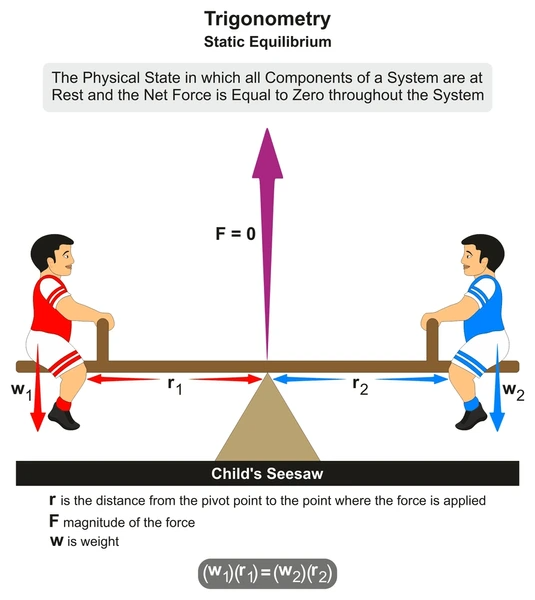
Conditions for Static Equilibrium
- First Condition: Translational Equilibrium
- The sum of all external forces acting on the object must be zero:
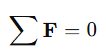
- This ensures there is no net force causing the object to move in any direction.
- The sum of all external forces acting on the object must be zero:
- Second Condition: Rotational Equilibrium
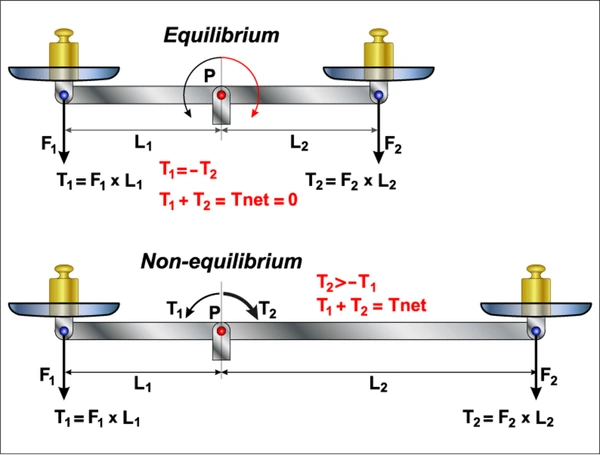
- The sum of all external torques acting on the object must be zero:

- This prevents any rotational motion around a given axis.
- The sum of all external torques acting on the object must be zero:
When both conditions are met, the object remains stationary, maintaining a stable state.
Static Equilibrium vs. Dynamic Equilibrium
Both static equilibrium and dynamic equilibrium describe a state where an object does not experience net force or torque. However, they differ in motion and application. The table below compares the two concepts:
| Property | Static Equilibrium | Dynamic Equilibrium |
|---|---|---|
| Definition | A state where an object remains at rest with no movement. | A state where an object moves at a constant velocity without acceleration. |
| Motion | No motion; the object is stationary. | The object is in motion but with zero net force and acceleration. |
| Net Force | Zero | Zero |
| Net Torque | Zero | Zero |
| Velocity | Zero (completely at rest) | Constant (not changing in speed or direction) |
| Acceleration | Zero | Zero |
| Example | A book resting on a table. | A car moving at a constant speed on a straight road. |
| Application in Engineering | Used in structures like bridges, towers, and buildings to maintain stability. | Used in aerodynamics and fluid mechanics to analyze objects moving at constant speeds. |
Static equilibrium ensures stability in stationary objects, while dynamic equilibrium governs steady motion without acceleration.
Applications of Static Equilibrium
1. Structural Engineering
- Used in designing buildings, bridges, and towers to ensure they remain stable under external loads such as gravity, wind, and earthquakes.
- Ensures that forces acting on a structure are evenly distributed to prevent collapse.
2. Mechanical Engineering
- Helps in analyzing forces in machinery and equipment, ensuring parts remain stationary under load.
- Used in designing support structures and frames that must bear heavy loads without shifting.
3. Biomechanics and Human Motion
- Explains how the human body maintains posture and balance while standing, sitting, or carrying weight.
- Helps in designing prosthetics and ergonomic equipment for better stability.
4. Civil Engineering
- Essential in constructing stable foundations, retaining walls, and support systems.
- Used to calculate load-bearing capacities of beams, columns, and other structural components.
5. Astronomy and Space Science
- Applied in understanding celestial mechanics, such as how planets maintain their positions in space under the influence of gravitational forces.
How to Address Static Equilibrium Problems
💡 Struggling with static equilibrium problems? Eureka Technical Q&A provides expert guidance on key principles, equations, and problem-solving strategies, helping you master it for applications in physics and engineering.

1. Identify the System
- Determine the object or structure under analysis.
- Define the reference point or axis for torque calculations if needed.
2. List All Forces Acting on the Object
- Draw a free-body diagram to visualize forces acting on the object.
- Include external forces such as gravity, normal force, tension, friction, and applied forces.
- Consider reaction forces from supports or connections.
3. Apply the First Condition of Equilibrium (Translational Equilibrium)
- Ensure that the sum of all external forces acting on the object is zero:
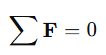
- Break forces into x- and y-components if dealing with forces in different directions.
4. Apply the Second Condition of Equilibrium (Rotational Equilibrium)
- Choose a pivot point and ensure that the sum of all torques around it is zero:
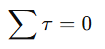
- Use the torque equation:
 where:
- r is the distance from the pivot point,
- F is the applied force,
- θ is the angle between the force and lever arm.
5. Solve for Unknowns
- Use algebraic equations to determine unknown forces, tensions, or reaction forces.
- If necessary, solve multiple equations simultaneously to find solutions.
6. Verify the Solution
- Ensure that all forces and torques balance correctly.
- Check if the units and direction of forces are consistent.
Example Problem: A Beam in Static Equilibrium
Scenario: A 2-meter horizontal beam is supported at both ends, with a 100 N load placed 1.2 meters from the left support. Find the reaction forces at each support.
Solution:
- Identify forces:
- The weight of the beam acts downward.
- Reaction forces
 and
and  act at the supports.
- Set up force balance:

- Set up torque balance about point A:

Solving for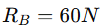
Substituting into the force equation,
- Check the solution:
- Sum of forces:
 (correct).
 - Sum of torques: balanced around any pivot (correct).
- Sum of forces:
By systematically following these steps, static equilibrium problems can be accurately solved and analyzed.
Forces Acting in Static Equilibrium
- Gravitational Force: Acts downward due to the weight of the object.
- Normal Force: Acts perpendicular to a surface to support an object’s weight.
- Tension Force: Present in cables, ropes, and strings that support objects.
- Frictional Force: Opposes motion and prevents objects from slipping.
- Applied Forces: Any external force exerted on an object.
Importance of Static Equilibrium in Design and Engineering
- Safety Assurance: Prevents structural failures and collapses.
- Efficiency in Construction: Ensures optimal material use while maintaining stability.
- Mechanical Stability: Helps in designing machines and devices that must remain fixed under operational loads.
FAQs
1. What are the two conditions of static equilibrium?
The two conditions for Stable equilibrium are that the sum of all external forces must be zero (translational equilibrium) and the sum of all external torques must be zero (rotational equilibrium).
2. What is an example of static equilibrium in everyday life?
A book resting on a table is a common example of static equilibrium, as the downward gravitational force is balanced by the upward normal force.
3. How is static equilibrium different from dynamic equilibrium?
In static equilibrium, the object remains at rest, while in dynamic equilibrium, the object moves at a constant velocity without acceleration.
4. Why is static equilibrium important in engineering?
It ensures the stability and safety of structures, machinery, and mechanical systems by preventing unwanted motion or collapse.
5. Can an object be in equilibrium if only one force acts on it?
No, an object cannot be in equilibrium if only one force acts on it because there would be an unbalanced force causing motion.
Conclusion
Static equilibrium is a crucial concept in physics, engineering, and biomechanics. By ensuring that forces and torques are balanced, it maintains the stability of structures, machinery, and natural systems. Understanding and applying its principles helps engineers, architects, and scientists design safe and efficient structures and mechanical systems.
To get detailed scientific explanations of Static Equilibrium, try Patsnap Eureka.
