


Launching a new product, system, or project without validating its viability can lead to wasted resources, missed opportunities, and unexpected risks. That’s where a feasibility study comes in—a structured evaluation that determines whether a concept is practically achievable, economically viable, and technically sound.
In this guide, we’ll explore what a feasibility study is, why it’s important, how to conduct one step-by-step, and how PatSnap’s Eureka Feasibility Analysis AI Agent can enhance the process by delivering faster, data-backed validation and technical insights.

What Is a Feasibility Study?
A feasibility study is a formal analysis used to determine whether a proposed project, system, or idea is likely to succeed. It evaluates technical, economic, legal, operational, and scheduling aspects of the initiative to answer one critical question: Should we move forward with this?
The goal is to minimize risk, guide decision-making, and support strategic planning. Feasibility studies are commonly used in product development, R&D, process optimization, infrastructure projects, and market expansion strategies.
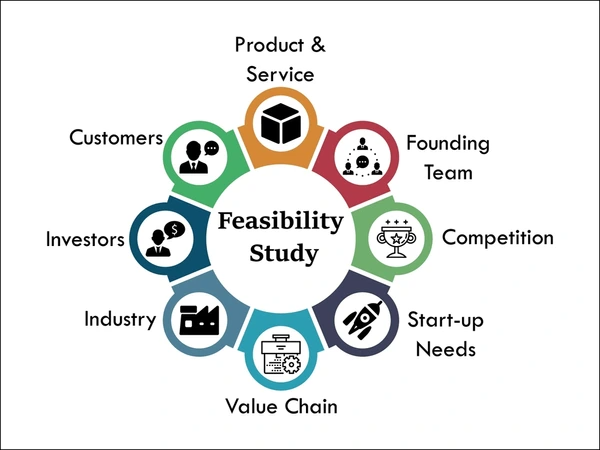
Why Conduct a Feasibility Study?
Conducting a feasibility study offers several key benefits:
- Reduces business and technical risk
- Prevents costly failures and rework
- Provides data to secure funding or executive approval
- Clarifies resource requirements and timelines
- Improves stakeholder confidence
Skipping this step can result in pursuing ideas that look promising on paper but fail under real-world conditions.
Types of Feasibility in a Study
Feasibility studies often evaluate multiple areas, including:
- Technical Feasibility: Can the system be built with current technology, expertise, and infrastructure?
- Economic Feasibility: Is the project financially viable? Will the return outweigh the investment?
- Operational Feasibility: Will the solution function effectively in the intended environment or organization?
- Legal/Regulatory Feasibility: Are there any legal constraints or compliance issues?
- Scheduling Feasibility: Can the project be completed within an acceptable timeframe?

Step-by-Step Guide to Conducting a Feasibility Study
Step 1: Define the Project Scope and Objectives
Begin by clearly outlining what the project aims to achieve. Define the boundaries, deliverables, and success criteria. This step creates a shared understanding of what’s being evaluated.
Step 2: Perform Preliminary Research
Gather initial data about market conditions, technology readiness, user needs, competitors, and existing solutions. This helps frame the analysis and reveals any early red flags.
Step 3: Evaluate Technical Feasibility
Determine if the required technology, tools, and expertise are available or can be acquired. Consider system architecture, integration requirements, and development complexity. This is where PatSnap’s Eureka Feasibility Analysis AI Agent provides critical value by analyzing technical readiness, comparing similar systems, and identifying potential design limitations.
Step 4: Assess Economic Feasibility
Estimate costs, projected revenues, and ROI. Include factors like development costs, maintenance, licensing, training, and supply chain requirements. Eureka supports this step by mapping innovation investment trends and assessing comparable product success in similar markets.
Step 5: Analyze Legal and Regulatory Considerations
Identify potential legal risks, such as intellectual property conflicts, licensing issues, or regulatory restrictions (e.g., FDA approval, environmental regulations). Eureka’s patent analysis engine helps detect potential IP barriers or opportunities early.
Step 6: Check Operational and Resource Feasibility
Evaluate whether your team, processes, and infrastructure can support the new system. Consider staffing, organizational culture, training needs, and ongoing operational support.
Step 7: Determine Scheduling Feasibility
Build a timeline for implementation, accounting for dependencies, testing, compliance, and go-to-market activities. Use project management tools or simulation models to estimate duration and resource load.
Step 8: Identify Potential Risks and Constraints
Compile a list of risks, assumptions, and constraints. This includes technical uncertainties, market volatility, cost fluctuations, and change management issues. Eureka’s predictive modeling helps quantify technical risk by simulating performance under varied conditions.
Step 9: Compile the Feasibility Report
Summarize your findings into a structured report. Include:
- Executive summary
- Project overview
- Feasibility assessments (technical, economic, legal, etc.)
- Recommendations
- Risk and mitigation strategies
- Go/no-go conclusion
Eureka automates the generation of this report by consolidating feasibility metrics, patent insights, and simulation results into a professional-grade document.
How Eureka AI Agent Enhances Feasibility Studies
PatSnap’s Eureka Feasibility Analysis AI Agent transforms feasibility studies from manual, assumption-driven reports into data-rich, validated strategies. Here’s how:
1. Technical Benchmarking
Eureka compares your concept to thousands of global innovations and R&D cases—highlighting potential pitfalls or performance gaps that traditional feasibility analysis might miss.
2. Design and Material Validation
Eureka analyzes material behavior, structural feasibility, and system dynamics to determine if your technical choices will hold up under real-world conditions.
3. IP and Innovation Landscape Analysis
Using patent data, Eureka assesses whether your idea is novel, legally clear, or potentially infringing—helping avoid legal barriers before development begins.
4. Automated Reporting
Eureka compiles all findings into structured feasibility reports, complete with charts, competitor benchmarks, technical scores, and suggested design changes.
5. Cross-Disciplinary Collaboration
Eureka bridges the gap between R&D, product, legal, and executive teams by offering a common platform with real-time, objective insights to guide approval decisions.
Real-World Example
Imagine a company exploring a multi-level dynamically adjustable silencer for electric vehicles. A feasibility study would need to evaluate sensor responsiveness, acoustic tuning accuracy, control algorithm stability, manufacturability, and long-term durability.
Eureka assists by:
- Validating sensor integration strategies based on similar patented solutions
- Simulating real-time chamber dynamics under changing engine loads
- Identifying IP overlap in smart acoustic control systems
- Recommending actuator materials based on fatigue performance data
- Compiling a complete feasibility report for stakeholder review
This AI-assisted process reduces uncertainty, improves technical confidence, and accelerates innovation approval.
Conclusion
Feasibility studies are essential tools for reducing risk, guiding investment, and aligning stakeholders around realistic project expectations. But traditional feasibility studies can be slow, fragmented, and overly reliant on assumptions.
By integrating PatSnap’s Eureka Feasibility Analysis AI Agent, you bring speed, precision, and innovation intelligence into your decision-making process. From technical validation to legal screening and risk prediction, Eureka empowers teams to move forward with confidence—turning big ideas into high-impact outcomes.
To get detailed scientific explanations of Feasibility Study, try Patsnap Eureka.
