Challenges and Goals of Improving Polycarbonate Adhesion
Polycarbonate is a widely used engineering thermoplastic known for its exceptional impact resistance, transparency, and heat resistance. However, one of the major challenges in its application is the poor adhesion to other materials, which limits its use in various industries such as automotive, construction, and electronics. Therefore, improving polycarbonate adhesion is the key.
The primary goal of improving polycarbonate adhesion is to enhance its bonding capabilities with other materials, enabling its broader application in multi-material assemblies and composite structures. This would unlock new opportunities for lightweight, durable, and cost-effective solutions across various sectors.
Achieving strong and reliable adhesion between polycarbonate and other materials is crucial for ensuring the structural integrity, durability, and performance of the final products. Improved adhesion can lead to enhanced mechanical properties, better resistance to environmental factors, and increased product lifespan.
Furthermore, improving polycarbonate adhesion can facilitate the development of innovative products and applications that leverage the unique properties of polycarbonate in combination with other materials. This could lead to advancements in areas such as lightweight automotive components, high-performance building materials, and advanced electronics enclosures.
Overall, the goal of improving polycarbonate adhesion is to overcome a significant technical challenge and unlock the full potential of this versatile material, enabling the creation of superior products and driving innovation across multiple industries.
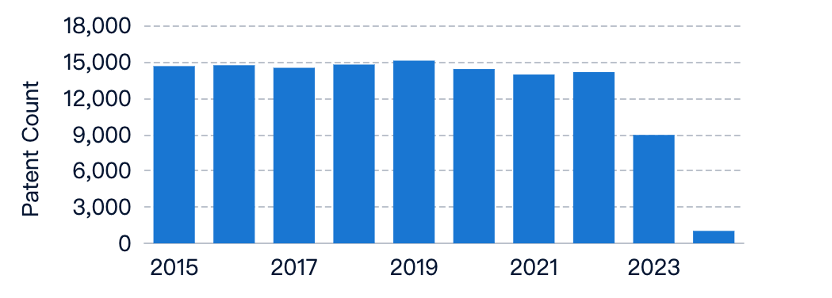
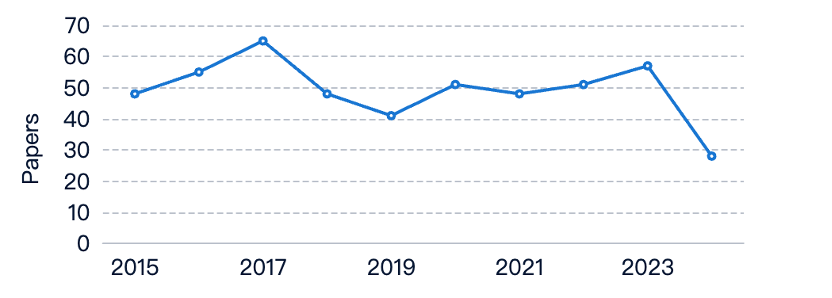
Market Demand for Improving Polycarbonate Adhesion
Polycarbonate is a widely used engineering plastic known for its exceptional impact resistance, transparency, and heat resistance. However, one of the challenges in its applications is the poor adhesion to other materials, which can limit its versatility and performance in various industries.
The market demand for enhanced polycarbonate adhesion is driven by several factors. Firstly, the automotive industry has a growing need for lightweight and durable materials that can improve fuel efficiency and safety. Polycarbonate with improved adhesion properties can be used in various automotive components, such as headlights, instrument panels, and interior trims, enabling better integration with other materials and enhancing overall product quality.
Secondly, the construction industry is increasingly adopting polycarbonate for its excellent insulation properties and impact resistance. However, poor adhesion can lead to delamination and compromised structural integrity. Improved adhesion would enable the use of polycarbonate in applications such as glazing, roofing, and cladding systems, expanding its market potential.
Furthermore, the electronics industry relies on polycarbonate for its electrical insulation and transparency properties. Enhancing the adhesion of polycarbonate to metals, ceramics, and other materials would enable its use in various electronic components, such as housings, displays, and touch panels, driving market growth in this sector.
Additionally, the medical industry has stringent requirements for materials used in medical devices and equipment. Polycarbonate with improved adhesion could find applications in medical equipment housings, surgical instruments, and implantable devices, where reliable bonding and compatibility with other materials are crucial.
Overall, the market demand for enhanced polycarbonate adhesion is driven by the need for lightweight, durable, and versatile materials across various industries. Improved adhesion properties would unlock new applications and expand the market potential of polycarbonate, leading to increased adoption and growth in diverse sectors.
Current State and Limitations of Polycarbonate Adhesion
Polycarbonate is a widely used engineering thermoplastic known for its excellent impact resistance, transparency, and dimensional stability. However, one of the major challenges in its applications is the poor adhesion to other materials, including coatings, adhesives, and substrates. This limitation can lead to delamination, peeling, and failure of the bonded components, compromising the overall performance and reliability of the product.
The adhesion of polycarbonate is influenced by several factors, including its chemical inertness, low surface energy, and smooth surface topography. The chemical inertness of polycarbonate stems from its highly stable aromatic structure, which makes it resistant to chemical modifications and interactions with adhesives or coatings. Additionally, the low surface energy of polycarbonate results in poor wettability, hindering the formation of strong interfacial bonds with other materials.
Furthermore, the smooth surface topography of polycarbonate provides limited mechanical interlocking opportunities, further contributing to the poor adhesion. These inherent properties of polycarbonate pose significant challenges in achieving reliable and durable adhesion, particularly in applications where strong bonding is crucial, such as automotive components, construction materials, and protective coatings.
To address these limitations, various surface modification techniques have been explored, including chemical treatments, physical treatments, and the use of coupling agents or primers. However, many of these methods have limitations in terms of effectiveness, durability, or compatibility with specific applications or processing conditions.
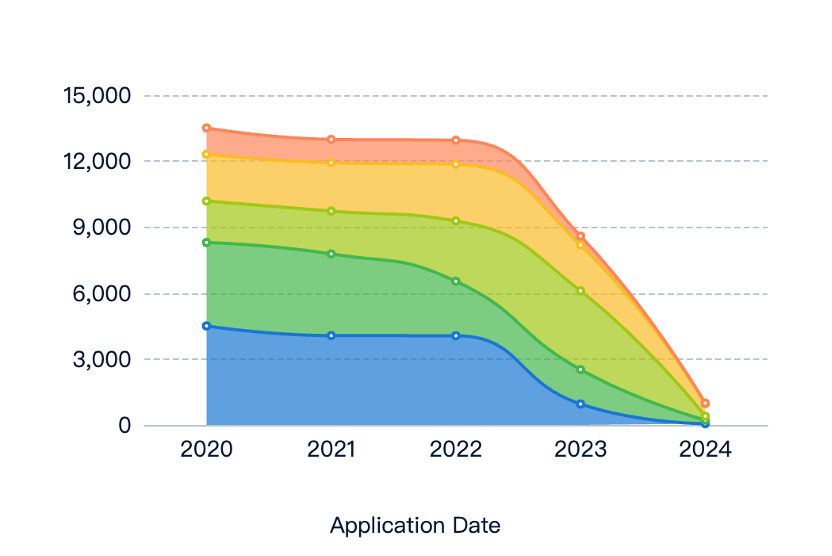
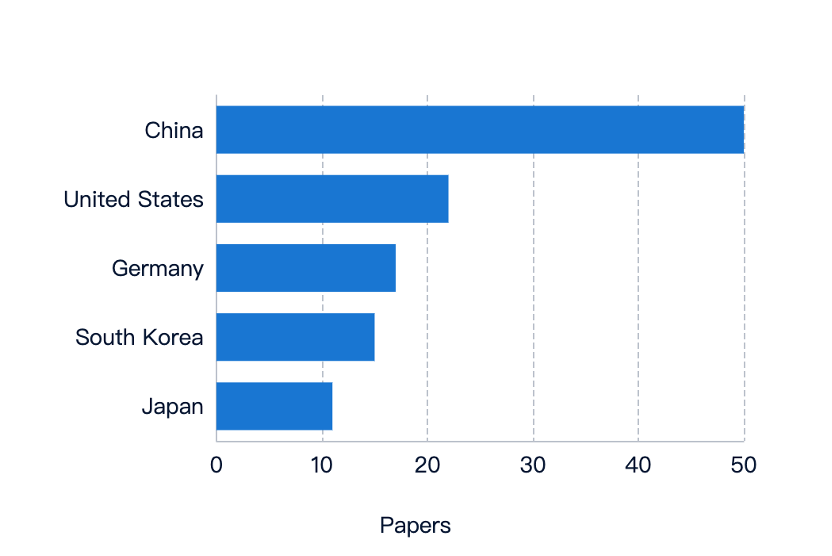
Evolution of Polycarbonate Adhesion Technologies
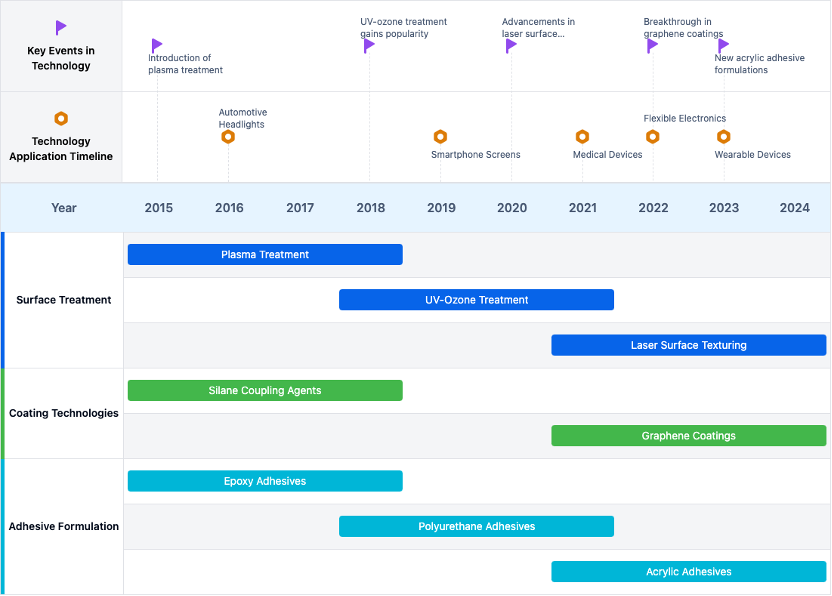
Existing Solutions for Polycarbonate Adhesion Improvement
Polycarbonate resin compositions with improved adhesion
Various polycarbonate resin compositions have been developed to enhance adhesion to other materials, such as polyurethane layers, metal surfaces, or coatings. These compositions often incorporate additives or modifiers to improve the interfacial bonding between polycarbonate and the target material.
- Polycarbonate resin compositions with improved adhesion
- The polycarbonate resin compositions are formulated with additives or modifiers to enhance their adhesion properties. These compositions exhibit improved adhesion to various substrates, making them suitable for applications requiring strong bonding or coating.
- Polycarbonate resin compositions with improved impact resistance
- The polycarbonate resin compositions are modified with impact modifiers or reinforcing agents to improve their impact resistance. These compositions exhibit enhanced toughness and resistance to impact, making them suitable for applications requiring high durability and strength.
- Polycarbonate resin compositions with improved flame retardancy
- The polycarbonate resin compositions are formulated with flame retardant additives or modifiers to enhance their fire resistance. These compositions exhibit improved flame retardancy, making them suitable for applications requiring high fire safety standards.
- Polycarbonate resin compositions with improved thermal stability
- The polycarbonate resin compositions are modified with thermal stabilizers or additives to enhance their resistance to heat and thermal degradation. These compositions exhibit improved thermal stability, making them suitable for applications involving high temperatures or prolonged heat exposure.
- Polycarbonate resin compositions for molded articles
- The polycarbonate resin compositions are specifically formulated for molding applications, allowing for the production of various molded articles with desired properties. These compositions exhibit suitable flow and processing characteristics for molding processes.
Surface treatment for polycarbonate adhesion
Surface treatment methods, such as primers, coatings, or chemical modifications, have been employed to improve the adhesion of polycarbonate to other materials. These treatments can enhance the surface properties of polycarbonate, facilitating better bonding with adhesives, paints, or other coatings.

Polycarbonate-based blends and composites
Blending polycarbonate with other polymers or incorporating reinforcing fillers can improve the adhesion properties of polycarbonate. These blends or composites can exhibit enhanced compatibility and interfacial adhesion with various materials, expanding the application potential of polycarbonate.
Polycarbonate laminates and coatings
Polycarbonate can be laminated or coated with other materials, such as glass or protective layers, to create multi-layered structures with improved adhesion and durability. These laminates or coatings can provide enhanced surface properties, scratch resistance, or barrier properties to polycarbonate products.
Polycarbonate adhesion in specific applications
Polycarbonate adhesion has been studied and optimized for various applications, such as electro-optic waveguide systems, porous membranes, or semiconductor packaging. These applications may require specific adhesion properties or compatibility with other materials used in the respective fields.
Key Players in Polycarbonate Adhesion Industry
The competitive landscape for the issue of improving the adhesion of polycarbonate can be analyzed through the industry’s development stage, market size, and technology maturity. The industry is currently in a growth phase, driven by increasing demand for high-performance materials in various applications. The market size is expanding, with significant investments in research and development. In terms of technology maturity, companies like Kingfa Sci. & Tech. Co., Ltd., Sika Technology AG, Toyobo MC Corp., Wanhua Chemical Group Co., Ltd., and Covestro Deutschland AG are at the forefront. These companies have developed advanced solutions and are continuously innovating to enhance polycarbonate adhesion, indicating a high level of technological maturity in this area.
Sika Technology AG
Sika Technology AG has developed a specialized adhesive formulation designed to enhance the adhesion of polycarbonate materials. This formulation includes a combination of silane coupling agents and polyurethane-based adhesives, which improve bonding strength and durability.
Wanhua Chemical Group Co., Ltd.
Wanhua Chemical Group Co., Ltd. offers a range of polyurethane-based adhesives specifically designed for polycarbonate adhesion. These adhesives provide excellent bonding strength and flexibility, making them suitable for various industrial applications.
Covestro Deutschland AG
Covestro Deutschland AG has developed a series of polycarbonate-compatible adhesives that utilize advanced polymer technology. These adhesives are designed to provide strong adhesion while maintaining the optical clarity of polycarbonate materials.
Core Innovations in Polycarbonate Adhesion
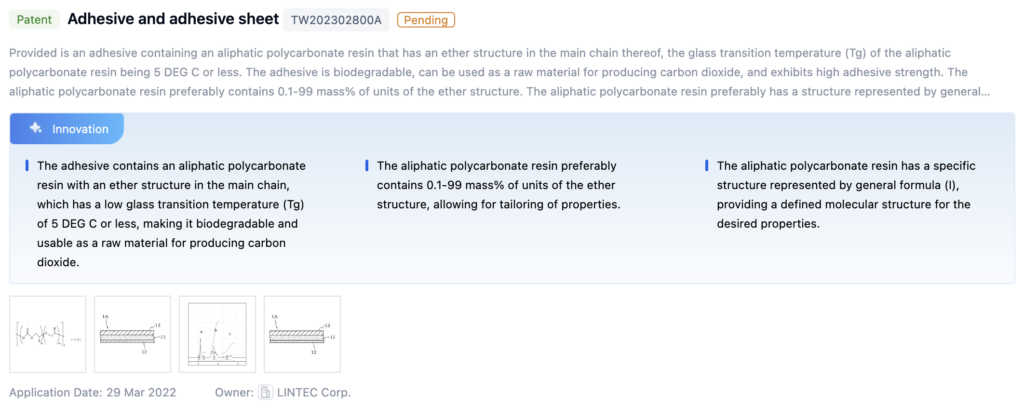
Patent1:Adhesive and adhesive sheet
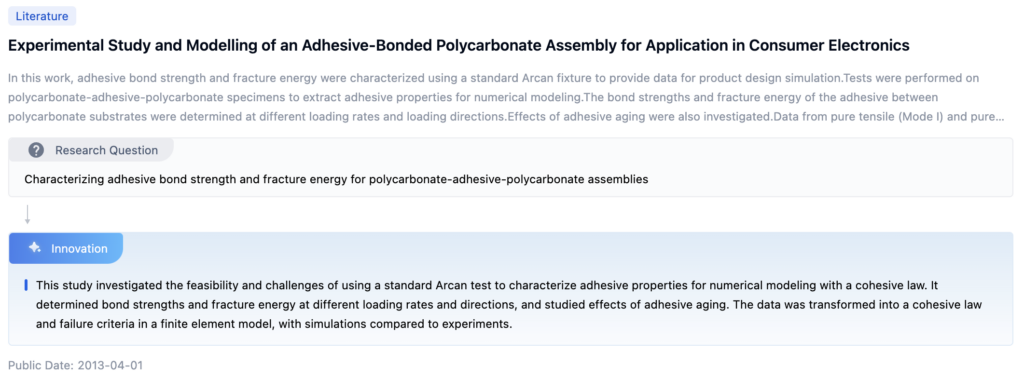
Paper 1:Experimental Study and Modelling of an Adhesive-Bonded Polycarbonate Assembly for Application in Consumer Electronics
Potential Breakthroughs in Polycarbonate Adhesion
- Polycarbonate resin compositions with improved adhesion
- Surface treatment and coatings for polycarbonate adhesion
- Polycarbonate-based blends and composites for improved adhesion
- Adhesion promoters and primers for polycarbonate
- Polycarbonate compositions with improved adhesion to polyurethane
Environmental Impact of Polycarbonate Adhesion Technologies

Regulatory Landscape for Polycarbonate Adhesion
If you want an in-depth research or a technical report, you can always get what you want in Eureka Technical Research. Try now!