Electromagnetic (EM) waves form the backbone of countless modern technologies—from everyday wireless communication to advanced scientific instrumentation. Spanning a vast spectrum of frequencies, EM waves enable non-contact energy transfer, data transmission, and imaging functionalities across diverse environments. Understanding their properties, propagation behaviors, and application-specific adaptations is essential for innovation in electronics, telecommunications, healthcare, and aerospace.
This article outlines the fundamental principles of electromagnetic waves, their diverse real-world applications, recent technological advancements, and insights from global R&D through PatSnap Eureka AI Agent.

What Are Electromagnetic Waves?
Electromagnetic waves are self-propagating transverse waves composed of oscillating electric and magnetic fields, perpendicular to each other and the direction of propagation. Unlike mechanical waves, they do not require a medium and can travel through a vacuum.
Key Characteristics of Electromagnetic Waves
- Wavelength & Frequency: Determines wave classification (e.g., radio, microwave, infrared).
- Speed: In a vacuum, EM waves travel at the speed of light (~3×10⁸ m/s).
- Polarization: Orientation of the electric field vector.
- Attenuation & Absorption: Depends on medium properties and wave frequency.
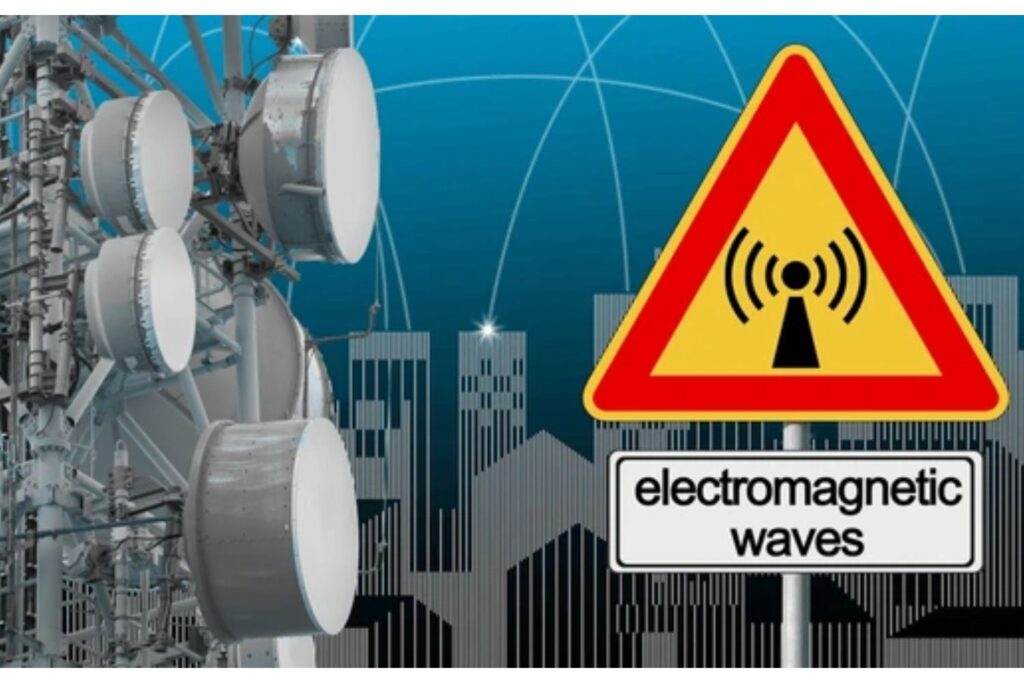
Spectrum Overview & Use Cases of Electromagnetic Waves
| Region of Spectrum | Wavelength Range | Key Technologies |
|---|---|---|
| Radio Waves | >10 cm | Broadcasting, Wi-Fi, GPS |
| Microwaves | 1 mm – 10 cm | Radar, microwave ovens, satellite comm. |
| Infrared | 700 nm – 1 mm | Thermal imaging, fiber optics |
| Visible Light | 400–700 nm | Human vision, LEDs, photonics |
| Ultraviolet | 10–400 nm | Sterilization, semiconductor lithography |
| X-rays | 0.01–10 nm | Medical diagnostics, material inspection |
| Gamma Rays | <0.01 nm | Nuclear imaging, astrophysics |
Advantages & Limitations of Electromagnetic Waves
Electromagnetic waves are foundational to modern technology, offering a diverse range of functionalities from wireless communication to advanced imaging systems. However, their application also introduces technical, environmental, and health-related concerns that require ongoing innovation and regulatory oversight.
✅ Advantages
| Advantage | Description |
|---|---|
| Wide Spectrum Versatility | EM waves span from extremely low-frequency radio waves to high-frequency gamma rays, allowing tailored use across sectors like telecom, medicine, and defense. |
| Non-Contact Energy & Data Transmission | Enables wireless communication (Wi-Fi, satellite, Bluetooth), remote sensing, RFID, and even wireless charging, reducing physical infrastructure needs. |
| Real-Time Signal Propagation | Near-instantaneous transmission at the speed of light facilitates real-time applications like radar, GPS, and live broadcasting. |
| High Resolution & Penetration (Selective Bands) | X-rays and microwaves can penetrate materials for use in imaging, diagnostics, and quality control in manufacturing. |
| Scalability Across Environments | From deep-space astronomy to nanophotonic circuits, EM waves can be engineered for scale-specific challenges. |
| Support for Multi-Modal Integration | EM-based systems support the integration of visual, thermal, and spectral data—critical for smart sensors, surveillance, and AR/VR. |
| Renewable Sourcing Potential | Some applications (e.g., solar power, optical wireless communication) harness natural EM radiation, promoting sustainability. |
⚠ Limitations
| Limitation | Description |
|---|---|
| Signal Attenuation in Certain Materials | EM waves weaken in the presence of dense, conductive, or lossy media (e.g., water, metal, human tissue), limiting effective range and accuracy. |
| Health Concerns at High Frequencies | Long-term exposure to high-frequency EM radiation (e.g., microwaves, X-rays) may pose biological risks, necessitating strict dosage control and shielding. |
| Interference and Diffraction Sensitivity | EM signals are prone to multipath effects, scattering, and noise, especially in urban and high-density environments. |
| Infrastructure & Cost Challenges | High-frequency applications (e.g., THz systems, mmWave 5G, MRI) require specialized components and high-precision equipment with elevated costs. |
| Security & Privacy Issues | EM-based communication systems are vulnerable to interception, jamming, or spoofing, demanding robust encryption and shielding. |
| Environmental Impact of EM Pollution | Cumulative EM emissions from antennas, satellites, and industrial systems can lead to ecological disruption and device interference. |
| Bandwidth Constraints & Licensing | Regulatory frameworks restrict access to many spectrum bands, creating bottlenecks in emerging sectors like satellite IoT or mmWave communications. |
Application Domains of Electromagnetic Waves
Telecommunications & Networking
Electromagnetic waves form the backbone of modern telecommunications, enabling faster, more secure, and wider-reaching wireless and optical data transmission.
Key Topics:
- Optimizing signal propagation in 5G and beyond
- Satellite systems and global internet coverage
- Interference mitigation and spectrum allocation
- High-frequency channel efficiency
These research themes are extensively covered in PatSnap Eureka AI Agent. Explore the following in-depth reports:
- Optimizing Signal Propagation with Electromagnetic Waves
- Harnessing Electromagnetic Waves for Wireless Communication
- How Electromagnetic Waves Enable Faster Internet Speeds?
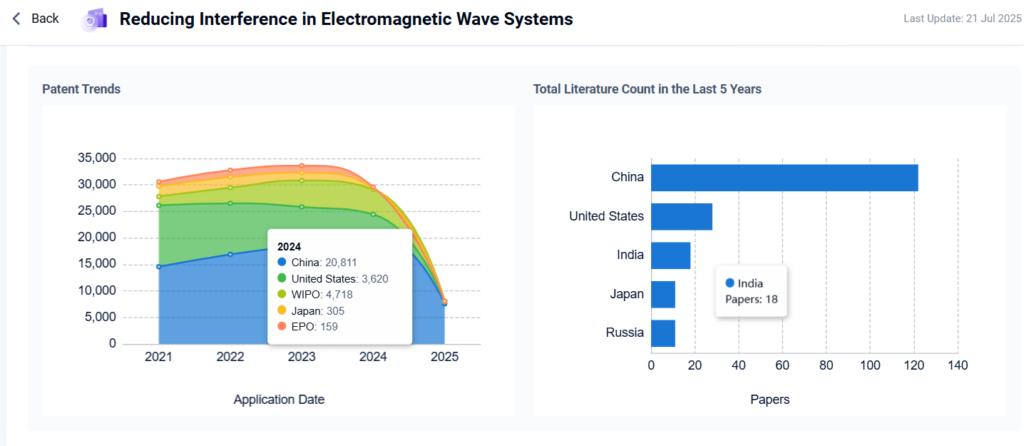
- How to Reduce Interference in Electromagnetic Wave Systems?
Healthcare & Medical Technologies
From diagnostics to treatment delivery, electromagnetic waves have transformed medical imaging and therapeutic precision.
Key Topics:
- MRI, CT, and advanced bio-imaging systems
- Wearable medical devices and telehealth transmission
- Electromagnetic wave biosafety standards
- Precision therapy with EM targeting
These innovations are extensively researched in the following reports:
- Electromagnetic Waves in Medical Devices: Latest Developments
- How to Enhance Imaging Techniques with Electromagnetic Waves?
- Assessing Electromagnetic Wave Impact on Health and Safety
- Pioneering Electromagnetic Wave Applications in Healthcare

Smart Infrastructure & IoT Systems
Smart cities, buildings, and connected devices rely on electromagnetic wave-based sensors and communication to function efficiently and autonomously.
Key Topics:
- Smart grid communication & control
- Wireless power transfer in IoT
- Electromagnetic interference in dense environments
- Environmental monitoring via EM sensors
The following reports offer technical insights:
- Future of Electromagnetic Waves in IoT Devices
- How to Address Challenges in Electromagnetic Wave Propagation?
- Advances in Electromagnetic Wave Sensors for Environmental Monitoring
Defense, Aerospace & Space Communication
Electromagnetic wave technologies ensure mission-critical reliability in aerospace operations, radar, and secure battlefield communication.
Key Topics:
- Radar and remote sensing precision
- Electromagnetic shielding and stealth
- Satellite-based defense communication
- Secure communication and anti-jamming
Reports shed light on these areas:
- Electromagnetic Waves in Defense Technology: Current Trends
- Electromagnetic Waves in Space Exploration: Breakthroughs
- How to Enhance Security Using Electromagnetic Waves?
- Innovations in Antenna Design for Electromagnetic Waves
- How to Minimize Electromagnetic Wave Attenuation?
Emerging Innovations in Electromagnetic Wave Technologies
Electromagnetic wave technologies are undergoing a new wave of transformation. Innovations at the intersection of physics, engineering, and materials science are redefining how EM waves are generated, controlled, and applied across industries. The following key innovation frontiers are leading the charge:
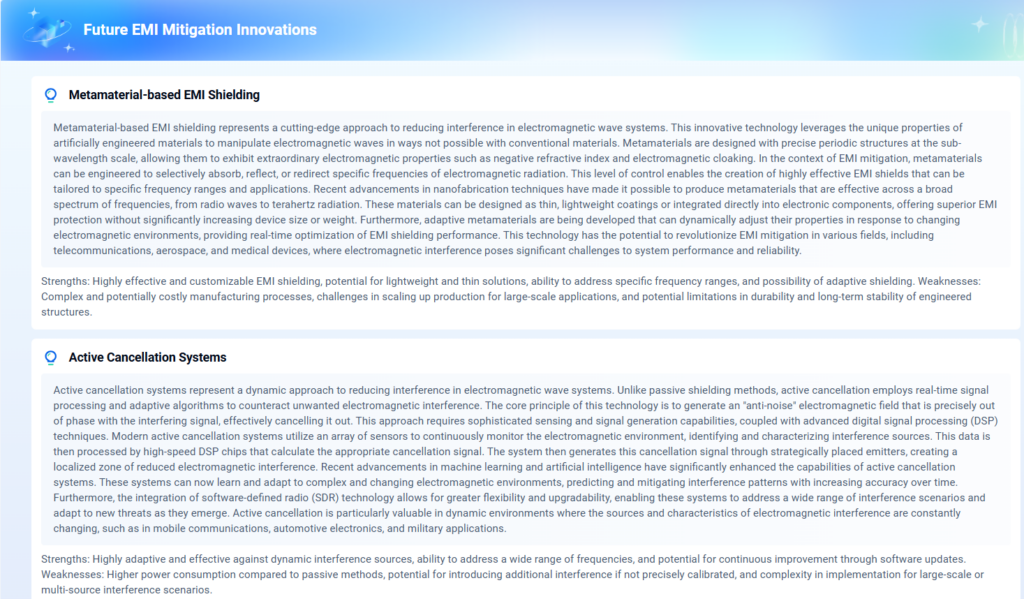
1. Metamaterials for Wave Manipulation
Metamaterials—engineered composites with unique electromagnetic properties—are enabling unprecedented control over wave propagation, including negative refraction and cloaking effects.
Breakthroughs:
- Development of tunable and reconfigurable metamaterials for beam steering
- Application in flat lenses, adaptive antennas, and EM shields
- Meta-surfaces integrated into chips for ultra-compact devices
2. Terahertz (THz) Systems
Terahertz waves (between microwave and infrared) are becoming the focus of next-gen communication and sensing due to their ability to carry vast data volumes and penetrate non-metallic materials.
Breakthroughs:
- Terahertz imaging for non-invasive quality control and security
- THz-band communications as potential 6G backbone
- Biomedical applications: real-time cancer and tissue detection
3. Wireless Power Transfer (WPT) & Energy Harvesting
EM wave-based energy delivery is evolving from simple inductive charging to long-range wireless power and ambient energy harvesting.
Breakthroughs:
- Mid-field and far-field WPT using directed RF or microwave beams
- Wireless charging of drones, EVs, and wearables
- Smart materials that harvest EM energy to power IoT sensors
4. Electromagnetic Neurostimulation & Biointerfaces
Cutting-edge biomedical devices are leveraging EM fields for non-invasive brain stimulation, pain relief, and neuro-modulation.
Breakthroughs:
- Targeted neuromodulation using pulsed EM fields
- Wearable EM therapy devices for chronic pain and mental health
- Research into electromagnetic “bio-resonance” therapies
5. AI-Driven EM Wave Simulation and Design
Machine learning models are now being trained to simulate, optimize, and even design antenna systems, waveguides, and photonic circuits with unprecedented speed and efficiency.
Breakthroughs:
AI-generated meta-surfaces and beamformers
Deep learning for inverse EM design (targeting desired field profiles)
Optimization of multi-layer dielectric structures in milliseconds
Future Outlook of Electromagnetic Waves
As technologies like quantum computing, autonomous systems, and terahertz sensing mature, electromagnetic wave research is becoming more multidisciplinary and AI-driven. Future developments will likely include:
- Ultra-efficient antennas with nano-scale wave manipulation
- Integrated EM-optical processors
- Personalized medical diagnostics using advanced EM spectral fingerprints
Conclusion
Electromagnetic waves remain a foundational enabler of modern technology, spanning communication, diagnostics, sensing, and quantum innovation. Understanding the fundamental behaviors, applications, and research directions of EM waves is essential for future-ready R&D and cross-disciplinary integration.
FAQ
Yes, unlike sound or mechanical waves, EM waves do not require a medium and propagate efficiently through vacuum at the speed of light.
The energy of an EM wave is directly proportional to its frequency, as described by Planck’s equation: E = hν.
High-frequency waves (like X-rays and gamma rays) carry more energy and can ionize atoms, leading to cellular damage and health risks if overexposed.
Microwaves are a subset of radio waves with shorter wavelengths and higher frequencies—better suited for radar and short-range data links.
Yes, particularly in solar power where visible and infrared light is converted into electrical energy via photovoltaic cells.
Ready to Power Innovation with EM Wave Intelligence?
PatSnap Eureka AI Agent gives engineers, scientists, and innovators access to curated reports on electromagnetic wave technologies—tracking global R&D trends, IP landscapes, and emerging white space opportunities.
👉 Book a Eureka demo and discover how your next EM-powered breakthrough begins today.