


What is Underwater Welding?
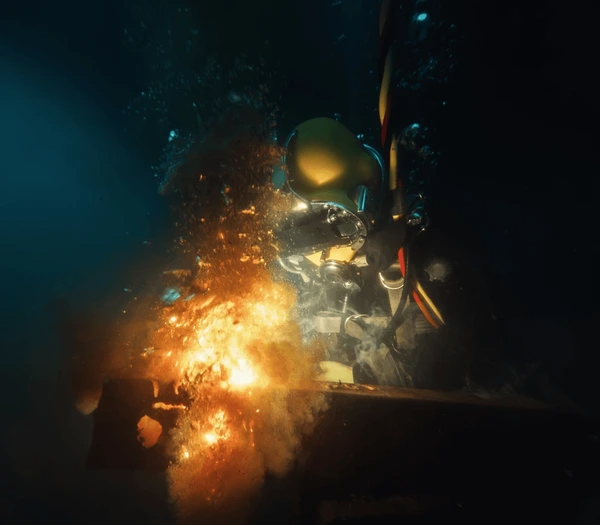
Underwater welding is the process of joining metals in an underwater environment, typically for maintenance, repair, or construction purposes in marine and offshore applications. There are two main types of underwater welding:
- Wet Underwater Welding (W-UWW): This method involves welding directly in the water using specialized waterproof electrodes. The arc and weld pool are exposed to the surrounding water, making it a relatively simple and cost-effective process. However, it can result in lower weld quality due to the rapid cooling and hydrogen-induced cracking.
- Dry Underwater Welding (D-UWW): In this method, the welding area is enclosed in a hyperbaric chamber filled with a gas mixture, allowing welding to occur in a dry environment at the prevailing water pressure. This technique can produce higher weld quality but is more complex, time-consuming, and expensive.
Skills and Requirements of Underwater Welding
Primary Skills
Diving Proficiency
Welders must possess advanced diving skills, including the ability to work comfortably underwater for extended periods. Certification in commercial diving or underwater welding is typically required.
Arc Striking and Manipulation
Establishing and maintaining a stable arc underwater is crucial. Welders must have excellent arc striking and manipulation techniques to ensure proper fusion and minimize defects.
Welding Technique Mastery
Proficiency in various welding processes, such as Shielded Metal Arc Welding (SMAW), Flux-Cored Arc Welding (FCAW), and gas Tungsten Arc Welding (GTAW), is essential. Welders must have a deep understanding of the unique challenges posed by the underwater environment and adapt their techniques accordingly.
Visual Acuity
Due to the limited visibility underwater, welders must have exceptional visual acuity and the ability to work in low-light conditions. They must be able to accurately assess weld quality and identify potential defects.
Physical Fitness
Underwater welding is physically demanding, requiring stamina, strength, and the ability to work in confined spaces. Welders must be in excellent physical condition to withstand the rigors of the job.
Requirements for Underwater Welding
In addition to the necessary skills, underwater welders must meet specific requirements, including:
Certification
Most employers require welders to hold certifications from recognized organizations, such as the American Welding Society (AWS) or the International Institute of Welding (IIW). These certifications validate the welder’s competence and ensure adherence to industry standards.
Safety Training
Comprehensive safety training is mandatory for underwater welders. This includes knowledge of hazards, emergency procedures, and the use of specialized equipment like hyperbaric chambers and diving gear.
Experience
Employers often prefer welders with significant experience in underwater welding or related fields. This experience ensures that welders can handle the unique challenges and adapt to various situations.
Physical Examination
Underwater welders must undergo regular physical examinations to ensure they meet the physical demands of the job. These examinations may include tests for respiratory function, cardiovascular health, and overall fitness.
Continuous Training
Due to the constantly evolving nature of underwater welding techniques and technologies, welders must participate in ongoing training and professional development programs to maintain their skills and knowledge.
Risks and Dangers of Underwater Welding
- Potential for electric shock, which can be mitigated by using specialized equipment and following safety protocols.
- Exposure to hazardous gases, such as hydrogen and carbon monoxide, generated during the welding process.
- Limited visibility and challenging working conditions, increasing the risk of accidents and injuries.
- Rapid cooling rates and hydrogen embrittlement, leading to weld defects and reduced mechanical properties.
- Decompression sickness (the bends) and other diving-related risks.
Pay and Rewards of Underwater Welding
- Average annual salary ranges from $50,000 to $80,000 for inland/inshore welders
- Offshore underwater welders can earn significantly higher salaries, often exceeding $100,000 per year
- Opportunities for career advancement and specialized roles, such as supervisory or inspection positions
- Job satisfaction from working on challenging and critical projects in unique environments
- Potential for travel and exposure to diverse locations and cultures
Applications of Underwater Welding
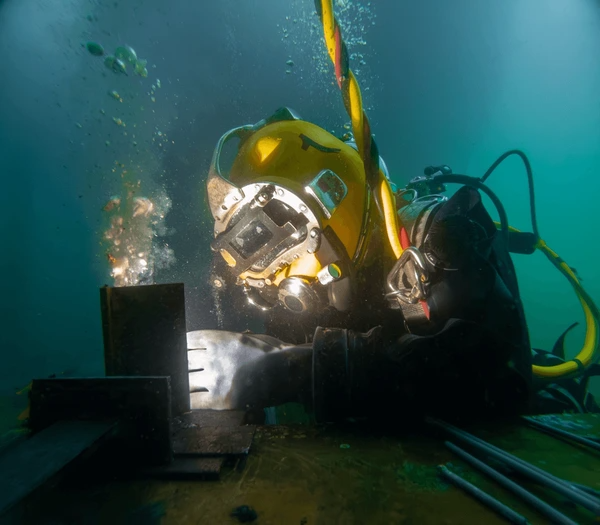
Underwater welding is an essential process for the installation, maintenance, and repair of various marine and offshore structures, including:
- Offshore oil and gas platforms and pipelines
- Ship construction and emergency repairs
- Dams, locks, and nuclear power facilities
- Underwater mining and resource exploration
- Installation of subsea habitats and large underwater facilities
Application Cases
| Product/Project | Technical Outcomes | Application Scenarios |
|---|---|---|
| Subsea Welding Habitat | Enables welding operations in deep waters and harsh environments, facilitating construction and repair of offshore structures. Utilises specialised techniques like hyperbaric dry welding to ensure high weld quality. | Offshore oil and gas platforms, pipelines, and subsea habitats in deep waters. |
| Friction Stir Welding for Marine Alloys | Solid-state welding process that produces high-quality welds without melting the base material, reducing defects and distortion. Suitable for welding aluminium and other marine alloys. | Shipbuilding, offshore structures, and underwater repairs where high-strength, corrosion-resistant welds are required. |
| Underwater Laser Beam Welding | Enables precise, high-quality welds with deep penetration and minimal distortion. Suitable for welding thick sections and dissimilar materials underwater. | Repair and maintenance of offshore platforms, pipelines, and nuclear facilities where high-quality welds are critical. |
| Underwater Robotic Welding Systems | Automated welding systems with advanced sensors and control systems, enabling consistent and reliable welds in challenging underwater environments. Reduces human exposure to hazardous conditions. | Large-scale underwater construction projects, offshore installations, and subsea repairs where remote operation is necessary. |
| Underwater Cladding and Hardfacing | Applies wear-resistant coatings or overlays to underwater structures, extending their service life and protecting against erosion, corrosion, and abrasion. | Offshore platforms, pipelines, ship hulls, and other marine structures exposed to harsh environments and wear. |
Latest Innovations of Underwater Welding
Multimodal Sensing and Control
- Recent advancements involve integrating multiple sensing modalities like ultrasonic waves , underwater cameras, and other sensors to accurately monitor the welding zone shape, position, and conditions in real-time. This multimodal sensing data is then used for adaptive control of welding parameters like speed, arc conditions, etc. to improve weld quality and accuracy, especially for wet underwater welding which is more challenging.
Local Dry Underwater Welding
- To overcome the limitations of wet welding like power attenuation and poor surface forming, local dry underwater welding methods have been developed. These create a dry environment around the weld zone using hyperbaric chambers or other techniques, allowing higher weld quality comparable to air welding even at greater depths.
Advanced Welding Processes
- In addition to conventional arc welding, newer processes like underwater laser welding, friction welding, and explosive welding are being explored. Laser welding offers advantages like long-range energy transmission, ease of control, and suitability for greater depths. Friction welding is suitable for thick sections and quality is less affected by depth. Explosive welding enables joining difficult material combinations.
Improved Consumables
- Significant research has gone into developing specialised welding consumables like low-hydrogen electrodes, iron oxide electrodes, flux-cored wires, etc. tailored for underwater environments. These help mitigate issues like porosity, cracking, and poor mechanical properties associated with underwater welds.
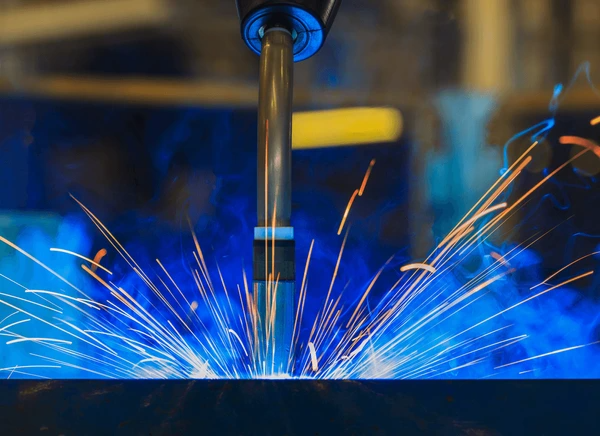
Automation and Robotics
- Automating underwater welding using robotic systems can improve efficiency and consistency and reduce risks to human welders. Key challenges being addressed include robust underwater mobility, joint sealing, weld seam tracking, and quality control at greater depths and pressures.
Technical Challenges
| Advanced Electrification and Sustainability | Developing highly efficient and sustainable electric and hybrid SUV models with extended range and improved performance to meet evolving consumer demands and environmental goals. |
| Cutting-Edge Technology and Connectivity | Integrating advanced driver assistance systems, infotainment systems, and connectivity features to enhance the driving experience and user convenience in SUVs. |
| Innovative Design and User Experience | Designing SUVs with bold and distinctive styling, optimised interior space, and a focus on user experience to cater to diverse consumer preferences. |
| Autonomous Driving and Safety | Incorporating advanced autonomous driving technologies, such as lidar systems, and prioritising safety features to enable safer and more convenient self-driving capabilities in SUVs. |
| Modular Platforms and Scalability | Developing modular and scalable platforms that can accommodate a wide range of SUV models, sizes, and powertrain options to meet diverse market demands efficiently. |
To get detailed scientific explanations of underwater welding, try Patsnap Eureka.
