


Introduction: What Are eSIM and Physical SIM?
The debate between eSIM vs physical SIM revolves around how mobile devices connect to networks. A physical SIM is a traditional chip you insert into your phone, while an eSIM is a modern, embedded alternative that eliminates the need for a physical card. Let’s break down the differences and find out which one suits your needs best.
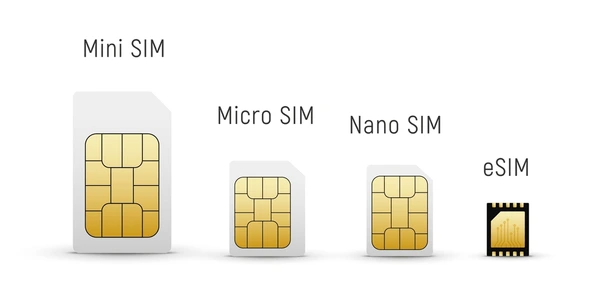
How eSIM and physical SIM card Work
Physical SIM Card
- Structure: A physical SIM card is a small, removable smart card that is inserted into a SIM card slot on a mobile device.
- Functionality: It securely stores information that identifies and authenticates the subscriber to a mobile network provider. This includes the International Mobile Subscriber Identity (IMSI), which is used to connect to the network.
- Usage: The SIM card must be physically inserted into the device to enable network connectivity. If the SIM card is lost or damaged, it needs to be replaced or restored.
eSIM
- Structure: eSIM is an embedded version of the SIM card, directly integrated into the device’s hardware, typically as a small chip on the circuit board. It is much smaller than a traditional SIM card.
- Functionality: Like a physical SIM, an eSIM stores the IMSI and other credentials needed to authenticate a subscriber on a mobile network. However, it can be remotely provisioned and updated over-the-air (OTA), eliminating the need for physical intervention.
- Usage: eSIM allows users to switch between different network providers without needing to change the SIM card. This can be done remotely through a mobile application or other means of communication with the network provider. The device can support multiple profiles on a single eSIM, enabling it to connect to different networks as needed.
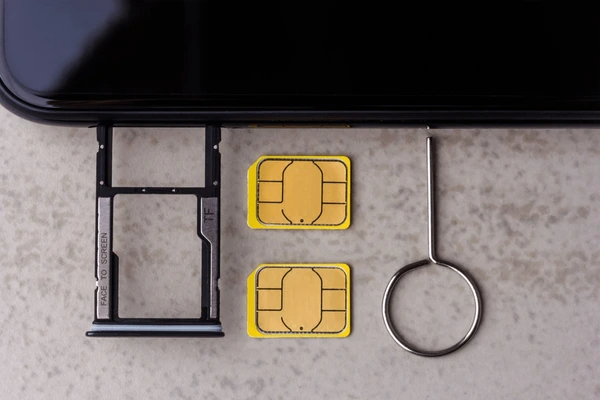
Comparison: eSIM vs Physical SIM
Advantages and Disadvantages
- Physical SIM Card:
- Advantages: Well-established technology, widely supported, easy to replace or move between devices.
- Disadvantages: Limited to a single profile, requires physical handling which can be cumbersome, and may not be suitable for harsh environments.
- eSIM:
- Advantages: Supports multiple profiles, can be remotely managed and updated (OTA provisioning), more secure, and suitable for IoT devices in harsh environments.
- Disadvantages: Relies on device compatibility, potential risks of digital security threats, and complexity in managing multiple profiles.
Usage and Applications
- Physical SIM Card:
- Widely used in consumer mobile devices for personal use.
- Suitable for scenarios where physical card insertion is straightforward and necessary.
- eSIM:
- Ideal for IoT applications, wearables, automotive systems, and industrial devices.
- Enables flexible subscription management and is crucial for 5G and beyond-5G (B5G) IoT verticals.
- Supports seamless carrier switching without physical intervention, beneficial for prepaid plans and dynamic subscription needs.
Security and Management
- Physical SIM Card:
- Secure storage of subscriber information within the card.
- Tamper-resistant, reducing unauthorized access risks.
- eSIM:
- Enhanced security features due to digital storage and remote management capabilities.
- Greater risk of digital security threats if not properly managed, necessitating robust security protocols.
Future Trends and Industry Impact
- The shift towards eSIM is driven by the need for flexibility, security, and efficiency, particularly in IoT and 5G environments.
- eSIM technology allows for over-the-air provisioning, simplifying the process of adding or changing network subscriptions.
- The ability to manage multiple profiles on a single device opens up new possibilities for personalized data plans and dynamic subscription models.
Which Should You Choose?
- Form Factor:
- Physical SIM: Requires a physical slot and is typically smaller (nano SIM, micro SIM) due to size reduction over the years.
- eSIM: Embedded directly into the device’s circuitry, eliminating the need for a physical slot.
- Provisioning:
- Physical SIM: Requires physical insertion and manual configuration.
- eSIM: Supports over-the-air (OTA) provisioning, allowing remote download and installation of operator profiles.
- Security:
- Physical SIM: Stores sensitive information securely in hardware.
- eSIM: Combines security features of eSE (Embedded Secure Element) with eUICC, offering enhanced security through software and hardware integration.
- Flexibility:
- Physical SIM: Limited to a single profile and requires physical changes for network switching.
- eSIM: Can store multiple profiles and switch between them remotely, offering greater flexibility for users.
In summary, while physical SIM cards offer security and familiarity, eSIM technology provides greater flexibility, convenience, and suitability for emerging IoT applications. The choice between the two often depends on the specific use case and the need for physical versus remote management and switching capabilities.
FAQs
- What devices support eSIM?
Devices like iPhone models (XS and later), Google Pixel phones, Samsung Galaxy S series, and some tablets and wearables support eSIM. - Can I use both eSIM and a physical SIM in one device?
Yes, many dual-SIM devices allow the use of one eSIM and one physical SIM simultaneously. - Is eSIM more secure than a physical SIM?
Yes, eSIMs are built into the device, making them less vulnerable to theft or tampering. - Does switching to eSIM cost extra?
Most carriers do not charge for switching to eSIM, but it’s best to confirm with your provider. - Will physical SIMs become obsolete?
While physical SIMs remain widely used, eSIMs are likely to replace them gradually as more devices and carriers adopt the technology.
To get detailed scientific explanations of esim vs. physical sim, try Patsnap Eureka.
