


What is an Isolation Transformer?
An isolation transformer transfers electrical power from an AC source to a device while ensuring safety. It typically does not change the voltage, although voltage adjustment can be designed. The main function of this transformer is to separate the primary and secondary windings, preventing direct current (DC) flow. This isolation reduces electric shock risks and minimizes high-frequency noise interference. This article will explore the essential role of isolation transformers in ensuring safety and preventing electrical disturbances.
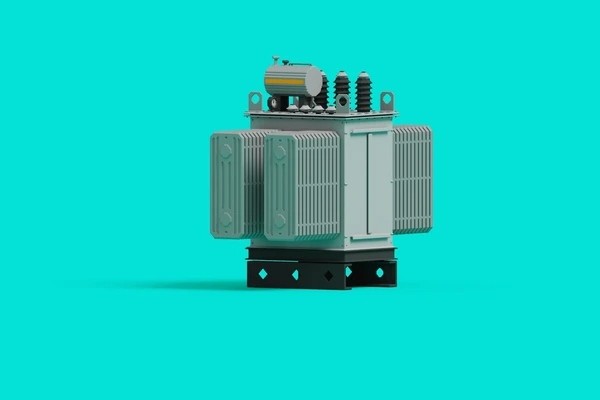
How Isolation Transformers Work?
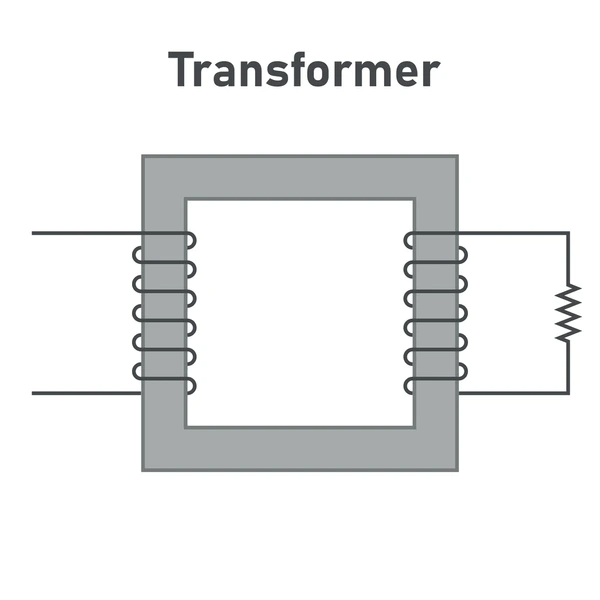
These transformers transfer electrical power between a source and a load while ensuring electrical isolation. The primary and secondary windings are magnetically coupled but electrically separated. The primary winding receives the input voltage, creating a magnetic field in the transformer’s core. This magnetic field induces a voltage in the secondary winding, which powers the load. The critical feature of these devices is the galvanic isolation, preventing direct electrical connection between the primary and secondary windings. As a result, no direct current flows between them, enhancing safety.
Key Components and Structure:
- Insulating Layer: An insulating layer separates the primary and secondary coils, enhancing insulation properties. It consists of stacked thin films.
- Primary and Secondary Coils: The primary coil connects to the power source, while the secondary coil connects to the load. These coils are spaced for effective isolation.
- Capacitor: Some designs use capacitors between coils to boost isolation and reduce noise.
- Magnetic Core: The core, made from magnetic material, transfers energy efficiently between the coils. It minimizes resonances, improving performance.
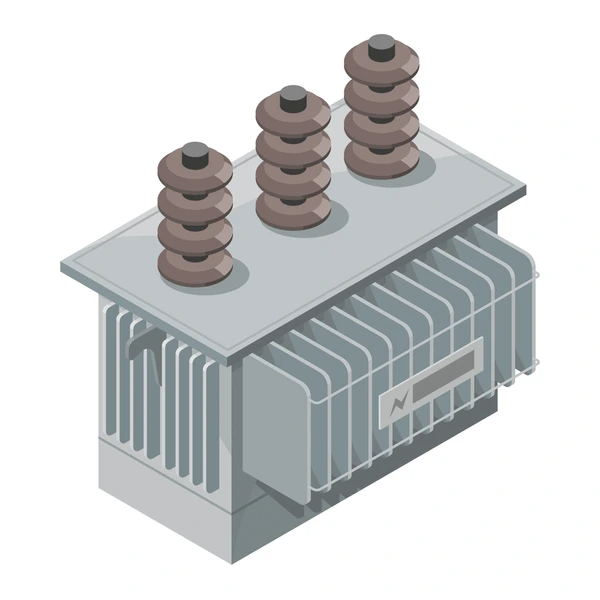
Benefits of Using an Isolation Transformer
Galvanic Isolation
These transformers provide electrical isolation between input and output circuits, ensuring safety and preventing ground loops. This isolation protects sensitive equipment from shocks and surges.
Noise Suppression
By isolating the load from the source, these transformers suppress electrical noise and transients. This feature is especially important for sensitive electronics and medical devices.
Voltage Transformation
They can step up or step down voltage levels, similar to other transformers, with the added benefit of isolation.
Harmonic Reduction
These transformers help reduce harmonic distortion in the power supply, improving power quality for sensitive loads.
Isolation Transformer vs. Step-Down Transformer: Key Difference
Functional Differences
Isolation transformers separate input and output, protecting equipment from noise and voltage surges. They prevent ground loops, making them ideal for sensitive devices. Step-down transformers reduce high voltage to match load requirements.
Construction and Design
Isolation transformers have equal turns on both windings, maintaining voltage and providing isolation. Step-down transformers have more turns on the primary winding, lowering the voltage. They offer various transformation ratios.
Applications
Isolation transformers are used in medical equipment, electronics, and industrial systems to reduce interference. Step-down transformers are common in power distribution, consumer electronics, and industrial machinery.
Performance Characteristics
Isolation transformers handle high voltages and minimize interference with multiple winding layers. Step-down transformers focus on reducing voltage efficiently, minimizing power losses.
Advantages and Disadvantages
Isolation transformers enhance safety and reduce noise but are bulkier and more expensive. Step-down transformers are smaller and cheaper but lack isolation, which may be a drawback in certain cases.
Recent Innovations
Recent advances have improved the efficiency and size of isolation transformers. Step-down transformers now use electronic circuits controlled by thyristors, offering adjustable voltage and reduced size.
Applications of Isolation Transformers
Medical Environments
Transformers in medical settings protect personnel and patients by isolating devices from the power source, preventing electrical shocks. SFRA allows for non-invasive fault detection and diagnostics.
Industrial Automation and Control Systems
In industrial settings, transformers protect control systems from electrical noise. They provide isolation between control and power circuits, ensuring reliable operation of switching elements.
Telecommunications and Data Centers
Transformers reduce noise in telecommunications and data centers. They help align signal ground potential with the power source, minimizing interference.
High Voltage Applications
In high voltage applications, transformers manage voltage differences. For example, they are used in neutron generators for high voltage isolation and efficient power transmission.
Renewable Energy Systems
Transformers isolate solar panels from the grid, protecting both systems from faults. They also reduce harmonics and improve overall power quality.
Medium Voltage Drives
Transformers in medium voltage drives reduce harmonics and voltage stress on motors. New topologies and PWM techniques now achieve this without transformers, reducing size and cost.
Signal Conversion and Communication Systems
Transformers isolate signal conversion modules, preventing electrical noise from affecting signal integrity in communication systems.
Electricity Storage Systems
In energy storage systems, transformers manage charging and discharging while isolating storage cells from the power source, ensuring safe energy transfer.
Testing and Compliance
Transformers are rigorously tested for safety and performance. Testing platforms like Labview verify functionality and compliance with regulatory standards.
Application Cases
| Product/Project | Technical Outcomes | Application Scenarios |
|---|---|---|
| Isolation Transformer ROHM Co., Ltd. | Provides high voltage isolation with embedded coils and capacitors for enhanced safety and performance. | Used in environments requiring high voltage isolation, such as industrial automation and control systems. |
| Noise Reduction Apparatus AT&T Intellectual Property I LP | Utilizes isolation transformers to minimize noise in communication networks. | Ideal for communication networks, particularly in IPTV systems to reduce signal interference. |
| High Voltage Isolation Transformer MOXTEK, Inc. | Reduces electromagnetic interference, crucial for sensitive equipment like X-ray machines. | Used in medical imaging systems to prevent interference with diagnostic signals. |
| Energy Conveying Device Creo Medical Ltd. | Reduces leakage current with a tuning circuit, enhancing safety in medical devices. | Applicable in electrosurgical apparatus to ensure safe energy transfer during medical procedures. |
| Electrical Transformer Northrop Grumman Systems Corp. | Features varied insulation thicknesses and magnetic cores for improved isolation. | Suitable for aerospace and defense applications where reliable electrical isolation is critical. |
To get detailed scientific explanations of isolation transformers, try Patsnap Eureka.
