


What is A Baler?
A baler is an agricultural machine used to compress and bind crop materials like hay, straw, or silage into compact bales for easier handling, storage, and transportation.
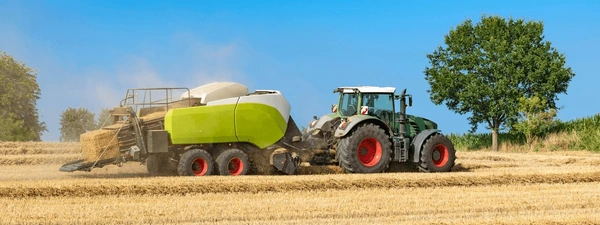
How Does A Baler Work?
Agricultural balers collect and compress cut crop material into compact bales for easier handling, transport, and storage. The typical process involves:
1. A pickup unit with a roller gathers the cut and windrowed crop material from the ground.
2. A packer unit or rotor cutter moves the crop into a pre-compression chamber, forming a “wad”.
3. The wad is transferred to the main bale chamber where a reciprocating plunger compresses it into flakes, forming the bale.
4. Once the desired bale size is achieved, the bale is bound with twine, netting, or wrapping and ejected from the rear of the baler.
Types of Balers
Round Balers
Round balers form cylindrical bales by rolling and compressing the crop material using belts or rollers in a variable or fixed diameter baling chamber. Key features:
- Suitable for baling hay, straw, silage, and other forage crops
- Bales are wrapped in netting or plastic film for better cohesion
- Completed bales are discharged onto the field when the bale chamber is opened
Large Square Balers
Large square balers form rectangular bales by compressing the crop material into a bale chamber using a reciprocating plunger. Key features:
- Produce cuboid bales, facilitating stacking and handling
- Suitable for baling hay, straw, biomass, and other crop residues
- Bales are typically tied with twine or wrapped in plastic film
- Completed bales are discharged from the rear of the bale chamber
Specialized Balers
- Baler-Wrappers: Combine the functions of a round baler and a wrapper, forming cylindrical bales and wrapping them in plastic film for ensiling
- Stalk Balers: Designed for baling crop residues like corn stalks, with specialized feeding and compression mechanisms
- Baling Machines with Splitting Knives: Divide the crop material to discharge multiple bales simultaneously, improving efficiency
Benefits of Baler
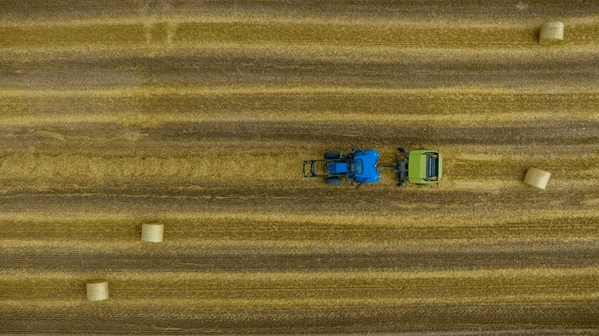
Efficient Crop Handling and Storage
Agricultural balers consolidate and package crop material into compact bales, facilitating efficient handling, transport, and storage for later use. Baling allows for:
- Reduced storage space requirements compared to loose crop material
- Easier transportation of baled crops over long distances
- Preservation of crop quality and nutritional value during storage
Versatility in Baling Different Crop Types
Balers can handle a wide range of crop materials, including:
- Forage crops like hay, grass, and leaves for animal feed
- Straw and other plant residues from harvesting operations
- Cotton and other commercial plant products
Improved Field Efficiency
By baling crops directly in the field, balers streamline the harvesting process, reducing labor and time requirements. Key advantages include:
- Simultaneous baling and windrow pickup in a single operation
- Automated bale wrapping and ejection for continuous operation
- Compatibility with precision agriculture systems for optimized performance
Customizable Bale Sizes and Densities
Balers can produce bales of varying sizes and densities to suit specific needs:
- Round balers create cylindrical bales suitable for easy rolling
- Rectangular balers produce cuboidal bales for efficient stacking and transport
- Adjustable bale chamber sizes and compression mechanisms control bale density
Baler vs. Compactor: What’s The Difference?
Baling Mechanism
Agricultural balers use a bale chamber to compress and shape crop material into bales. The key components include:
- Pickup unit to gather and feed the crop material
- Pre-compression chamber to form a wad/slice of crop
- Bale chamber with reciprocating plunger to compress wads into bales
- Wrapping/tying mechanism to secure the baled shape
Compactors, on the other hand, use a continuous extrusion process to compress material into a dense, compacted form without distinct bale shapes.
Bale Characteristics
Balers produce distinct bale shapes and sizes, such as:
- Round bales with variable or fixed diameter
- Large square/rectangular bales
Compactors produce a continuous, dense stream of compacted material without defined bale shapes.
Material Handling
- Baled crops are easier to handle, store, and transport compared to loose or compacted material. Bales maintain their shape and density, facilitating efficient handling.
- Compacted material may require additional containment or packaging for handling and transport.
Applications
Farmers use balers for hay, straw, cotton, and silage to produce animal feed and other agricultural products. - Compactors handle materials like municipal solid waste, recyclables, or industrial byproducts when bale shape isn’t important.
Applications of Balers
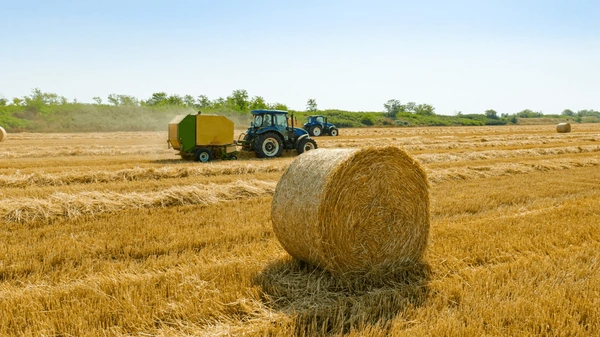
Baling Hay and Forage Crops
Agricultural balers are widely used for baling hay and other forage crops like grass and silage. The key steps include:
- Cutting and conditioning the crop material for windrow drying
- Picking up the dried windrows using a pickup unit with rollers and tines
- Compressing the crop material into bales in the baling chamber using mechanisms like reciprocating plungers, belts, or rollers
- Wrapping or tying the baled material with twine or netting for better cohesion
- Discharging the completed bales onto the field
Baling Straw and Crop Residues
Balers are also used for baling straw and other crop residues like wheat, oat, or cotton straw left over from harvesting operations:
- Combines discharge the non-grain crop material as straw to be picked up by the baler
- The straw is baled using the same mechanisms as for hay, forming dense bales for easy handling and storage
Application Cases
| Product/Project | Technical Outcomes | Application Scenarios |
|---|---|---|
| John Deere Large Square Balers | Utilising high-density baling technology, these balers can produce bales weighing up to 1,000 lbs, reducing handling and transportation costs. The bales are also more resistant to weather and moisture, minimising spoilage. | Large-scale hay and forage operations, where efficient handling and storage of high-volume bales are crucial. |
| Krone BiG Pack HighSpeed Balers | Featuring a high-speed baling system, these balers can produce up to 110 bales per hour, significantly increasing productivity. The bales are also consistently dense and well-shaped, facilitating efficient storage and transportation. | Commercial hay and forage operations that require high-volume baling to meet tight harvesting windows. |
| Vermeer ZR5 Self-Propelled Balers | Equipped with advanced feed control systems and high-inertia flywheels, these balers can consistently produce dense, well-formed bales, even in challenging crop conditions. The self-propelled design also enhances maneuverability and efficiency. | Large-scale farming operations with diverse crop types and field conditions, where consistent bale quality and mobility are essential. |
| Claas Quadrant Square Balers | Utilising a unique pre-compression chamber and advanced knotter technology, these balers can produce consistently well-shaped and tightly bound bales, reducing material loss and spoilage during storage and transportation. | Hay and forage operations that prioritise bale quality and longevity, particularly for long-term storage or export markets. |
| New Holland Roll-Belt Round Balers | Featuring a unique roll-belt baling system, these balers can produce dense, well-shaped round bales without the need for conventional belts or rollers, reducing maintenance requirements and increasing uptime. | Livestock operations that require high-quality round bales for efficient feeding and minimal waste, as well as operations with limited maintenance resources. |
Latest Technical Innovations of Balers
Intelligent Control Systems
Agricultural balers are incorporating advanced control systems to optimize performance and efficiency. These systems utilize sensors to monitor various parameters like clutch engagement status, crop compression profiles, and input power. Based on this data, the control unit adjusts factors such as drive shaft speed, clutch torque transfer, and bale chamber compression to achieve optimal baling conditions. This intelligent control leads to improved bale quality, reduced wear, and increased throughput.
Automated Operation
Innovations are enabling agricultural balers to operate autonomously with minimal human intervention. Self-propelled balers with integrated electronics, GPS guidance, and remote control capabilities can autonomously follow pre-recorded paths, pick up crops, and form bales. This automation reduces labor requirements, improves efficiency, and enables operation in challenging terrains like swamps or steep slopes.
Monitoring and Quality Assessment
Advanced sensor systems are being integrated into balers to monitor and assess the quality of the baled crop material in real-time. Techniques like electromagnetic reflectance analysis and vegetation index calculations provide insights into the nutritional value and feed quality of individual bales. This information enables optimized feeding strategies for livestock based on their specific nutritional needs.
Binding and Wrapping Innovations
Improvements in binding and wrapping mechanisms are enhancing the throughput and reliability of balers. Innovations include pivoting counter-holders with secure fixing arrangements, welding devices for binding material, and cooling systems to accelerate hardening. These advancements result in faster and more reliable binding, reducing downtime and increasing overall productivity.
Sustainability and Environmental Considerations
Baler designs are incorporating features to reduce environmental impact and promote sustainability. Examples include the use of eco-friendly materials, low-VOC or solvent-free binding agents, and improved durability and corrosion resistance to extend the operational life of the equipment.
Technical Challenges
| Intelligent Crop Monitoring and Control Systems | Developing advanced sensor systems and intelligent control algorithms to monitor and optimise the baling process, including monitoring crop density, moisture content, and bale formation, and automatically adjusting baler parameters for optimal performance and bale quality. |
| Autonomous Baling Systems | Integrating autonomous navigation, guidance, and operation capabilities into balers, enabling self-propelled and unmanned baling operations, particularly in challenging terrains or environments. |
| Bale Quality Assessment and Traceability | Implementing systems to assess and monitor the quality and composition of individual bales, enabling traceability and optimisation of bale handling, storage, and utilisation based on specific quality parameters. |
| Advanced Bale Wrapping and Preservation | Developing innovative wrapping materials and techniques, as well as preservative application systems, to improve bale preservation, storage life, and nutritional value. |
| Integrated Biomass Handling and Logistics | Optimising the entire biomass handling and logistics chain, from baling to transportation, storage, and utilisation, through integrated systems and processes for improved efficiency and reduce |
To get detailed scientific explanations of the balers, try Patsnap Eureka.
