


What is A Pressure Vessel?
A pressure vessel is a closed container designed to hold gases or liquids at a pressure substantially different from the ambient pressure. It is widely used in various industries, including chemical, petroleum, and power generation.
How Does A Pressure Vessel Work?
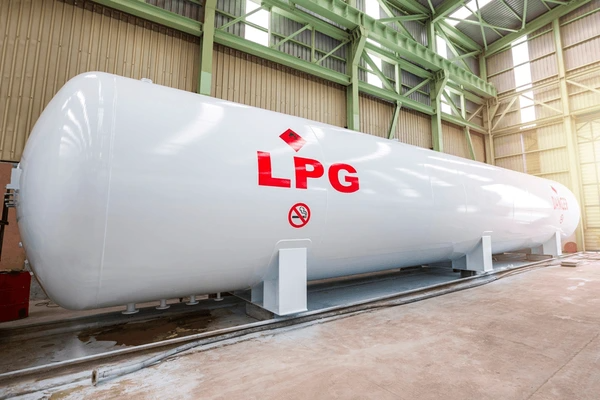
Operational Principles
- Pressure vessels operate based on the following principles:
- Containing a compressible fluid (gas or liquid) at high pressure within the vessel body
- Allowing controlled inflow and outflow of the pressurized fluid through functional components like valves and nozzles
- Withstanding high internal pressure loads through a robust multi-layer construction, often using fiber-reinforced plastics
Key Mechanisms
The core mechanisms enabling pressure vessel operation include:
- Pressure Containment: Pressure containment in vessels relies on a robust design, often using a multi-layer construction: an inner liner, a fiber-reinforced middle layer, and an outer protective layer to withstand internal pressures effectively.
- Fluid Flow Control: Valves, nozzles, and other functional parts regulate the inflow and outflow of pressurized fluids.
- Pressure Relief: Safety mechanisms like pressure relief valves and rupture discs prevent excessive pressure buildup.
- Structural Support: Reinforcements, support shells, and specific geometries (e.g., conical guide plates) provide structural integrity and enable smooth fluid flow.
Types of Pressure Vessels
Pressure vessels are typically classified into four main types:
- Type I: All-metal construction
- Type II: Metal-lined with fiber hoop wrap reinforcement
- Type III: Metal-lined with complete fiber reinforcement wrap
- Type IV: Plastic-lined with complete fiber reinforcement wrap
Materials Selection for Pressure Vessels
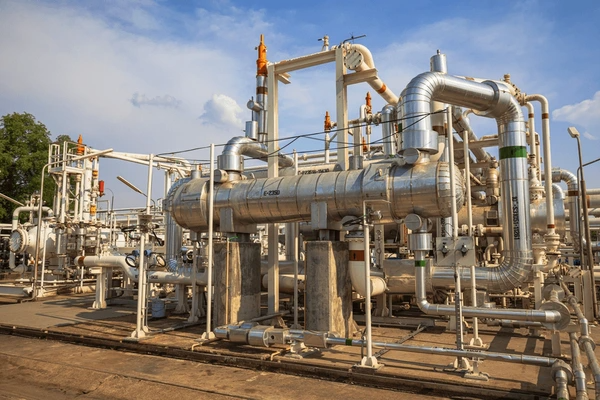
Working Pressure and Temperature
The operating pressure and temperature range dictate the material’s strength and resistance to creep, fatigue, and corrosion. High-pressure vessels often use materials like carbon steel, stainless steel, or high-strength alloys for durability and pressure resistance. Meanwhile, low-pressure vessels can utilize lighter options like fiberglass-reinforced plastics (FRP) or aluminum alloys for cost and weight efficiency.
Corrosion Resistance
The material must be resistant to the corrosive effects of the contained fluid or environment. Stainless steels, nickel alloys, and specialized coatings are often used for corrosive media.
Fracture Toughness
Materials with high fracture toughness are preferred to prevent brittle fracture, especially in low-temperature applications or when subjected to cyclic loading.
Fabrication and Welding Considerations
The material should be suitable for the manufacturing processes involved, such as forming, welding, and heat treatment
Applications of Pressure Vessel
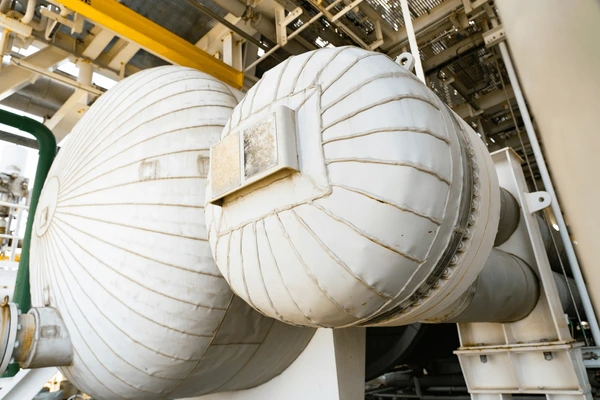
Energy Industry
Pressure vessels are widely used in the energy industry for storage and transportation of gases and liquids under pressure, such as:
- Compressed natural gas (CNG) storage tanks for vehicles
- Hydrogen storage tanks for hydrogen-powered vehicles
- Storage and transportation of propane and other fuels
Chemical and Petrochemical Industry
Pressure vessels play a crucial role in various chemical processes, including:
- Reactors for chemical reactions under high pressure
- Storage and transportation of industrial gases like oxygen, nitrogen, and hydrogen
- Fermentation and pharmaceutical manufacturing processes
Automotive Industry
Pressure vessels are used in various automotive applications, such as:
- Compressed air brake systems for trucks and buses
- Hydraulic systems and air compressors
- Brake energy regeneration systems in trucks
Aerospace Industry
Pressure vessels are critical components in aircraft systems, including:
- Hydraulic power units
- Fuel storage tanks
- Cryogenic storage tanks for liquid oxygen and other gases
Nuclear Power Industry
Pressure vessels are essential for managing high-pressure coolants and steam in nuclear reactors, ensuring safe and reliable operation.
Cryogenic Applications
Pressure vessels are used for storing and transporting cryogenic fluids, such as liquefied natural gas (LNG) and liquid oxygen, at extremely low temperatures
Application Cases
| Product/Project | Technical Outcomes | Application Scenarios |
|---|---|---|
| Compressed Natural Gas (CNG) Storage Tanks | Utilising advanced composite materials and optimised design, CNG tanks offer high strength-to-weight ratio, enabling safe and efficient storage of compressed natural gas for vehicular applications. | Transportation sector, particularly for buses, trucks, and other commercial vehicles running on CNG fuel. |
| Hydrogen Storage Tanks for Fuel Cell Vehicles | Employing lightweight carbon fibre reinforced polymer composites and advanced insulation techniques, these tanks enable safe and compact storage of hydrogen at high pressures, extending the driving range of fuel cell electric vehicles. | Automotive industry, specifically for hydrogen-powered fuel cell electric vehicles (FCEVs) as an alternative to conventional internal combustion engines. |
| High-Pressure Reactors for Chemical Processes | Incorporating advanced materials and design optimisations, these reactors facilitate chemical reactions at elevated pressures, enabling higher yields, improved reaction kinetics, and enhanced process efficiency. | Chemical and pharmaceutical industries, where high-pressure reactions are crucial for synthesising various compounds and active ingredients. |
| Compressed Air Brake Systems for Commercial Vehicles | Utilising robust and lightweight pressure vessels, these systems store compressed air to power the braking mechanisms of heavy-duty vehicles, ensuring reliable and efficient braking performance. | Automotive industry, particularly for trucks, buses, and other commercial vehicles requiring powerful and responsive braking systems. |
| Cryogenic Storage Tanks for Industrial Gases | Employing advanced insulation techniques and specialised materials, these tanks enable safe and efficient storage of liquefied gases like oxygen, nitrogen, and hydrogen at extremely low temperatures, minimising evaporative losses. | Industrial gas supply chain, including production, storage, and transportation of cryogenic gases for various applications in healthcare, manufacturing, and research sectors. |
Latest Technical Innovations of Pressure Vessel
Materials and Construction
- Composite materials like carbon fiber reinforced polymers are increasingly used for lightweight, high-strength pressure vessels, often with a polymer liner to prevent leakage. Filament winding techniques allow optimized fiber orientations for improved strength transfer.
- Multilayer constructions with different materials tailored for specific requirements like strength, corrosion resistance, and permeation resistance.
- Advanced metal alloys and processing techniques for improved strength, fatigue life, and fracture toughness.
Design Optimization
- Computational tools (CAD, CAE) for design, modeling, and structural optimization of pressure vessels for weight, strength, and safety requirements.
- Improved understanding of fatigue life from combined cyclic and static loading through testing and analysis.
- Risk-based inspection planning using data analytics and digital twins to optimize maintenance.
Manufacturing Advancements
- Automated filament winding and fiber placement processes for efficient composite overwrapping.
- Additive manufacturing techniques like 3D printing for complex geometries and integrated functionality.
- In-process monitoring and quality control through embedded sensors and digital manufacturing.
Safety and Regulations
- Improved standards (ASME, ISO, etc.) incorporating new materials, construction methods, and failure models.
- Leakage monitoring systems and smart pressure relief devices for enhanced safety.
- Hydrogen storage solutions for fuel cell vehicles adhering to stringent regulations
Technical Challenges of Pressure Vessel
| Composite Material Integration | Integrating advanced composite materials like carbon fiber reinforced polymers into pressure vessel design for improved strength-to-weight ratio and optimized fiber orientations. |
| Multilayer Construction | Developing multilayer pressure vessel constructions with different materials tailored for specific requirements like strength, corrosion resistance, and permeation resistance. |
| Advanced Alloys and Processing | Utilising advanced metal alloys and processing techniques to enhance strength, fatigue life, and fracture toughness of pressure vessels. |
| Computational Design Optimisation | Leveraging computational tools (CAD, CAE) for design, modelling, and structural optimisation of pressure vessels to meet weight, strength, and safety requirements. |
| Fatigue Life Analysis | Improving the understanding of fatigue life from combined cyclic and static loading through testing and analysis for pressure vessels. |
To get detailed scientific explanations of pressure vessels, try Patsnap Eureka.
