


What is a Rear Differential?
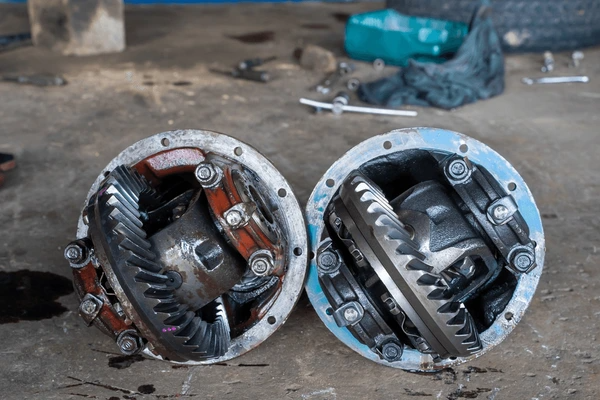
A rear differential is a vital part of a vehicle’s drivetrain, especially in rear-wheel-drive (RWD) and all-wheel-drive (AWD) systems. This component is essential for maintaining stability, optimizing handling, and enhancing overall performance. In this article, we’ll explore how a rear differential works, its key types, and why it’s indispensable for efficient vehicle operation. Whether you’re a car enthusiast or looking to maintain your vehicle, understanding this component will help you appreciate its role in delivering a smooth and controlled driving experience.
Types of Rear Differentials
Open Differential
- Mechanism: An open differential allows the wheels to rotate at different speeds, essential for smooth turns.
- Advantages: It features a simple design, low cost, and reliability under normal driving conditions.
- Disadvantages: Limited traction in low-grip conditions can lead to wheel spin when one wheel loses grip.
- Applications: This type is common in passenger vehicles and light-duty trucks for everyday driving.
Limited Slip Differential (LSD)
- Mechanism: LSDs use clutches, gears, or viscous fluids to limit the speed difference between the two wheels.
- Advantages: They enhance traction and handling in slippery conditions, benefiting off-road and performance vehicles.
- Disadvantages: These systems are more complex and expensive, with parts that can wear out over time.
- Applications: Common in high-performance and sports cars as well as off-road vehicles.
Locking Differential
- Mechanism: A locking differential forces both wheels to rotate at the same speed regardless of traction.
- Advantages: It delivers exceptional traction in extreme or off-road conditions.
- Disadvantages: Lack of wheel speed differentiation can cause handling issues on paved roads.
- Applications: Used in heavy-duty trucks and off-road vehicles for rugged terrains.
Torque Vectoring Differential
- Mechanism: Sensors and electronics dynamically distribute torque to the wheel with better traction.
- Advantages: This system improves handling, stability, and cornering performance, particularly in performance vehicles.
- Disadvantages: It is highly complex, costly, and relies on advanced sensors.
- Applications: Found in luxury cars, high-performance sports cars, and advanced vehicle platforms.
Torsen Differential
- Mechanism: A gear-based system distributes torque smoothly between wheels without clutches.
- Advantages: It offers continuous torque transfer, improved durability, and reduced maintenance.
- Disadvantages: It struggles in scenarios where one wheel loses all traction.
- Applications: Used in performance cars, sports cars, and some off-road vehicles.
Electronic Limited Slip Differential (eLSD)
- Mechanism: Combines mechanical LSD functionality with electronic controls for precise torque management.
- Advantages: Dynamically adjusts to varying conditions, providing superior traction on-road and off-road.
- Disadvantages: It is expensive, complex, and requires integration with vehicle electronics.
- Applications: Popular in high-performance and modern luxury vehicles.
Nonlinear Semiactive Rear Differential
- Mechanism: Adjusts differential behavior based on yaw rate and wheel speed for better control.
- Advantages: Enhances stability and handling during cornering and emergency maneuvers.
- Disadvantages: It demands advanced sensors and algorithms, adding cost and complexity.
- Applications: Found in sports cars and high-performance vehicles.
Integrated Active Front Steering and Semiactive Rear Differential Control
- Mechanism: This system combines front steering and rear differential control for optimized stability and handling.
- Advantages: Improves cornering, performance, and safety, particularly in emergency situations.
- Disadvantages: High cost and complexity limit its accessibility.
- Applications: Common in luxury and high-end sports vehicles.
Default Open Differential Control Switch
- Mechanism: It allows the differential to start in an open mode, providing flexibility for various driving conditions.
- Advantages: Offers multiple operational modes to adapt to different terrains and driving styles.
- Disadvantages: Increases system complexity and potential maintenance needs.
- Applications: Found in modern vehicles with adaptive differential systems.
How Does a Rear Differential Work?
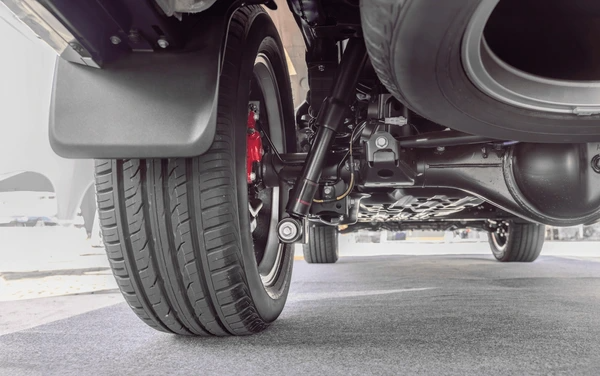
The rear differential distributes torque to the wheels while allowing them to rotate at different speeds during turns. This ensures smooth cornering, as the outer wheel travels farther than the inner wheel. A set of gears in the differential adjusts the rotational speed of each wheel independently. Conventional mechanical differentials use a ring gear, pinion gears, and side gears housed in a differential case.
In electric vehicles, electronic systems often handle the differential function for enhanced performance. Electric differentials use two motors to drive each rear wheel at different speeds. This eliminates mechanical gears, reducing weight and complexity while improving efficiency. Additionally, electric differentials enhance traction control and support regenerative braking for energy recovery.
Benefits of a Properly Functioning Rear Differential
- Improved Handling and Stability: A functional differential enhances stability and handling during cornering, preventing wheel slip and maintaining effective power distribution. It ensures the vehicle remains in control by optimizing traction, especially in dynamic driving conditions.
- Enhanced Traction: By enabling wheels to rotate at different speeds, the system improves traction on uneven or slippery surfaces. This capability reduces skidding risks, particularly in rain or snow, and enhances overall vehicle safety.
- Reduced Wear and Tear: Proper differential operation evenly distributes power, minimizing stress on tires and drivetrain components. This reduces wear, extends component lifespan, and lowers overall maintenance expenses for the vehicle.
- Fuel Efficiency: Advanced systems like hydraulically actuated clutches reduce energy losses, optimizing fuel economy by ensuring efficient power distribution. These innovations help engines operate more effectively, improving overall fuel consumption for better efficiency.
- Performance and Efficiency: Modern variable-engagement clutches and torque coupling mechanisms adapt to driving conditions for optimal power distribution. This adaptability enhances vehicle performance and boosts efficiency, particularly in demanding scenarios.
Rear Differential vs. Front Differential
Basic Function and Mechanism
- Front Differentials: These are found in front-wheel-drive (FWD) and all-wheel-drive (AWD) vehicles. They send power from the transmission to the front wheels and often include mechanisms for switching drive modes. This allows vehicles to transition between FWD and AWD for better adaptability to road conditions.
- Rear Differentials: These are common in rear-wheel-drive (RWD) and AWD vehicles. They transfer power from the driveshaft to the rear wheels. Locking mechanisms in some designs enhance traction in low-grip scenarios, improving performance on slippery surfaces.
Performance Characteristics
- Front Differentials: Integrated with the transaxle in FWD vehicles, they may cause torque steer under acceleration. However, modern designs mitigate this by using equal-length driveshafts and optimized gear placements. These advancements ensure smooth handling and better stability during acceleration.
- Rear Differentials: Rear differentials improve weight distribution and handling, especially in RWD vehicles under acceleration. Limited-slip or locking mechanisms further enhance traction on uneven or slippery terrains, making them ideal for demanding driving conditions.
Application Scenarios
- Front Differentials: These are ideal for urban and highway driving in FWD vehicles due to their compact and efficient design. In AWD systems, they enhance traction when additional grip is required, improving performance in varying driving conditions.
- Rear Differentials: These are suited for performance-oriented and off-road vehicles, offering better handling and stability. They are also essential in RWD vehicles, where their ability to handle higher torque loads improves driving dynamics.
Technological Innovations
- Electronic Differentials (ED): These replace traditional mechanical systems with electronic controls, allowing precise torque distribution to individual wheels. This improves traction and stability, particularly in electric vehicles equipped with individual wheel motors.
- Semiactive Rear Differential Control: This system adjusts differential behavior in real time based on driving conditions. It enhances stability and handling during sharp turns or dynamic maneuvers, providing a more responsive driving experience.
Comparative Analysis
- Handling and Stability: Rear differentials excel in high-performance and off-road scenarios by offering better weight distribution and traction control. Front differentials, while optimized for compactness in FWD and AWD vehicles, are more prone to torque steer under heavy acceleration.
- Traction and Off-Road Capability: Locking or limited-slip rear differentials deliver superior traction in challenging terrains by preventing wheel slip. Front differentials in AWD setups also boost traction but are typically less robust in extreme off-road conditions.
Applications of Rear Differential
Power Distribution and Vehicle Stability
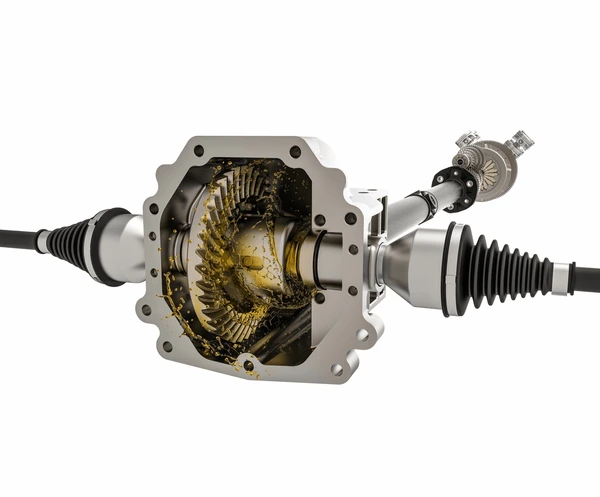
Rear differentials transfer drive power from the engine to the rear wheels, ensuring stability and better vehicle handling. This system improves traction, especially in performance or off-road vehicles. A transfer mechanism can direct power to front and rear wheels, while the rear differential focuses on the rear wheels. Many designs include clutches to manage wheel engagement independently, enhancing traction and control in various conditions.
Vibration Control
Rear differentials can sometimes cause vibrations that impact comfort and vehicle performance. Active vibration control systems address this issue by using feedback mechanisms to manage sub-frame vibrations. Proof mass actuators absorb vibrations near the differential, reducing cabin noise and enhancing ride comfort. This innovative approach ensures a smoother driving experience.
Weight Reduction and Cooling Systems
Modern rear differential designs prioritize weight reduction and improved cooling efficiency for optimal performance. Innovative systems incorporate body panels with air tunnels and heat exchangers to cool differentials effectively. This design reduces system weight while improving heat dissipation, which is crucial during high-stress driving conditions.
Advanced Differential Assemblies
Advanced differential assemblies offer multiple operational modes, enhancing vehicle adaptability. These systems include configurations for open-wheel rotation, synchronized locking, and independent output wheel rotation. By providing flexibility, these assemblies improve performance across various driving scenarios, from tight corners to rough terrains.
Application in All-Wheel Drive (AWD) Systems
Rear differentials play a key role in AWD systems, distributing power alongside front differentials and transfer cases. This collaboration enhances traction and stability, making AWD vehicles suitable for challenging conditions. Rolling dynamometer tests highlight AWD systems’ ability to reduce vibrations and improve overall dynamics.
Noise Reduction in Hearing Devices
Differential principles extend to non-automotive applications, such as hearing devices. Spatial noise reduction systems use front-rear differential techniques to enhance sound quality. By adjusting directional beams, these devices reduce background noise, delivering clearer sound for the user.
Application Cases
| Product/Project | Technical Outcomes | Application Scenarios |
|---|---|---|
| Active Vibration Control System | Effectively reduces rear differential-induced vibration using proof mass actuators (PMAs), resulting in lower cabin noise and improved ride comfort. | All-wheel drive vehicles requiring enhanced vibration control for improved passenger comfort. |
| Rear Differential Cooling System Ford Global Technologies LLC | Reduces overall weight and improves weight distribution of motor vehicles, enhancing performance and efficiency. | High-performance and off-road vehicles where weight distribution and cooling efficiency are critical. |
| Vehicle Drive Power Distribution Device Nissan Motor Co., Ltd. | Provides greater freedom in power distribution, enhancing traction and stability under various driving conditions. | Vehicles requiring precise power distribution for improved handling and stability, especially in off-road and high-performance scenarios. |
| Inter-Axle Differential Assembly Scania CV AB | Less complex and more robust design, improving reliability and performance of the vehicle’s drivetrain. | Heavy-duty trucks and commercial vehicles needing durable and efficient power distribution systems. |
Latest Technical Innovations in Rear Differential
Advanced Design Mechanisms
Innovative rear differential designs now include transfer mechanisms that distribute power to all wheels, enhancing performance and control. Clutches independently manage power to each rear wheel, improving traction. Speed-increasing mechanisms align output and input shaft speeds, optimizing wheel rotation for better handling.
New Materials in Manufacturing
High-strength alloys and composites reduce rear differential weight while improving durability and heat dissipation. These materials enhance performance under high-stress conditions.
Efficiency and Performance Enhancements
Electronically controlled limited-slip differentials (eLSDs) use sensors to optimize torque distribution, improving traction, stability, and fuel efficiency. Torque vectoring systems selectively apply torque during turns, enhancing cornering performance and reducing understeer.
Application of Smart Control Systems
Smart control systems with advanced algorithms predict driving conditions, adjusting torque distribution for better handling. Real-time responses improve adaptability and overall driving experience.
Future Trends and Innovations
Future rear differential advancements will leverage lightweight materials, improved control systems, and integration with electric and hybrid powertrains for greater efficiency and durability.
To get detailed scientific explanations of Rear Differential, try Patsnap Eureka.
