


See your design-patent risk before you list, tool, or ship.

Upload a product image. Eureka returns patent-standard line art, risk-ranked design patent matches, and design-around guidance.

81%
X-Citation
Recall
190M+
Patents
Indexed
174
Jurisdictions
SOC 2
Type II
Certified

A design conflict costs almost nothing to fix now — and a fortune after launch.

Frozen accounts, scrapped molds, stalled listings. Design FTO gives sellers, product teams, IP professionals, and platforms the same first-pass screen — before the money is committed.

You can't tell who owns the design.
Cross-Border Sellers

You can't tell who owns the design.

Eureka screens the SKU against design patents in your target market before you place the order, and keeps a timestamped record of the check.

Start a free screen
You find out after the mold is paid for.
Brand R&D & Design Teams

You find out after the mold is paid for.

Eureka screens the render or prototype, shows which visual features drive the risk, and suggests design-around adjustments while the design can still change.

Start a free screen
Manual searching caps how many cases you can take.
IP Agencies & Law Firms

Manual searching caps how many cases you can take.

Eureka builds the candidate matrix and a citable comparison report as the working base for your opinion letter, with sources and scoring you can defend.

Start a free screen
You only find out when a brand files a complaint.
E-Commerce Platforms

You only find out when a brand files a complaint.

Eureka screens new listings in bulk through the API and flags high-similarity products automatically, so you can offer the same check to your key brands and sellers.

Start a free screen

Four stages. Every score traceable to a design feature.

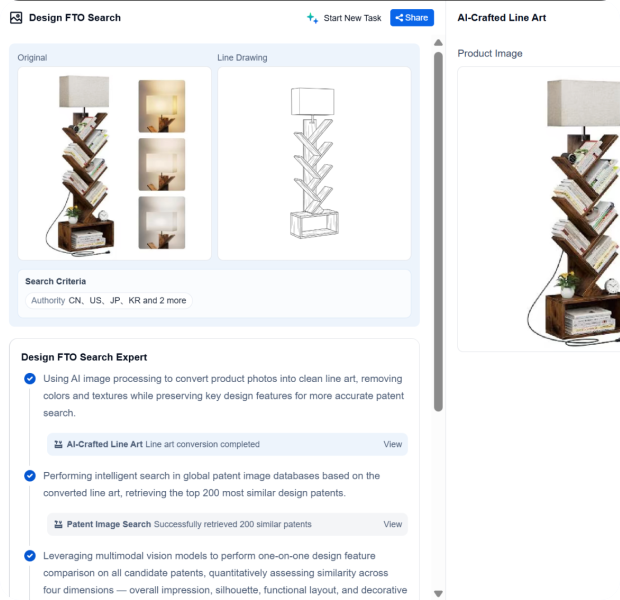
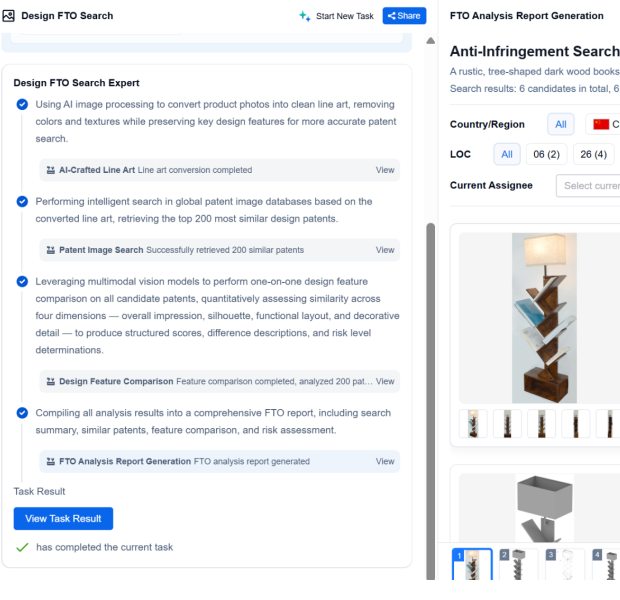
Design patents are published as line drawings, and similarity is judged on appearance rather than pixels. Eureka works to both conventions — converting your photo to line art, then comparing every candidate feature by feature.

01

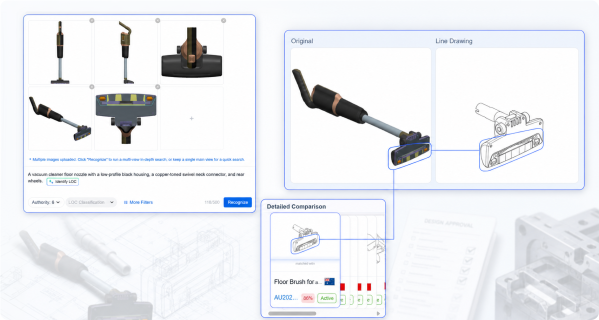
AI-Crafted Line Art

What Eureka does

Eureka converts your product photos into patent-standard line drawings and automatically generates additional views from a single image. The result is a multi-view representation that reflects how design offices compare appearances.

What you get

Your product enters the search on the same visual terms design offices use — and from angles that single-shot image search would miss.

AI-Crafted Line Art
02

Patent Image Search

What Eureka does

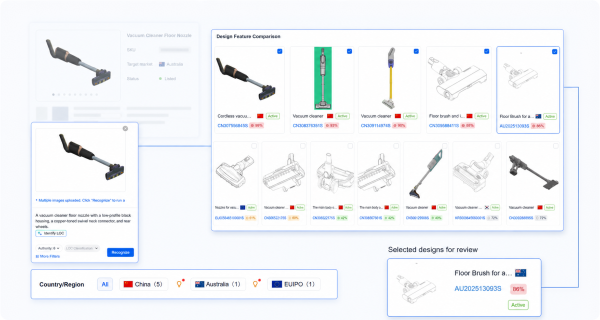
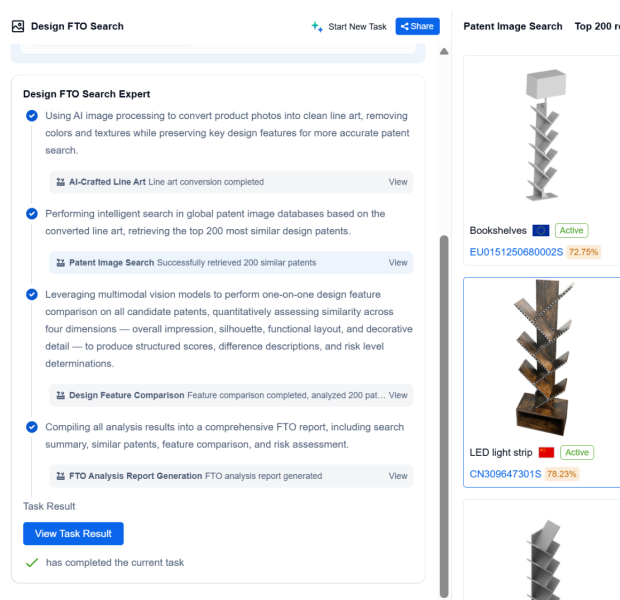
Eureka searches global patent image databases across every generated view, fusing the results into a single ranked candidate pool from the authorities you select.

What you get

A candidate set drawn from millions of records — typically the top 200 — built from multiple angles instead of one.

Patent Image Search
03

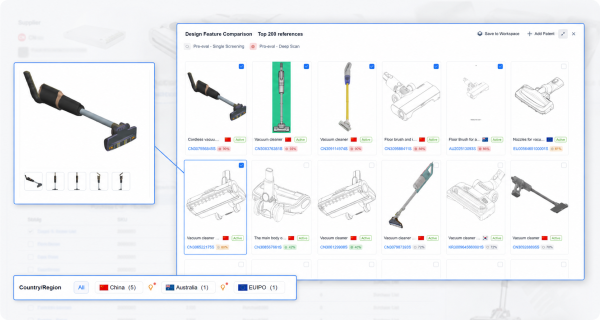
Design Feature Comparison

What Eureka does

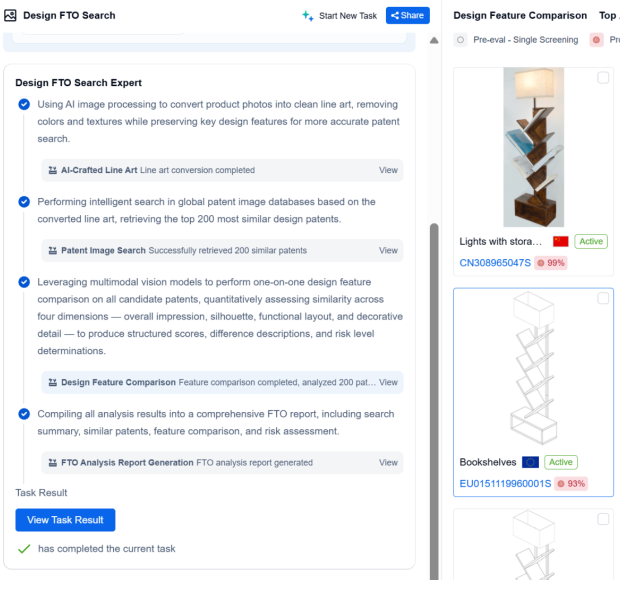
Design Feature Comparison evaluates visual and structural features against applicable legal standards and jurisdiction-specific considerations to deliver a clear, defensible assessment of design similarity and risk.

What you get

Structured scores with difference descriptions and a risk level for each reference, so a high score always points to a named feature.

Design Feature Comparison
04

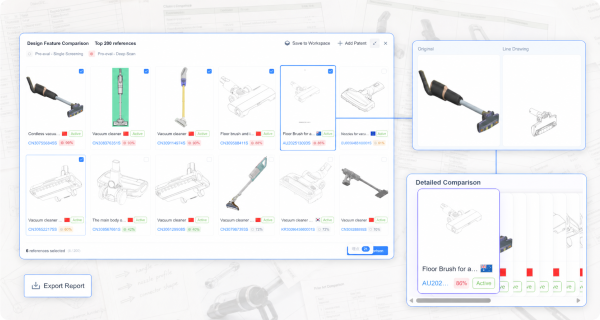
FTO Analysis Report

What Eureka does

Eureka turns the results into an evidence-led FTO report that prioritizes relevant design rights, compares the product across multiple views, distinguishes protectable features from functional, conventional, or unclaimed elements, applies jurisdiction-specific legal standards to the overall visual impression, and translates the findings into clear risk ratings and actionable design-around recommendations.

What you get

An exportable, shareable record your team can act on and your counsel can build on.

FTO Analysis Report

Trust the evidence, not the score.

You should be able to see where the search looked, why a patent ranked high, what the report leaves to expert judgment — and change the result when you disagree.

170+ Countries and regions of patent data.

Search design patent records across the five major offices and beyond, with regularly refreshed data. Select the markets you are actually entering.

01

See the comparison on the same terms as the patent figures.

Line-drawing conversion removes photographic noise before matching, so similarity reflects appearance rather than lighting, background, or material finish.

PHOTO → LINE DRAWING → FIGURE
02

Follow a score from first pass to final comparison.

Every candidate shows how its screening score changed after detailed comparison, and which shared features drove it. No single opaque number.

SCREENING SCORE → DETAILED SCORE
03

You decide what enters the report.

Add or remove candidates before the report is generated. Design FTO is built as a first-pass screen: high-similarity results narrow where to look, and the final call on a close case belongs with a patent professional.

HUMAN-IN-THE-LOOP

Plans & Pricing

Scale from a single IP check to continuous IP research

Freefor 14 days

No Credit Card Required

10,000 Trial Credits Included

Typically enough for:

  • ≈ 2 Targeted Analyses (Novelty Search · Design FTO Search · and more)
  • or ≈ 1 Deep-Dive Deliverable (FTO Assessment and more)
  • Access to featured agents* across IP Search
  • Professional outputs with traceable patent & literature evidence
  • Up to 90% faster research · 95% faster patent review · 92% faster compound search

Pro

For professionals running IP Search workflows

$200/month · 2-4 IP Search reports

Right for you when IP checks become recurring work:

  • Iterate searches until the evidence is review-ready
  • Move from one IP question to a fuller product check
  • Share source-backed findings with R&D, IP, or clients

Teams

For teams running IP work together…

Right for you when IP checks stop being one person's job:

  • Share one credit pool instead of rationing per person
  • Keep project's evidence in one shared workspace
  • Pass findings to clients without rebuilding them
  • Control seats, usage, and billing from one console
  • Run every Eureka IP agent across the full innovation cycle

Check the design risk while it still costs nothing to change.

Before the order, the mold, or the listing. Start with the product image you already have.

Questions teams ask before a design screen.

Can't find what you're looking for? Reach out to our team.

A standard product photo works. Design FTO converts whatever you upload into a line drawing before matching, which removes background, lighting, and material differences. Renders, prototype photos, and listing images are all valid starting points. Clear, unobstructed views of the full product give the best results.

No. A high score means the design is visually close enough to deserve a closer look. In practice, many high-similarity results are set aside on review — the shared features may fall outside the claimed scope shown in solid lines, the patent itself may be challengeable, the product categories may not be sufficiently similar, or the overlap may sit in functional or commonplace design that comparison excludes. Design FTO narrows millions of records to a reviewable shortlist. Which of those are real risks is a judgment call, and for close cases it belongs with a patent professional.

Design patent data from the five major offices and 170+ countries and regions. You select the markets you are entering, and results are limited to those jurisdictions. Coverage and refresh cadence differ by office.

It replaces the search and comparison work, not the legal judgment. The workflow runs end to end without patent expertise, handles batches unattended, and returns a structured report. Reading solid versus broken lines, weighing design points, and assessing prior art remain expert work — and the structured report makes that review faster because the input is already organized.

Most single-product screens complete in 1–2 minutes with no supervision required, so dozens of SKUs can be queued and reviewed together — results in minutes, not days.

Jurisdictions searched, candidate patents with filing details, shared features and differences, possible sources of confusion, an overall risk level, and design-improvement suggestions. Reports can be exported or shared by link — and because they are timestamped, they also serve as a record that a check was performed before launch.

Yes. Bulk multi-product screening is available for catalog-scale review, and API / MCP access lets you trigger screens from your own ERP, PLM, or listing workflow so results arrive where your team already works.